Estrogen and progesterone begin fluctuating years before menopause itself, often starting in the 40s. These shifts affect energy, mood and how the body responds to training, which is why some weeks feel harder than they should.
Why it's different
Why the 40s are worth training deliberately for
Nothing changes overnight in your 40s, but perimenopause sets several things in motion that a consistent strength habit can get ahead of.
3–5%/10y the typical rate of muscle mass loss after 40, which resistance training directly slows
3×/week strength sessions weekly builds a meaningful buffer of muscle and bone before menopause
1 in 4 roughly how many women report disrupted sleep during perimenopause, hurting recovery
Muscle mass naturally declines with age, and building a stronger base in your 40s creates a buffer before the more rapid muscle and bone loss that often follows menopause. Strength trained now pays off for the next two decades.
Disrupted sleep is common during perimenopause, and it directly affects how well the body recovers from training. Managing training volume around bad sleep weeks matters more here than it did a decade earlier.
A combination of hormonal changes and muscle loss can gradually lower resting metabolic rate through this decade. Resistance training is one of the most effective ways to counter that shift, more so than cutting calories further.
What it looks like
A sample week on a workout plan for women over 40
Three strength sessions built around compound lifts, with cardio and recovery worked in around a busy midlife schedule.
Example week
4 Days/week40–50 min Session lengthBeginner–intermediate LevelDumbbells + bodyweight Equipment
Monday Lower body strength Squat 4×8 · Romanian deadlift 3×10 · Walking lunge 3×10 · Calf raise 3×15
Tuesday Cardio 25–30 min moderate cardio
Wednesday Upper body strength Push-up 3×10 · Row 3×10 · Shoulder press 3×10 · Plank 3×30s
Thursday Rest or mobility 20 min stretching or a gentle walk
Friday Full body strength Deadlift 3×8 · Goblet squat 3×10 · Lat pulldown 3×10 · Dead bug 3×10
Saturday Cardio + walk 20–25 min walk or light cardio
Sunday Rest Full rest
How Burnplate handles it
How Burnplate builds a workout plan for women over 40
Burnplate's workout planner builds the plan to your level and schedule, and makes it easy to scale a session back on a rough week.
A plan built around your days and level
Set your days per week, equipment and level and Burnplate builds a strength-focused plan, adjusting exercise selection as you progress.
Every session logged for a clear history
Log each workout and Burnplate keeps a full history, useful for noticing patterns between sleep, energy and how a session went.
Protein and calorie targets for muscle
Burnplate sets protein and calorie targets from your body and goal, supporting the muscle- and metabolism-protective effect of your training.
Training and food connected on one screen
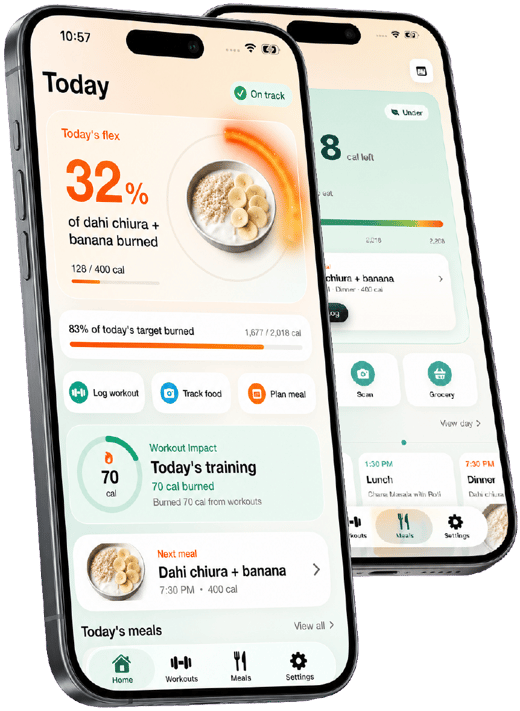
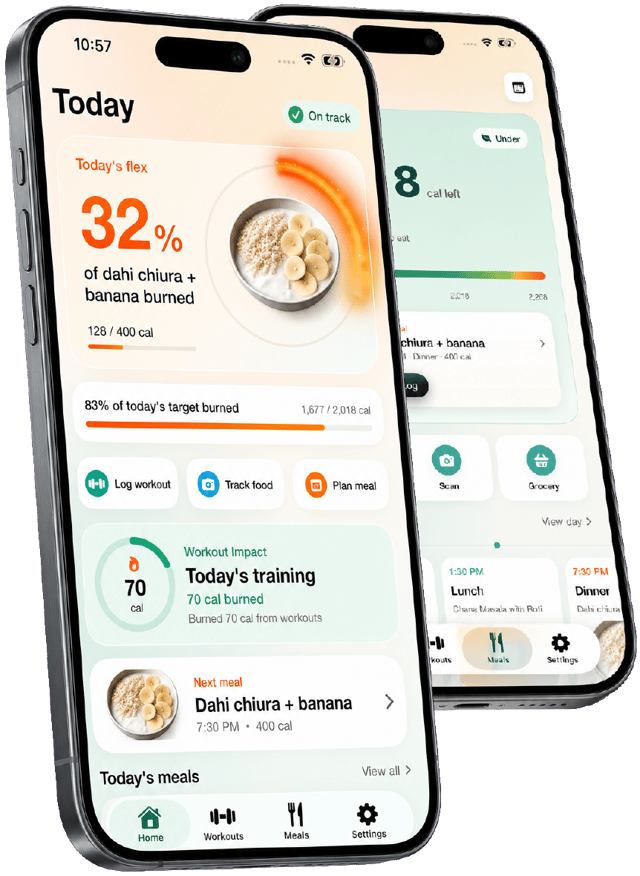
The burn bar shows how much of your day's calorie target a workout and your steps have covered, keeping training and eating linked.
Practical guidance
Tips for training through your 40s
Adjustments that make a workout routine for women over 40 more sustainable through a decade of shifting hormones.
- 01 Make strength training the priority
Two to three sessions a week, kept consistent, matter more for long-term muscle and bone than any cardio-only routine.
- 02 Track energy alongside performance
Noticing that certain weeks feel harder helps you tell normal fluctuation from something worth discussing with a doctor.
- 03 Protect sleep as part of the plan
Recovery depends on sleep as much as nutrition — a short walk or wind-down routine can help on disrupted-sleep weeks.
- 04 Increase protein gradually
Slightly higher protein intake supports muscle maintenance as natural muscle-building slows through this decade.
- 05 Don't abandon training on a hard week
Scaling a session back beats skipping it entirely — some stimulus keeps the habit and the muscle intact.
- 06 Revisit your plan every few months
As strength builds, a plan that felt hard in month one should get updated rather than repeated indefinitely.

Build the plan around your week
Build my workout plan Tell Burnplate your days, equipment and level and it builds a progressive workout plan, logs every session, and connects what you burn to what you eat.
Questions
Workout planner for women over 40: FAQ
What is a good workout routine for women over 40?
A strength-focused plan three to four times a week, built around compound lifts like squats, deadlifts, presses and rows, with cardio layered in, covers the muscle, bone and metabolic changes that begin in this decade. Consistency matters more than intensity.
Does perimenopause affect exercise performance?
It can. Fluctuating hormones during perimenopause, which often starts in the 40s, affect energy, sleep and recovery, which means some training weeks will feel harder than others for no obvious reason. Scaling volume on those weeks rather than pushing through is usually the better call.
Why is strength training recommended in your 40s specifically?
Muscle mass declines gradually with age, and building a stronger base in your 40s creates a buffer before the faster muscle and bone loss that often follows menopause. Strength trained now has a compounding benefit over the next two decades.
How does sleep affect a workout plan for women over 40?
Disrupted sleep, common during perimenopause, directly reduces how well the body recovers between sessions. A workout plan that can flex — trimming volume on poor-sleep weeks rather than forcing the same intensity — holds up better over time.
Can strength training help with weight changes in your 40s?
It helps more than cardio alone. Resistance training preserves and builds muscle, which supports resting metabolic rate as hormonal shifts start to naturally lower it. Pairing that with adequate protein tends to work better than cutting calories aggressively.
How much cardio should be paired with strength training in your 40s?
Around 150 minutes of moderate cardio a week alongside two to three strength sessions is a reasonable default for general health. Strength training should remain the priority for muscle and bone, with cardio supporting heart health alongside it.
