Weight-bearing exercise — walking, stair climbing, resistance training — stresses bone in ways that can help maintain or slow the loss of density, similar to how muscle responds to training.
Why it's different
Why osteoporosis needs a specific training approach
A standard strength program doesn't account for reduced bone density or the fall risk that comes with it. An osteoporosis-conscious plan gets the loading benefits of weight-bearing and resistance training while avoiding the specific movements most likely to cause a fracture.
2–3×/week resistance training sessions most bone-health guidelines recommend to stimulate density
30 min daily weight-bearing activity (walking counts) commonly recommended for bone and balance health
1.2–1.5 g/kg protein per kilogram of bodyweight supports bone matrix and the muscle that protects it
Most osteoporotic fractures happen from a fall. Balance and lower-body strength work reduces fall risk directly, which is often as protective as the bone-loading effect itself.
Movements that combine forward bending with twisting — like a toe-touch with rotation — are linked to vertebral compression fractures in people with low bone density and are generally avoided.
Bone remodels slowly. Regular moderate loading sustained over months and years does more for density than occasional intense sessions, especially given the higher injury stakes of pushing too hard.
What it looks like
A sample week for osteoporosis
A three-day plan combining weight-bearing cardio, resistance training and balance work.
Example week
3–4 Days/week30–40 min Session lengthBeginner to intermediate LevelDumbbells, resistance band, sturdy chair Equipment
Monday Resistance training Bodyweight or dumbbell squat 3×10 · Seated row (band) 3×12 · Standing hip abduction 3×12 · Heel raise 3×15
Tuesday Weight-bearing cardio Brisk walk 30 min, upright posture, no forward bending
Wednesday Balance training Single-leg stand (hold chair if needed) 3×20s per side · Heel-to-toe walk 3×10 steps · Sit-to-stand 3×10
Thursday Rest Gentle stretching, no spinal twisting
Friday Resistance training Chest press (dumbbell) 3×10 · Standing row 3×12 · Step-up (low step) 3×10 · Wall push-up 3×12
Saturday Weight-bearing cardio Walk or stair climbing, 25–30 min
Sunday Rest Full recovery day
How Burnplate handles it
How Burnplate supports an osteoporosis exercise plan
Burnplate isn't a bone-density device — it builds the training structure your care team's guidance runs on top of.
A plan built around your equipment and level
Tell Burnplate your days per week and what you have available, and it builds a weight-bearing and resistance plan around that.
Session logging for consistency
Log each session's sets and reps — bone health depends on sustained consistency over months, and the log makes that trend visible.
Protein targets that support bone and muscle
Burnplate sets protein targets from your body and goal, supporting both the bone matrix and the muscle that protects joints and reduces fall risk.
The burn bar keeps weight-bearing activity visible
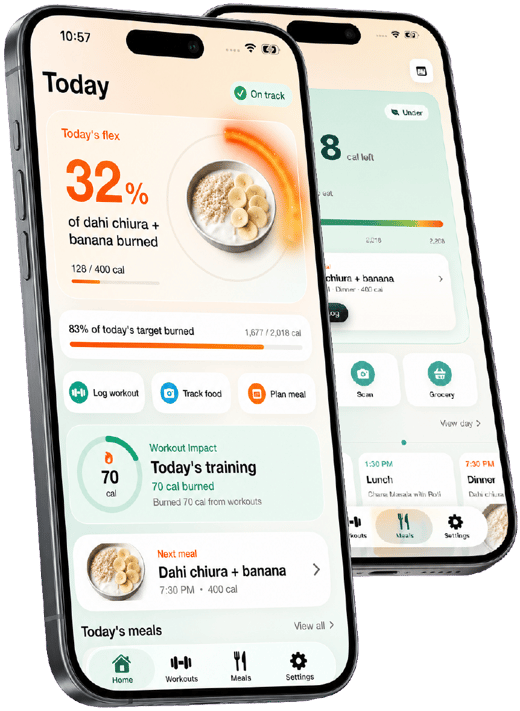
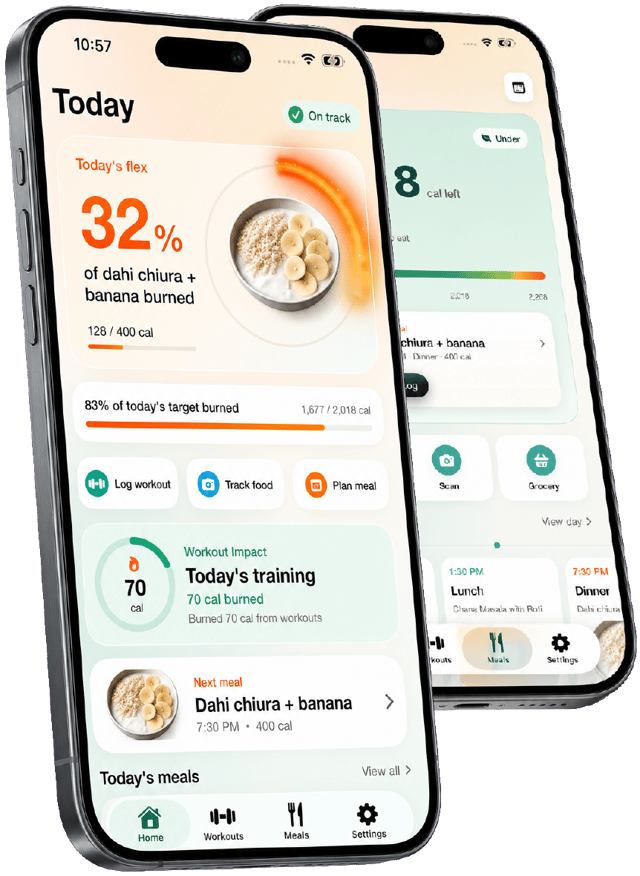
A walk or a resistance session still burns real calories — the burn bar shows how much of your day's food it covered.
Practical guidance
Tips for exercising with osteoporosis
Practical habits that keep a bone-health routine safe and effective.
- 01 Avoid forward bending with twisting
Toe touches, sit-ups and golf-swing-style rotations under load are the movements most linked to vertebral fractures — skip or modify them.
- 02 Keep posture upright during cardio
Walking or climbing stairs with a tall, neutral spine gets the weight-bearing benefit without the flexion risk.
- 03 Prioritize balance work, not just strength
Even a few minutes of single-leg standing or heel-to-toe walking a day meaningfully reduces fall risk over time.
- 04 Use a chair or wall for support early on
There's no downside to holding support during balance exercises while building confidence and stability.
- 05 Get a bone density baseline
A DEXA scan result helps a clinician or trainer tailor how aggressive loading can safely be for your specific case.
- 06 Check exercise safety with your care team first
Osteoporosis severity varies widely — confirm which movements are appropriate for your bone density before starting.

Build the plan around your week
Build my workout plan Tell Burnplate your days, equipment and level and it builds a progressive workout plan, logs every session, and connects what you burn to what you eat.
Questions
Workout planner for osteoporosis: FAQ
What is the best workout for osteoporosis?
A combination of weight-bearing cardio (like brisk walking or stair climbing), resistance training 2–3 times a week, and regular balance exercises is generally considered the most supportive approach. It builds bone-stimulating load and reduces fall risk at the same time.
What exercises should be avoided with osteoporosis?
High-impact activities, and movements combining spinal flexion with twisting — like toe touches or full sit-ups — are usually avoided because they're linked to vertebral compression fractures in people with low bone density. A clinician can confirm what's appropriate for your specific bone density.
Can exercise reverse osteoporosis?
Exercise is more effective at slowing bone loss and, in some cases, modestly improving density than at reversing significant loss on its own. It's typically used alongside medical treatment and nutrition, not as a replacement for either.
Is walking enough exercise for osteoporosis?
Walking helps as weight-bearing activity but is usually not enough on its own — most guidance also recommends resistance training, since muscle-pulling forces on bone provide a different stimulus than walking alone, plus balance work to reduce fall risk.
How often should someone with osteoporosis exercise?
Most guidance suggests weight-bearing activity most days of the week, resistance training 2–3 times a week, and balance exercises several times a week. Consistency over months matters more than any single intense session, given how slowly bone remodels.
Can Burnplate build an exercise plan for osteoporosis?
Yes. Tell Burnplate your equipment, level and days per week, and it builds a weight-bearing and resistance plan, then logs your sessions so you can track consistency. It doesn't replace guidance from your doctor about which movements are safe for your bone density.
