Falling estrogen after menopause shifts fat storage toward the abdomen and accelerates bone loss, which is why calcium, vitamin D and muscle-protecting protein all step up at once.
Why it's different
Why a meal plan for women over 50 needs its own targets
Menopause changes more than hot flashes — it changes fat distribution, bone density and how efficiently the body holds onto muscle. A plan that doesn't account for that is just a smaller version of a plan built for a different body.
1,200 mg daily calcium target after 50, up from 1,000 mg before menopause
1.1 g/kg protein target to help offset the muscle loss that speeds up after menopause
600 IU typical vitamin D target for women over 50 to support bone density
Age-related muscle loss speeds up around menopause; the protein target moves from the general adult range toward 1.0 to 1.2 g/kg to help offset it.
Calorie needs typically fall somewhat with age and lower muscle mass, which means every calorie has to work harder — nutrient density matters more than it did at 30.
Disrupted sleep during perimenopause and menopause is commonly linked with more irregular hunger and cravings, which a flexible plan handles better than a rigid one.
What it looks like
A sample day around 1,700 calories
Calcium and protein worked into every meal, with a modest deficit for anyone whose goal is fat loss rather than maintenance.
Example day on the plan
~1,700 Calories85–95 g Protein1,200 mg CalciumDaily source Vitamin D
7:30 AM Greek yogurt with flax and berriesPlain Greek yogurt, ground flax, mixed berries 340 kcal
10:30 AM Cheese and whole-grain crackersA calcium-forward mid-morning snack 220 kcal
1:00 PM Salmon salad with chickpeasSalmon, leafy greens, chickpeas, olive oil 460 kcal
3:30 PM Cottage cheese and pearA light, protein-forward afternoon snack 200 kcal
6:30 PM Chicken, quinoa, roasted vegetablesChicken breast, quinoa, roasted seasonal vegetables 480 kcal
Smart swaps
Skipping dairy out of habit Yogurt, milk or a fortified alternativeAn easy, repeatable way to hit the higher post-menopause calcium target without a supplement
Cardio as the only exercise 2–3 strength sessions plus cardioResistance training is what actually preserves muscle and bone density during this transition; cardio alone doesn't
Low-fat everything, all the time Fatty fish and olive oil a few times a weekOmega-3s and healthy fats support cardiovascular changes that become more common after menopause
Alcohol as the evening wind-down Most nights alcohol-freeAlcohol can worsen hot flashes and sleep quality for many women in this transition, on top of adding calories
How Burnplate handles it
How Burnplate plans a week for women over 50
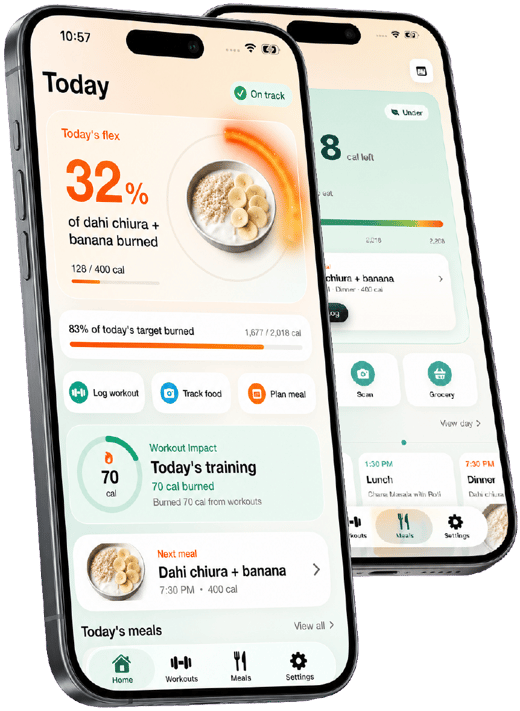
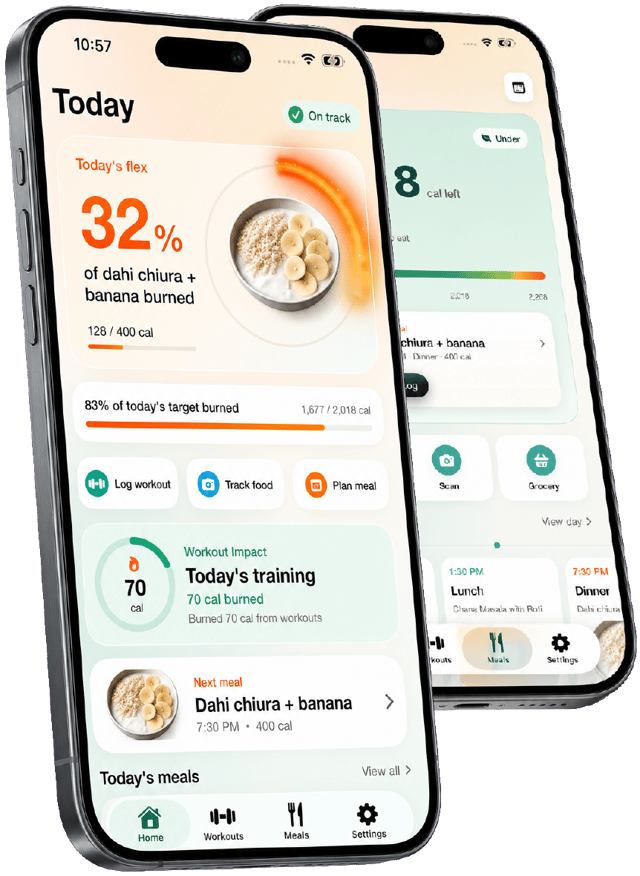
Burnplate tracks the nutrients that matter most at this life stage, not just a single calorie number.
Protein and calorie targets set together
Calorie and protein goals are tracked side by side, so the nutrient that matters most here doesn't get lost in a single number.
Photo logging for an already busy routine
Fast enough to keep up with the meals you already make, without adding another chore.
A 7-day plan sized to a lower calorie need
The AI meal plan adjusts to a modest deficit or maintenance target without dropping protein or calcium to get there.
Strength workouts built into the same app
The workout planner includes resistance training appropriate to level, which pairs directly with the higher protein target.
Practical guidance
Meal-planning tips for women over 50
Adjustments that account for what actually changes after menopause, not what worked a decade ago.
- 01 Recalculate your target, don't reuse
Lower muscle mass and activity usually mean a real calorie need below what worked a decade or two ago.
- 02 Protein at every meal, not just dinner
20–30 g per meal is easier to hit consistently than one large serving at night.
- 03 Make calcium a daily habit
Dairy, fortified plant milk, canned salmon with bones, or leafy greens most days.
- 04 Add resistance training if it's missing
Two to three sessions a week is enough to meaningfully slow muscle and bone loss.
- 05 Watch alcohol's effect on sleep
Cutting back is one of the more reliably effective changes women report in this transition.
- 06 Get vitamin D checked
Many women over 50 run low regardless of diet; a blood test settles whether food alone is enough.

Get the week planned in one tap
Build my meal plan Burnplate builds a 7-day meal plan around your calories, protein and food preferences, writes the grocery list, and lets you swap any meal you don't feel like.
Questions
Meal planner for women over 50: FAQ
How many calories should a woman over 50 eat?
It varies with size and activity, but calorie needs typically fall somewhat after 50 as muscle mass and activity decline. Rather than guessing, calculating a target from your current body and goal is more reliable than reusing a number from your 30s or 40s.
How much protein do women over 50 need?
A common range is 1.0 to 1.2 grams per kilogram of body weight, above the general adult minimum, to help offset the muscle loss that speeds up around menopause. Spreading it across meals helps more than one large serving at dinner.
Why does calcium need to go up after menopause?
Estrogen helps protect bone density, so falling estrogen after menopause speeds up bone loss. The recommended calcium target rises to about 1,200 mg a day after 50, up from 1,000 mg before menopause, to help offset that.
Is it harder to lose weight after menopause?
Many women find it takes more deliberate effort, largely because calorie needs drop with lower muscle mass and activity. A modest deficit combined with higher protein and resistance training tends to work better than calorie-cutting alone.
Can a meal planner app work for menopause-related weight changes?
Yes — Burnplate can set a calorie and protein target that reflects a lower calorie need without shortchanging protein, calcium or fiber, and build a week of meals around it with a grocery list.
Do women over 50 need a vitamin D supplement?
Many do, since vitamin D is hard to get from food alone and skin production declines with age. A blood test is the most reliable way to know whether diet and sun exposure are enough or whether a supplement makes sense for you.
