The first trimester needs almost no extra calories for most people; the second adds roughly 340 a day and the third roughly 450. A flat calorie target set once at the start misses both ends of the pregnancy.
Why it's different
Why a pregnancy meal plan is different
A generic weight-loss or maintenance plan optimizes calories alone. Pregnancy needs a plan that tracks calories, protein and a handful of specific micronutrients at once — and that changes as the trimesters change.
+340 kcal extra daily calories typical in the second trimester, per ACOG guidance
71 g daily protein target in pregnancy, about 25 g above pre-pregnancy needs
27 mg daily iron target in pregnancy — nearly double the non-pregnant recommendation
Folate, iron, choline and DHA support fetal development directly, and gaps here don't show up on a scale the way a calorie shortfall does. A plan built only around calories can look fine and still miss these.
First-trimester nausea can make eating anything feel hard; third-trimester heartburn and a compressed stomach make large meals uncomfortable. The same rigid plan rarely survives both.
Certain fish, unpasteurized foods and undercooked meat carry real risks in pregnancy that don't apply otherwise, so the swaps matter as much as the calorie count.
What it looks like
A sample day in the third trimester
Around 2,300 calories with iron- or folate-rich foods paired with vitamin C or protein at nearly every meal — adjust to your own trimester and your clinician's targets.
Example day on the plan
~2,300 Calories75–80 g Protein27 mg Iron600 mcg Folate
7:00 AM Fortified oatmeal bowlOats, milk, walnuts, banana, chia seeds 480 kcal
10:00 AM Greek yogurt and orangeVitamin C alongside protein and calcium to help iron absorb later 220 kcal
12:30 PM Spinach and lentil salad with chickenChicken, lentils, spinach, olive oil dressing 520 kcal
3:30 PM Cheese, crackers, dried apricotsA folate and iron-friendly afternoon snack 260 kcal
6:30 PM Salmon, sweet potato, broccoliSalmon for DHA, broccoli for folate and fiber 560 kcal
8:30 PM Milk and a few almondsA calcium top-up before bed 260 kcal
Smart swaps
Cold deli turkey sandwich Freshly cooked or steaming-hot deli meatCold deli meat carries a listeria risk unless it's heated until steaming
Tuna steak or swordfish Salmon, shrimp or canned light tunaLower-mercury fish still deliver the DHA pregnancy needs without the mercury load
Three cups of coffee One cup, or a half-caff blendKeeping caffeine under roughly 200 mg a day is common guidance in pregnancy
Soft-serve or unpasteurized soft cheese Hard cheeses or clearly pasteurized soft cheeseUnpasteurized soft cheeses carry a listeria risk that pasteurized versions don't
How Burnplate handles it
How Burnplate plans a pregnancy week
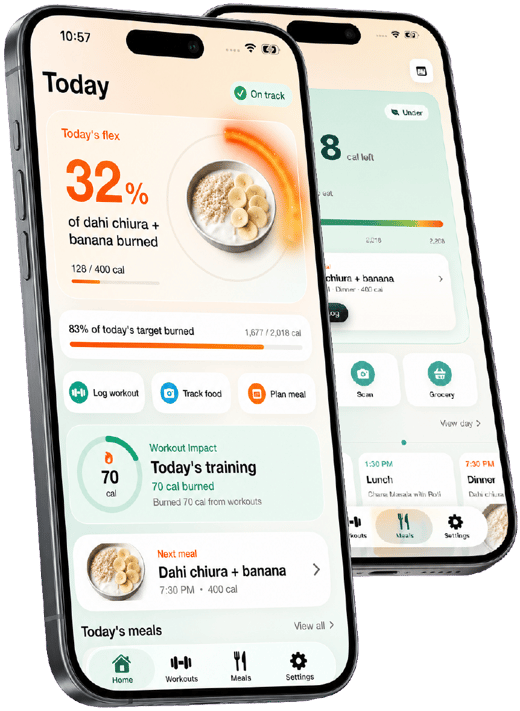
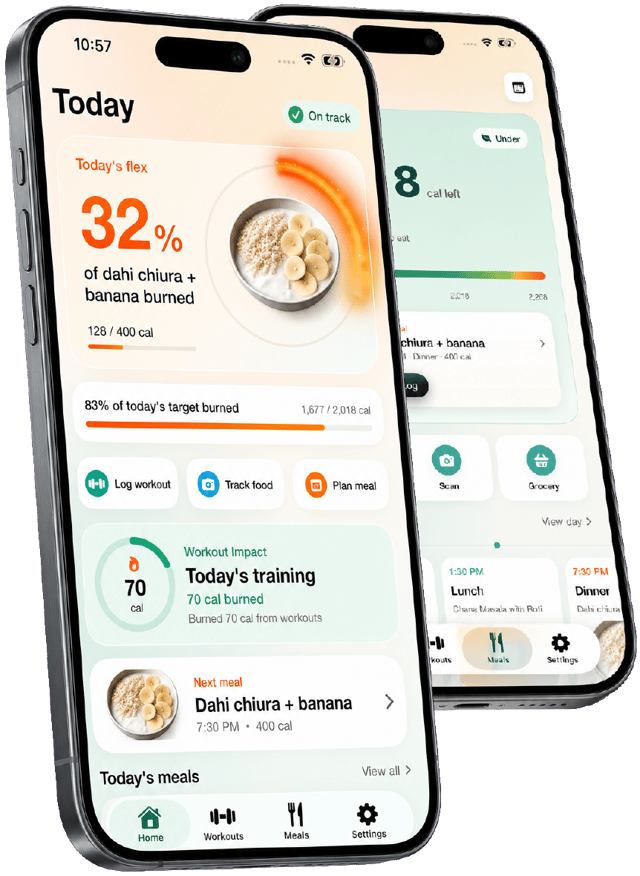
Burnplate isn't a medical device and doesn't replace your prenatal care team's targets. What it does is turn those targets into a week of real meals you don't have to think about on the days thinking is hard.
Targets that shift with your trimester
Update your calorie and protein target as pregnancy progresses instead of relying on one number set in week six.
Photo logging for a changing appetite
Snap what you're actually eating when cravings or aversions change day to day — fast enough to use even on a nauseous morning.
A 7-day plan built around your numbers
The AI meal plan works from your calorie and protein targets and food preferences, with a consolidated grocery list.
Groups keep a partner in the loop
A shared group space lets a partner see the week's plan and help with the groceries or the cooking.
Practical guidance
Meal-planning tips for pregnancy
Small structural habits that make eating well easier through nine months of changing appetite and energy.
- 01 Set targets with your clinician first
Burnplate's calculator is a starting point; your OB or midwife sets the real numbers, especially with twins or a high-risk pregnancy.
- 02 Pair iron with vitamin C
Eating plant iron sources alongside a vitamin C source roughly doubles how much of it your body absorbs.
- 03 Smaller meals ease nausea and heartburn
First-trimester nausea and third-trimester reflux both tend to respond to smaller, more frequent meals rather than three large ones.
- 04 Keep a safe-foods list handy
Know which fish, cheeses and deli items need extra care so you're not deciding from scratch every time.
- 05 Don't chase a deficit
Pregnancy isn't the time for calorie restriction, even with extra pre-pregnancy weight, unless your clinician directs it.
- 06 Reach for water before a snack
Increased blood volume and thirst can feel like hunger; hydration plus a small nutrient-dense snack solves most of it.

Get the week planned in one tap
Build my meal plan Burnplate builds a 7-day meal plan around your calories, protein and food preferences, writes the grocery list, and lets you swap any meal you don't feel like.
Questions
Meal planner for pregnancy: FAQ
How many calories should you eat during pregnancy?
Most people need close to their pre-pregnancy calories in the first trimester, then roughly 340 more a day in the second and 450 more in the third, per ACOG guidance. Actual needs vary with starting weight, activity and whether you're carrying multiples, so your clinician's number is the one to follow.
How much protein do you need during pregnancy?
A common target is around 71 grams a day, about 25 grams above typical pre-pregnancy needs. Protein supports the placenta and fetal tissue growth, and spreading it across three meals is easier to hit than trying to get it all at dinner.
Is it safe to diet or try to lose weight while pregnant?
Generally no. Pregnancy is not the time for intentional weight loss, even for people who entered pregnancy at a higher weight, unless a doctor specifically recommends it for a medical reason. The focus is nutrient adequacy, not restriction.
What foods should be avoided during pregnancy?
High-mercury fish, unpasteurized dairy and juice, undercooked meat and eggs, raw sprouts, cold deli meat that hasn't been reheated, and alcohol are the main ones. Most other foods are fine in normal amounts — the list is shorter than it feels.
Can a meal planner app help during pregnancy?
It can take the daily decision-making off your plate and keep protein and iron consistent even when your appetite isn't. Burnplate builds a weekly plan around your targets and writes the grocery list, but it doesn't replace your prenatal care team.
How much extra should you eat in the third trimester specifically?
Roughly 450 additional calories a day is the common guideline for the third trimester, up from about 340 in the second. With a smaller stomach capacity late in pregnancy, that often works out better as five or six smaller meals than three large ones.
