A 5K rewards raw speed; a marathon rewards fat-burning endurance. A 10K needs both — enough aerobic base to hold pace for 40-60 minutes, and enough speed work to make that pace feel sustainable rather than desperate.
Why it's different
Why a 10K needs its own plan
A 10K training plan for 10k isn't a shorter marathon plan or a longer 5K plan — it's a distinct blend of aerobic endurance and sustained speed, and most runners who wing it either run out of gas at 7K or never get close to their goal pace in training.
6–8 wks typical length of an intermediate 10K training block before race day
80/20 easy-to-hard running ratio most 10K plans use to build a base without burnout
5–7 g/kg carbohydrate per kg bodyweight per day many runners need on higher-mileage weeks
Most runners have never actually run at their 10K goal pace before race day. Interval and tempo sessions exist to teach your body — and your pacing judgment — what that effort should feel like at kilometer 2 versus kilometer 8.
The quality sessions only work if the easy days are genuinely easy. Runners who push every run end up too fatigued to hit their intervals, which is the single biggest reason 10K training stalls.
Running-specific strength — hips, glutes, calves — is what keeps a training block from ending early with a strain. It doesn't need to be complicated, but skipping it entirely raises injury risk as mileage climbs.
What it looks like
A sample week of a 10K training plan
A 4-day running week for an intermediate runner building toward a 10K, with one interval session, one tempo run and a long run.
Example week
4 runs Days/week25–70 min Session lengthIntermediate LevelRunning shoes Equipment
Monday Easy run + strides 35 min easy pace · 4x20s relaxed strides
Tuesday Intervals 6x800m at 10K goal pace · 2 min jog recovery between
Wednesday Rest or cross-train 30 min easy cycle or swim, or full rest
Thursday Tempo run 10 min easy warm-up · 20 min at threshold effort · 10 min cool-down
Friday Rest Full rest — this protects Saturday's long run
Saturday Long run 60–70 min easy, conversational pace throughout
Sunday Recovery run + strength 25 min easy jog · 15 min glute and core circuit
How Burnplate handles it
How Burnplate builds your 10K plan
Tell Burnplate your race date, current mileage and how many days you can run, and it builds the block around you.
A plan built around your race day
Burnplate's workout builder lays out your weekly runs and strength sessions based on your days available, current level and how many weeks are left until race day.
Every run logged, every trend visible
Log paces, distances and how each session felt, and Burnplate keeps a running history so you can see your fitness actually building week to week.
See what the long run earned you
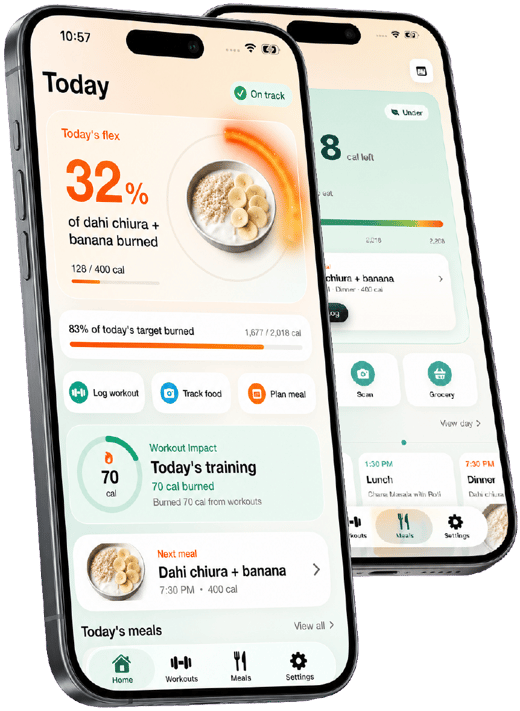
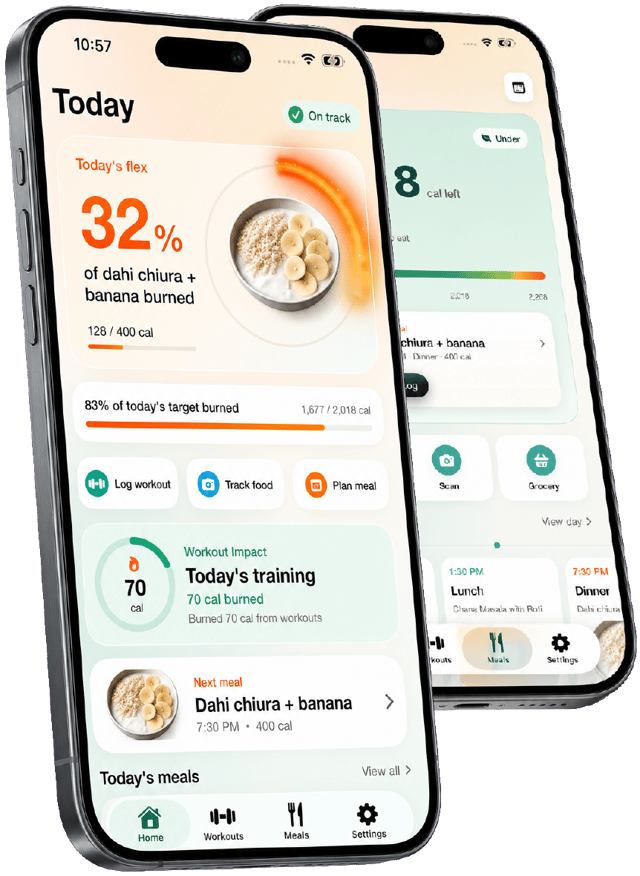
The burn bar shows how much of a meal your long run or interval session has burned off, connecting the training block to what's on your plate.
Calories and carbs that flex with mileage
Your daily targets adjust as your weekly mileage climbs, so a 60-minute long-run week doesn't leave you running on empty.
Practical guidance
Training tips for a strong 10K
Small habits that make the difference between a training block that sticks and one that fizzles out by week three.
- 01 Fuel before the long run
A small carb-forward snack 60-90 minutes before a run over 45 minutes prevents the mid-run fade that ruins good training days.
- 02 Keep easy runs honestly easy
If you can't hold a conversation, you're running your easy days too hard — and it's borrowing energy from the sessions that matter.
- 03 Rehearse race-day pace early
Practicing your goal pace for short reps weeks out makes it feel automatic instead of a guess on race morning.
- 04 Don't skip the strength circuit
Ten to fifteen minutes of glute and core work twice a week is enough to meaningfully cut injury risk over a training block.
- 05 Rotate your shoes if you can
Alternating between two pairs spreads the impact load differently and is linked to lower injury rates in runners who log real mileage.
- 06 Protect your sleep in peak weeks
The heaviest training weeks are exactly when your body needs the most recovery — sleep is where the fitness actually gets built.

Build the plan around your week
Build my workout plan Tell Burnplate your days, equipment and level and it builds a progressive workout plan, logs every session, and connects what you burn to what you eat.
Questions
Workout planner for running a 10K: FAQ
How long should a 10K training plan be?
Most intermediate runners do well with a 6-8 week block, though beginners building their first real mileage base may want 10-12 weeks. The right length depends on how close your current weekly mileage already is to what the plan needs.
What pace should I run my 10K training runs?
Easy runs and your long run should feel conversational — noticeably slower than race pace. Interval and tempo sessions are the only places you should be running at or near your 10K goal pace; running everything hard is the most common training mistake.
Do I need to run every day to train for a 10K?
No. Most effective 10K training plans use 3-5 running days a week with rest or cross-training in between. The recovery days are what let the hard sessions actually produce fitness instead of just fatigue.
How many calories does running a 10K burn?
It depends heavily on bodyweight and pace, but most runners burn somewhere around 500-800 calories completing a 10K. Training runs in the lead-up burn proportionally less based on distance and effort.
What should I eat before a 10K race?
A familiar, carb-forward meal 2-3 hours before the start, plus a small easily digestible snack about an hour out if you tend to run better with one. Race morning is not the time to try something new.
Can beginners use a 10K training plan?
Yes, but a beginner plan should build a walk-run aerobic base before adding interval work, and stretch over more weeks than an intermediate plan. Burnplate's workout builder adjusts the structure to your current level rather than assuming you're already running consistently.
