
Unlike adults, teen calorie and protein needs shift substantially with growth velocity and puberty stage, not just body size — which is why one flat number rarely fits a whole school year.
Why it's different
Why a teen meal plan is different
An adult weight-loss plan and a teen meal plan solve different problems. Teens are still building bone, muscle and, for many, lean mass at a pace that doesn't happen again — the plan has to support that, not fight it.
1,300 mg daily calcium target for ages 9–18, the highest of any life stage
15 mg daily iron target for teen girls once periods start, vs 11 mg for teen boys
2,400 kcal typical daily calories for an active teen — needs vary widely by growth stage
Roughly 90 percent of peak bone mass is built by the late teens, which is why calcium and vitamin D targets peak now rather than later in life.
Once periods start, iron losses roughly double the requirement compared with teen boys, and low iron in teen girls is common enough to be worth planning around deliberately.
Restrictive dieting during adolescence is linked with slower growth and higher risk of disordered eating patterns. The goal here is consistency and adequacy, not cutting.
What it looks like
A sample day for an active teenager
Around 2,400 calories for an active teen, with calcium and iron built into meals rather than left to chance.
Example day on the plan
~2,400 Calories75–85 g Protein1,300 mg Calcium11–15 mg Iron
7:00 AM Yogurt parfait with granolaGreek yogurt, granola, berries 420 kcal
10:00 AM Cheese toastWhole-grain toast, melted cheese 260 kcal
12:30 PM Turkey sandwich, milk, fruitTurkey sandwich, glass of milk, an apple 620 kcal
3:30 PM SmoothieMilk, banana, spinach, peanut butter 380 kcal
6:30 PM Beef stir-fry, rice, broccoliBeef, rice, broccoli, soy-ginger sauce 720 kcal
Smart swaps
Soda at lunch Milk or a calcium-fortified drinkTrades empty sugar calories for a direct hit on the calcium target that matters most right now
Skipping breakfast before school A quick portable option — yogurt, a wrap, a smoothieSkipped breakfast is one of the more common reasons teens run short on calories and focus by mid-morning
Chips as the only snack Chips plus cheese or nutsKeeps the snack but adds protein and calcium instead of just refined carbs
An energy drink before practice Fruit plus a carb-and-protein snackDelivers usable fuel for practice without the caffeine load most energy drinks carry
How Burnplate handles it
How Burnplate plans a teen's week
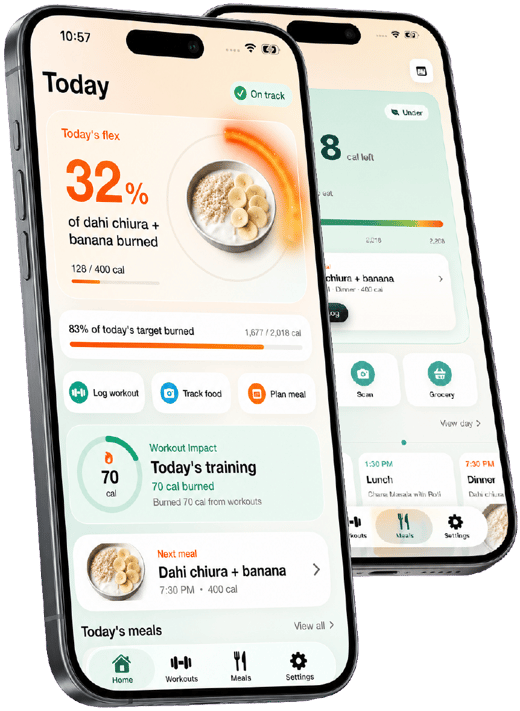
Burnplate can reflect a growing, active teen's real needs instead of defaulting to an adult weight-loss target.
Targets set for growth, not weight loss
The calculator can reflect an active, growing teen's higher calorie and protein needs rather than an adult deficit target.
Photo logging teens will actually use
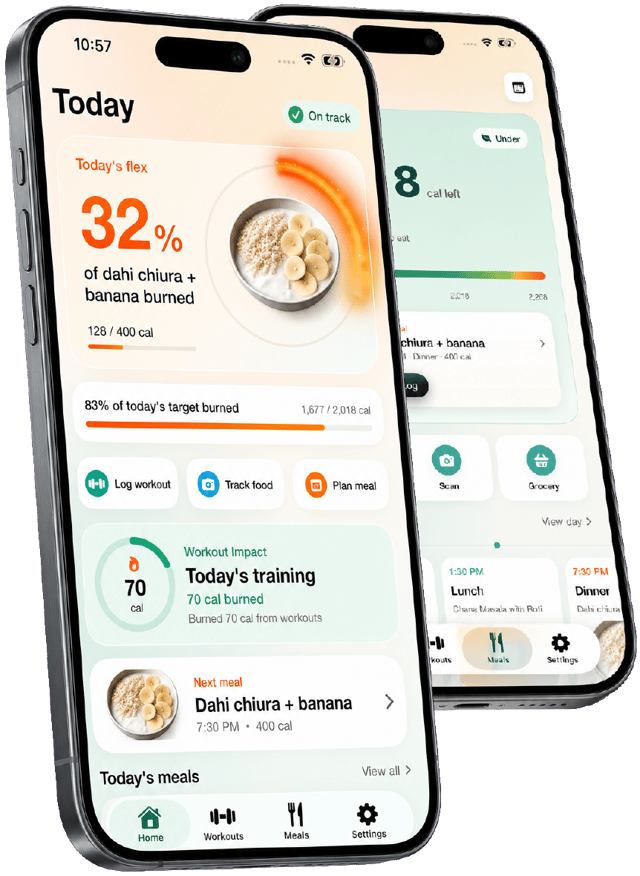
Snap-and-confirm logging fits how teens already use their phones, unlike a written food diary.
A 7-day plan that fits practice schedules
Meals timed around school and sports, with quick swaps for busy days.
Workout plans that match the sport
The workout builder scales to level and days per week, useful alongside a team sport or starting to train independently.
Practical guidance
Meal-planning tips for teens
Structural habits that support growth instead of working against it.
- 01 Build meals around adequacy
The goal at this age is hitting targets consistently, not undershooting them.
- 02 Keep a calcium source at most meals
Milk, yogurt, cheese or fortified alternatives are the simplest way to hit 1,300 mg without tracking closely.
- 03 Don't let sports drinks replace meals
They're for long, intense sessions, not a substitute for real food.
- 04 Prioritize iron once periods start
Red meat, beans and fortified cereals, ideally with a vitamin C source to help absorption.
- 05 Protect breakfast
Even a small one improves focus and makes the rest of the day's targets easier to hit.
- 06 Involve the teen in the plan
A meal plan a teen helped choose gets eaten; one imposed on them usually doesn't.

Get the week planned in one tap
Build my meal plan Burnplate builds a 7-day meal plan around your calories, protein and food preferences, writes the grocery list, and lets you swap any meal you don't feel like.
Questions
Meal planner for teenagers: FAQ
How many calories does a teenager need per day?
It varies widely — roughly 1,600 to 2,800 or more calories a day depending on age, sex, growth stage and activity level. An active teen playing a sport most days needs meaningfully more than a less active peer of the same age.
How much calcium do teens need and why?
About 1,300 mg a day for ages 9 to 18, the highest target of any life stage, because roughly 90 percent of peak bone mass is built before age 20. Milk, yogurt, cheese and fortified plant milks are the easiest ways to hit it.
Should teenagers diet or count calories?
Generally no, not in a restrictive sense. Restrictive dieting during adolescence is linked with slower growth and a higher risk of disordered eating. The focus should be balanced, adequate meals rather than cutting calories.
How much protein does a teen athlete need?
A common range is around 0.85 grams per kilogram of body weight for typical growth, with active teen athletes often doing well somewhat higher, closer to 1.2 to 1.6 g/kg, spread across the day.
Can a meal planner app work for a teenager?
Yes, especially fast logging like a photo of a plate, which fits how teens already use their phones. Burnplate can set targets for growth rather than weight loss and build a week of meals around a practice or school schedule.
Why do teen girls need more iron than teen boys?
Once menstruation starts, monthly blood loss roughly doubles a teen girl's iron requirement compared with a teen boy of the same age — about 15 mg a day versus 11 mg. Low iron is common enough in teen girls to be worth planning around directly.
