Fermentable Oligo-, Di-, Mono-saccharides And Polyols are short-chain carbs that resist digestion and ferment quickly in the gut. In a sensitive gut that fermentation produces gas and draws in water, causing the bloating and pain that define IBS.
Why it's different
Why an IBS diet is different
A typical healthy-eating plan pushes more fiber, beans and fruit. For IBS, some of the highest-fiber, most nutritious foods — onion, garlic, apples, wheat, certain beans — are also the most common trigger foods, which is why generic healthy-eating advice can backfire.
2–6 wks is the typical elimination phase before reintroducing FODMAP groups one at a time
~75% of people with IBS report meaningful symptom improvement on a properly followed low FODMAP plan
1 group/wk is the usual reintroduction pace — testing one FODMAP category at a time to find your actual triggers
The low FODMAP method removes all high-FODMAP foods for a few weeks, then reintroduces them one group at a time to identify your specific triggers. Staying on strict elimination long-term isn't the goal and can reduce beneficial gut bacteria.
One person's flare food — say, garlic — might be completely fine for someone else with IBS, while wheat or apples get them instead. That's why a generic IBS food list is a starting point, not a finished answer.
Large meals, eating too fast, and stress all lower the threshold at which a given FODMAP load causes symptoms — which is why the same food can be fine on a calm day and a problem on a stressful one.
What it looks like
A sample day on a low FODMAP meal plan
Around 1,900 calories using low FODMAP swaps for onion, garlic and wheat, with soluble fiber sources that tend to be gentler on IBS.
Example day on the plan
~1,900 caloriesmostly soluble fiberlow, per phase FODMAP levelmoderate, no skipping meal size
7:30 AM Oatmeal with strawberries½ cup oats, ½ cup strawberries, 1 tbsp peanut butter 380 kcal
10:30 AM Rice cakes and a banana2 rice cakes, 1 firm banana 220 kcal
12:30 PM Chicken, rice and low FODMAP vegetables130 g chicken, 1 cup rice, carrots, zucchini, garlic-infused oil 500 kcal
3:30 PM Lactose-free yogurt and blueberries¾ cup lactose-free yogurt, ½ cup blueberries 200 kcal
6:30 PM Baked salmon, quinoa and spinach140 g salmon, ½ cup quinoa, sautéed spinach, herbs 520 kcal
8:30 PM Handful of walnuts20 g walnuts 130 kcal
Smart swaps
Onion and garlic Garlic-infused oil and the green tops of scallionsThe FODMAPs in onion and garlic are water-soluble, so infused oil carries the flavor without the trigger.
Wheat bread or pasta Sourdough spelt, rice or oatsTraditional sourdough fermentation and gluten-free grains are typically far lower FODMAP than regular wheat.
Apples or mangoes Strawberries, blueberries or firm bananasThese fruits are naturally lower in the fermentable sugars that trigger symptoms in most FODMAP-sensitive people.
Regular milk or soft cheese Lactose-free dairy or hard cheeseLactose is a FODMAP; hard cheeses are naturally low in it and lactose-free products remove it entirely.
How Burnplate handles it
How Burnplate plans an IBS-friendly week
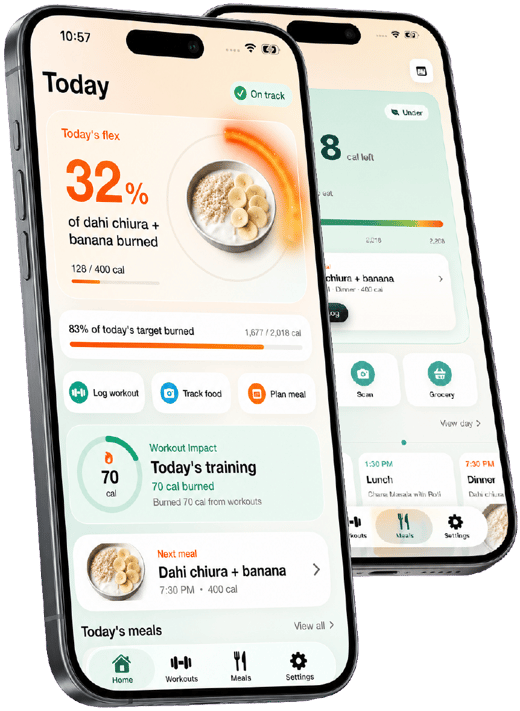
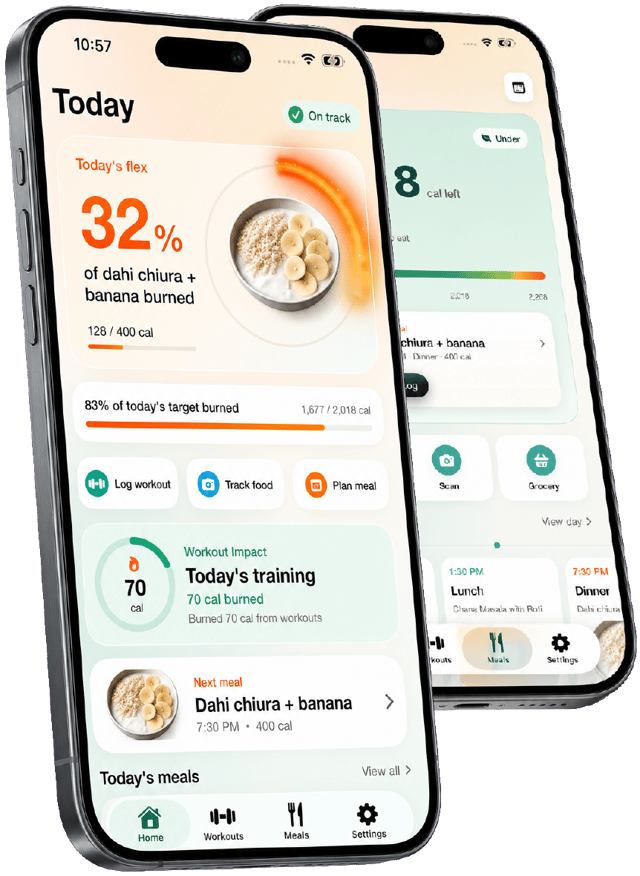
Burnplate isn't a medical device and doesn't diagnose IBS or run a formal FODMAP elimination protocol. What it does is turn a lower-FODMAP eating pattern into a week of meals once you know your triggers, or want a gentler starting point.
A 7-day plan built around your calories and preferences
Tell Burnplate your calorie target and food preferences, and it builds a week of meals — steer it toward lower-FODMAP staples like rice, chicken, firm bananas and lactose-free dairy.
Grocery list that removes the guesswork
Every plan comes with a consolidated shopping list, useful during reintroduction weeks when you're testing one FODMAP group and want the rest of the week to stay predictable.
Swap any meal, keep the day's structure
Found that a specific meal triggered symptoms? Swap it out and Burnplate keeps the day's calories and macros in range while you adjust the ingredients.
Photo logging for eating out
Restaurant meals are the hardest to control for FODMAPs. Logging what you actually ate — even imperfectly — helps you connect symptoms back to specific meals over time.
Practical guidance
Practical tips for eating with IBS
Habits that support the low FODMAP process and everyday symptom management.
- 01 Work through the phases in order
Don't stay in strict elimination indefinitely — reintroducing one FODMAP group at a time is how you find your actual triggers instead of guessing forever.
- 02 Eat at regular times
Skipping meals and then overeating later is itself a common IBS trigger, independent of what's on the plate.
- 03 Favor soluble fiber
Oats, carrots, strawberries and psyllium tend to be gentler than insoluble fiber like wheat bran or raw cruciferous vegetables for many people with IBS.
- 04 Eat slowly and don't overfill the stomach
Large meals and fast eating both increase gas and bloating even with otherwise well-tolerated foods.
- 05 Keep a simple symptom log
Noting what you ate and how you felt a few hours later is the fastest way to find your personal triggers, faster than any generic list.
- 06 Consider a dietitian for the reintroduction phase
A dietitian familiar with low FODMAP can help you reintroduce systematically instead of relying on trial and error alone.

Get the week planned in one tap
Build my meal plan Burnplate builds a 7-day meal plan around your calories, protein and food preferences, writes the grocery list, and lets you swap any meal you don't feel like.
Questions
Meal planner for IBS: FAQ
What is the best diet for IBS?
The low FODMAP diet has the strongest evidence, done in three phases: eliminate high-FODMAP foods for a few weeks, reintroduce them one group at a time, then settle on your personal list of triggers and tolerances. It's not meant to be a strict diet forever.
What is a low FODMAP food list?
Low FODMAP foods include rice, oats, firm bananas, strawberries, carrots, zucchini, chicken, eggs, hard cheese and lactose-free dairy. High FODMAP foods to limit during elimination include onion, garlic, wheat, apples, mangoes, regular milk and many beans and lentils.
Is a low FODMAP meal plan the same as gluten-free?
No, though they overlap. Low FODMAP limits wheat because of its fermentable carbs (fructans), not gluten specifically — some low FODMAP foods contain gluten, and some gluten-free foods are still high FODMAP. They're different frameworks that happen to share some foods.
How long should I stay on the elimination phase for IBS?
Most guidance suggests two to six weeks of elimination, just long enough to see if symptoms improve, before starting structured reintroduction. Staying in strict elimination longer than needed isn't necessary and can reduce the diversity of gut bacteria over time.
Can stress make IBS symptoms worse even on a good diet?
Yes. The gut and nervous system are closely linked, and stress can lower the threshold at which a given food triggers symptoms. Diet changes help most people, but managing stress and meal timing often matters alongside what's actually on the plate.
Can Burnplate help with a low FODMAP meal plan?
Burnplate builds a 7-day plan around your calorie target that you can steer toward lower-FODMAP staples, with a grocery list and easy meal swaps. It doesn't run a formal FODMAP protocol or diagnose IBS — that's best done with a doctor or dietitian.
