
With appetite suppressed, there often isn't room left for protein if a meal starts with something else. Structuring meals protein-first is the most reliable way to hit the higher target (1.2–1.6 g/kg) that protects muscle during rapid weight loss.
Why it's different
Why a GLP-1 diet plan is different
Every other diet plan starts by asking how to eat less. GLP-1 medications already answer that question for you — appetite drops sharply and food volume shrinks fast. The real problem becomes making a much smaller amount of food count.
1.2–1.6 g/kg protein per day is the priority target — the single biggest lever against losing muscle while eating much less
25–30% of weight lost on GLP-1 medications without resistance training and adequate protein can come from lean mass, not fat
8+ cups fluid a day helps offset the constipation and dehydration common with slowed digestion on these medications
Rapid weight loss without enough protein and resistance training can mean a significant share of the loss is lean mass rather than fat — which slows metabolism and undermines the long-term result.
GLP-1 medications delay stomach emptying, which is part of how they reduce appetite — but it also means fried, greasy or very large meals are far more likely to cause nausea than they used to be.
Eating a third less food than before makes it easier to fall short on fiber, vitamins and minerals unless what you do eat is chosen deliberately rather than just whatever appetite allows.
What it looks like
A sample day on a GLP-1 meal plan
Around 1,300 calories in smaller, protein-first meals — lower in fat and volume than a typical day to work with slowed digestion and reduced appetite.
Example day on the plan
~1,300 calories90 g+ protein3 small + 1 snack meals/day8+ cups fluids
7:30 AM Cottage cheese and berries½ cup cottage cheese, ⅓ cup berries 160 kcal
10:00 AM Protein shake, half portion½ scoop protein powder, water or milk 100 kcal
12:30 PM Grilled chicken and steamed vegetables100 g chicken, small portion broccoli and carrots 280 kcal
3:00 PM Greek yogurt¾ cup plain Greek yogurt 140 kcal
6:00 PM Baked fish and a small potato110 g white fish, 1 small baked potato, side salad 340 kcal
8:00 PM A few crackers and hummus4 crackers, 2 tbsp hummus 150 kcal
Smart swaps
Fried or greasy food Grilled, baked or steamed preparationsLower-fat cooking methods are far less likely to trigger nausea when digestion is already slowed.
A carb-heavy plate Protein first, then vegetables, carbs lastWith limited appetite, eating protein first ensures it isn't crowded out by lower-priority calories.
Large infrequent meals Smaller meals more oftenMatches reduced stomach capacity and appetite better than trying to force three normal-sized meals.
Plain water only Water plus electrolytes if intake is lowLower food and fluid volume overall makes it easier to under-hydrate without noticing.
How Burnplate handles it
How Burnplate plans a GLP-1-friendly week
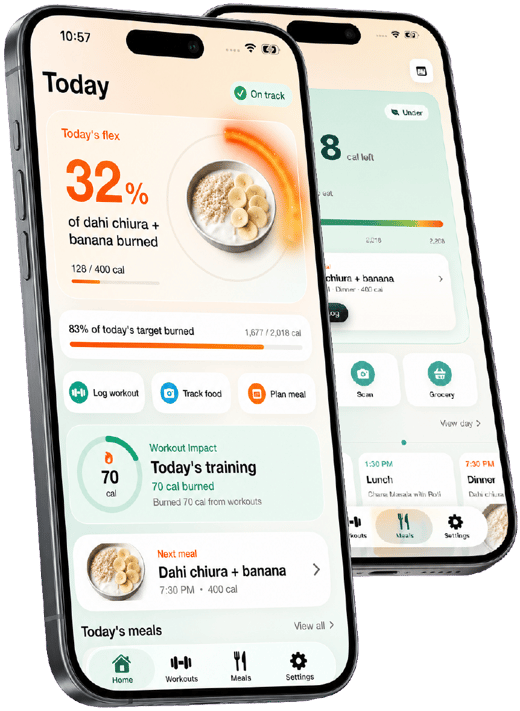
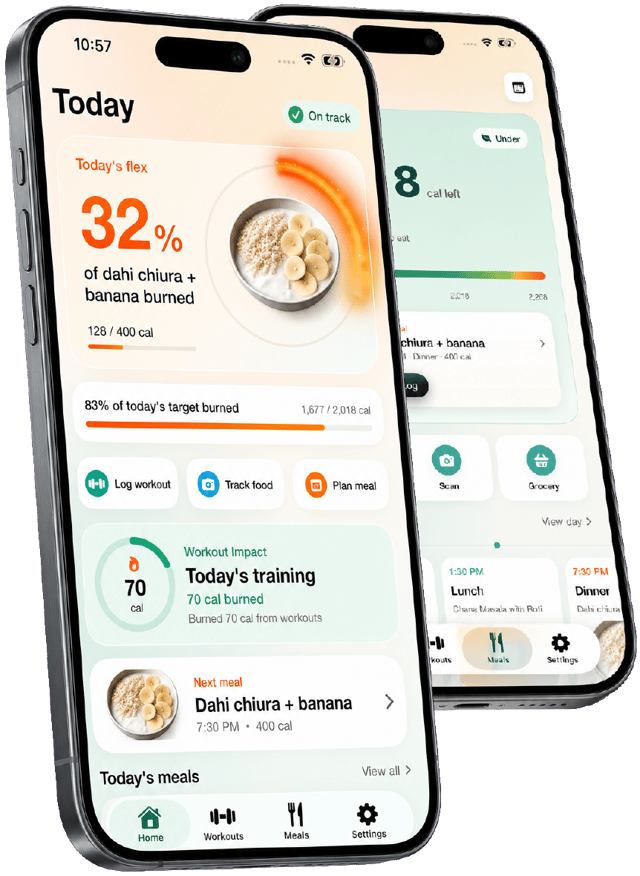
Burnplate isn't a medical device and doesn't manage GLP-1 dosing or side effects. What it does is make a much smaller amount of food actually meet your protein and nutrient needs, and log it in seconds when eating a full meal isn't realistic.
Protein-first calorie and macro targets
Burnplate sets targets from your body and goal, and a GLP-1-appropriate plan weights protein heavily even as total calories drop, so muscle isn't the thing quietly being lost.
Photo logging for small, irregular meals
When appetite is unpredictable, a few bites here and there is often the reality. Snap what you actually eat, even in small amounts, and Burnplate logs it accurately instead of requiring a full traditional meal to count.
A 7-day plan sized to less food
Tell Burnplate your calorie target and it builds a week of smaller, protein-forward meals with a grocery list, instead of portions built for a pre-medication appetite.
Workout planning to protect what protein alone can't
Burnplate's workout builder creates a plan around your level and equipment — pairing resistance training with the higher protein target is what actually preserves muscle during rapid weight loss.
Practical guidance
Practical tips for eating well on a GLP-1 medication
Habits that matter most when appetite and food volume are both dramatically reduced.
- 01 Eat protein before anything else on the plate
If appetite runs out halfway through a meal, you want it to run out after the protein, not before.
- 02 Keep meals small and lower in fat
Large or greasy meals are the most common trigger for nausea on these medications — smaller, simpler plates are usually better tolerated.
- 03 Sip fluids throughout the day, not all at once
Drinking a lot of water at once alongside a smaller stomach capacity can cause discomfort — spread it out instead.
- 04 Don't skip resistance training
Two to three sessions a week is the difference between weight loss that's mostly fat and weight loss that eats into muscle.
- 05 Choose nutrient-dense food over empty calories
With less room for food overall, low-nutrition choices cost more than they used to — make the calories you do eat count.
- 06 Track even small amounts
Logging a partial meal or a few bites still matters for hitting protein and nutrient targets — don't skip logging just because a meal felt too small to count.

Get the week planned in one tap
Build my meal plan Burnplate builds a 7-day meal plan around your calories, protein and food preferences, writes the grocery list, and lets you swap any meal you don't feel like.
Questions
Meal planner for GLP-1 users: FAQ
What should I eat on a GLP-1 diet plan?
Lead every meal with protein — chicken, fish, eggs, Greek yogurt, cottage cheese or a protein shake — then add vegetables and a modest amount of carbs. Keep meals smaller and lower in fat than you're used to, since slowed digestion makes heavy meals more likely to cause nausea.
How much protein do I need on Ozempic or a similar medication?
Most guidance suggests 1.2–1.6 g of protein per kilogram of body weight, higher than general adult recommendations, because rapid weight loss without enough protein risks losing muscle along with fat. Structuring meals protein-first makes this target realistic on a much smaller appetite.
Why do fatty or fried foods cause problems on GLP-1 medications?
These medications slow stomach emptying as part of how they work. Fatty, greasy or very large meals sit in the stomach longer than before, which is the most common cause of the nausea people report — lighter, lower-fat meals are typically far better tolerated.
Will I lose muscle on a GLP-1 medication?
Some muscle loss is common with any rapid weight loss, but it's not inevitable at a high rate. Adequate protein (1.2–1.6 g/kg) and resistance training two to three times a week substantially reduce how much of the loss comes from muscle versus fat.
Do I need supplements while on a GLP-1 medication?
Not automatically, but eating much less food makes it easier to fall short on fiber, vitamins and minerals. A multivitamin is reasonable for many people on these medications — ask your prescriber whether it fits your situation.
Can Burnplate help me eat right on a GLP-1 medication?
Burnplate sets protein-forward calorie targets from your body and goals, logs small or partial meals accurately from a photo, and builds a workout plan to protect muscle. It isn't a medical device and doesn't manage GLP-1 dosing or side effects — that stays with your prescriber.
