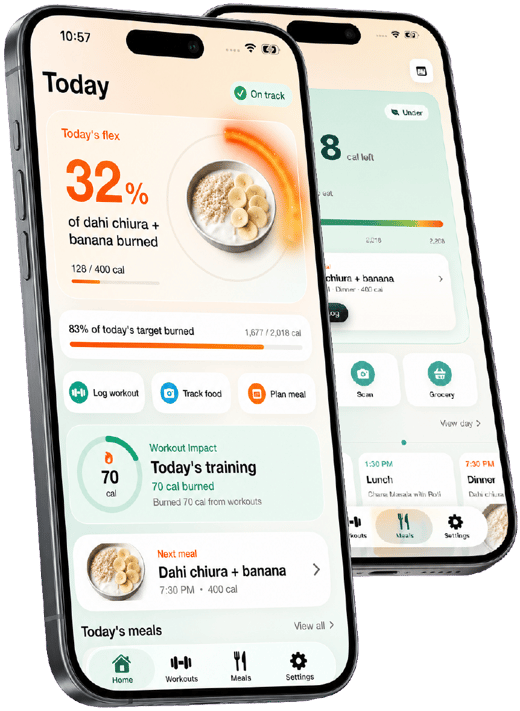

Total calories are often intentionally low in the months after surgery, but protein needs stay high to protect lean muscle while you lose weight quickly. Tracking that only shows a calorie total misses the number that matters most day to day.
Why it's different
Why bariatric tracking isn't regular calorie counting
A gastric sleeve or bypass changes stomach volume, not just intent. The tracking has to match a pouch that holds a few ounces, a nutrient absorption pattern that's changed, and a protein requirement that stays high even as total calories fall very low.
60–80 g protein per day is the common post-op target most bariatric programs set to protect muscle
2–4 oz a typical solid-food meal size months after surgery — a fraction of a pre-surgery plate
6×/day small meals or snacks many patients eat instead of 3 large ones, especially early on
A 2-tablespoon serving of scrambled egg doesn't fit neatly into apps built around cups and normal plates. Bariatric tracking needs to work in the small, precise portions a healing pouch can actually hold.
Liquid diet, pureed, soft food and then regular textures each carry different calorie and protein goals, usually set by your surgical team. A generic calorie target doesn't reflect where you are in that progression.
Most programs recommend not drinking fluids within 30 minutes of eating, so patients sip water separately through the day. Tracking needs to account for small, frequent food entries rather than three big meals.
What it looks like
A sample day at the soft-food to regular-food stage
Roughly 900–1,000 calories with protein prioritized first at every meal — a common pattern several months after surgery, once solid food has been reintroduced. Your surgical team's targets should always take priority over this example.
Example day
Daily targets
calories 900–1,000 set by your bariatric team based on your stage and progress
protein 60–80 g protected first, even when total calories are very low
fluids 48–64 oz sipped between meals, not with them
meals 5–6 small spread through the day instead of 3 large ones
A logged day
7:30 AM Scrambled egg + cottage cheese, 2 tbsp eachprotein-first, eaten slowly 115 kcal
9:30 AM Protein shake, half servingsipped over 15–20 minutes 80 kcal
12:00 PM Shredded chicken + soft-cooked veg, 3 tbspchewed thoroughly, no liquids with it 160 kcal
2:30 PM Greek yogurt, 1/3 cupsmooth texture, easy to tolerate 70 kcal
5:30 PM Flaked fish + mashed sweet potato, 1/4 cup eachsmall fork, stop at first fullness cue 180 kcal
7:30 PM Protein shake, half servingcloses the day's protein gap 80 kcal
How Burnplate handles it
How Burnplate handles bariatric-stage tracking
Burnplate isn't a bariatric program and doesn't set your stage or your targets — your surgical team does. What it does is make logging tiny, frequent, protein-first meals fast instead of frustrating.
Photo logging for small, mixed plates
Snap a photo of a few tablespoons of egg and cottage cheese, confirm what it found, and adjust the portion down to match what's actually on the plate — no forcing a tiny meal into a standard serving size.
Protein tracked alongside calories, not buried
Set a protein target your surgical team gives you and Burnplate shows daily progress toward it right next to calories, so protein isn't an afterthought when the calorie number is already very low.
Fast re-logging for repeat meals
Early recovery tends to mean the same few tolerated foods on repeat. Log a meal once and reuse it in seconds, which matters when eating itself already takes real effort and time.
Frequent small entries, not three big ones
Burnplate logs as many small meals and snacks a day as you actually eat, so a 5–6 meal pattern reads clearly instead of looking like constant snacking against a 3-meal template.
Practical guidance
Tracking tips for bariatric patients
Small habits that make logging sustainable at a stage where eating itself takes deliberate effort.
- 01 Log protein sources first
Enter the protein food before anything else on the plate — it's the number your surgical team is watching most closely.
- 02 Weigh or measure early on
A kitchen scale or measuring spoons for the first few months removes the guesswork that a photo alone can miss at these small volumes.
- 03 Track sips of protein shakes separately
Half-servings sipped over 20 minutes are common early on — log the amount actually finished, not the full label serving.
- 04 Don't skip logging just because a meal was tiny
A 2-tablespoon entry still counts toward the day's protein total — skipping small meals in the log undercounts real progress.
- 05 Revisit targets at each stage
Ask your program for updated calorie and protein targets at each follow-up and update them in the app so the numbers stay current.
- 06 Separate food and fluid entries
Logging water and shakes apart from solid food mirrors the eat-then-drink pattern most programs recommend and keeps the log easy to read.

Track it with a photo, not a search bar
Start tracking free Burnplate sets your calorie and macro targets, logs meals from a photo, and shows how much of each meal your workouts and steps have burned off.
Questions
Calorie tracker for bariatric patients: FAQ
How many calories should a bariatric patient eat per day?
It depends heavily on the stage of recovery and which surgery was performed — early post-op is often under 600 calories on a liquid or pureed diet, rising toward 900–1,200 as regular food returns. Your surgical or dietitian team sets the number for your stage; a calorie counter should track against that, not a generic target.
How much protein do I need after gastric sleeve or bypass?
Most bariatric programs target roughly 60–80 g of protein a day, sometimes higher, to protect muscle during rapid weight loss. Because total calories are low, protein has to come from dense, efficient sources like eggs, cottage cheese, fish and protein shakes rather than large portions of any single food.
Can a calorie tracker app work with such small portions?
Yes, as long as it lets you log and adjust portions in small units like tablespoons or ounces rather than cups and standard servings. Burnplate's photo logging lets you correct the portion down to match a 2- or 3-tablespoon meal, which is common in the months after surgery.
Is it normal to eat 5 or 6 small meals a day after surgery?
Yes — a reduced stomach pouch typically can't hold enough at once to meet daily protein and calorie needs in 3 meals, so many programs recommend 5–6 small meals or snacks. A tracker that logs frequent small entries clearly, rather than forcing a 3-meal structure, matches this pattern better.
Does Burnplate know my bariatric stage or set my targets?
No. Burnplate doesn't diagnose, stage or set bariatric-specific targets — those come from your surgeon or dietitian. What it does is let you enter the calorie and protein numbers they give you and track small, frequent meals against them clearly.
What should I do if I can't hit my protein target through food alone?
This is extremely common in the first months after surgery, which is why most programs include a protein shake or supplement in the daily plan. Log shakes the same way as food so the day's total protein reflects what you actually consumed, and raise any persistent gap with your care team.
