
Extra calories without a structured resistance program mostly become fat. The surplus is the raw material; training is what directs it toward muscle instead.
Why it's different
Why muscle gain is a training problem with a food requirement
Calories alone don't build muscle — progressive resistance training does that. But without enough calories and protein, even a well-designed program builds muscle far slower than it could, or not at all.
200 kcal a modest daily surplus that limits fat gain while building muscle
1.6–2.2g protein per kg bodyweight, the range shown to maximize muscle growth
20–40 g protein per meal, spaced every 3–4 hours to keep growth signals elevated
Muscle protein synthesis responds to protein arriving every few hours, not just a big number at the end of the day. Spreading 20–40 g across four to five meals uses the daily total more effectively than two large servings.
Even with perfect training and nutrition, most people can add roughly 0.25–0.5% of bodyweight in muscle per week as beginners, slowing further with experience. A surplus far beyond what supports that rate just adds fat.
What it looks like
A sample day for building muscle
Built around a maintenance estimate of roughly 2,600 calories with a modest surplus and protein spread evenly across the day.
Example day
Daily targets
Calories 2,800 kcal about 200 above maintenance — enough to build, not stack fat
Protein 165 g roughly 1.8 g/kg spread across four meals
Carbs 320 g fuels training volume and recovery between sessions
Fat 80 g supports hormone production without crowding out protein or carbs
A logged day
7:00 AM Eggs, oats, whole milk40 g protein to start the muscle-building day 650 kcal
12:00 PM Chicken, rice, veg, olive oilanother 40 g protein at lunch 720 kcal
3:30 PM Protein shake, rice cakes, peanut butteran easy 35 g between training and dinner 480 kcal
6:00 PM (post-lift) Whey shake, bananafast protein and carbs right after the session 300 kcal
8:00 PM Steak, potatoes, saladcloses the day near 165 g protein total 650 kcal
How Burnplate handles it
How Burnplate handles muscle gain
The food side and the training side are built to work off the same numbers, not two separate apps.
A workout planner that builds the program the surplus fuels
Tell Burnplate your days per week, equipment and level, and it builds a progressive resistance plan — the training that actually turns the surplus into muscle.
A calorie and protein target sized for lean gain
Burnplate calculates a modest surplus and a protein target from your body and goal, instead of a generic 'eat more' number.
Photo logging makes per-meal protein easy to check
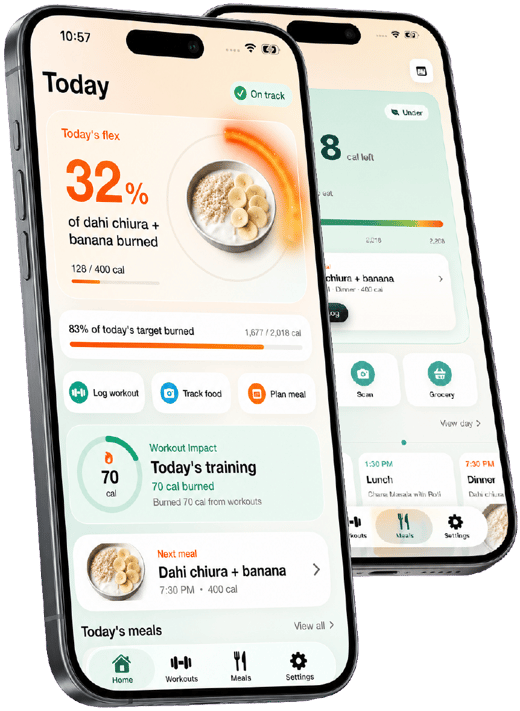
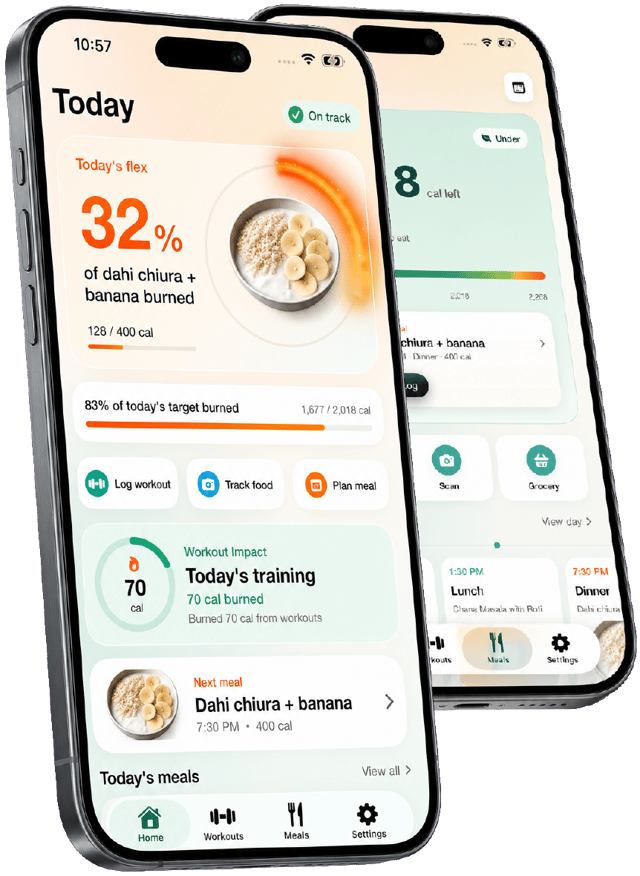
Snap a meal and see its protein count immediately, so you can tell at a glance whether a meal is pulling its weight toward the daily target.
Session logging tracks the progression that drives growth
Logging sets and reps each session builds a training history, so you can see the progressive overload that's the actual trigger for muscle growth.
Practical guidance
Tips for building muscle efficiently
Small adjustments that get more muscle out of the same surplus and training time.
- 01 Keep the surplus modest
150–300 calories above maintenance is enough for most people. Bigger surpluses mostly add fat, not extra muscle.
- 02 Prioritize protein at breakfast
A protein-light breakfast is the easiest meal to fix — start closer to 30–40 g instead of relying on dinner to catch up.
- 03 Track training, not just food
Muscle responds to progressive overload. If lifts aren't trending up over weeks, more food alone won't fix it.
- 04 Reassess every 4–6 weeks
As bodyweight and lifts increase, both the calorie surplus and protein target should be recalculated, not left static for months.
- 05 Sleep is part of the plan
Muscle repair happens largely during sleep; under-sleeping blunts the return on a well-tracked surplus and a good program.
- 06 Expect the scale to move slowly
Half a pound of real muscle gain a week is a strong pace. Faster weight gain is a sign the surplus is likely too large.

Track it with a photo, not a search bar
Start tracking free Burnplate sets your calorie and macro targets, logs meals from a photo, and shows how much of each meal your workouts and steps have burned off.
Questions
Calorie tracker for building muscle: FAQ
How many calories do I need to build muscle?
Most people build muscle effectively on a surplus of 200–300 calories above maintenance, paired with progressive resistance training. Larger surpluses don't build muscle meaningfully faster — they mostly add fat.
How much protein do I need to build muscle?
Research generally supports 1.6–2.2 g of protein per kg of bodyweight per day for maximizing muscle growth, spread across three to five meals rather than concentrated in one or two.
Can I build muscle without a calorie surplus?
Some muscle gain is possible at maintenance or even a small deficit, especially for beginners or people returning to training — this is often called body recomposition. It's slower than a dedicated surplus but comes with less fat gain.
How much muscle can I realistically gain per month?
Beginners can often gain 1–2 lb of muscle a month with consistent training and adequate protein; the rate slows significantly for intermediate and advanced lifters, sometimes to a pound every couple of months.
Does Burnplate build my workout plan too?
Yes. Burnplate's workout planner builds a progressive resistance program around your days per week, available equipment and experience level, and logs your sessions so you can track the strength gains driving muscle growth.
