Crunches repeatedly flex the spine — the same motion that often triggers pain. Planks, dead bugs and bird dogs train the core to resist motion instead, which is closer to what the spine needs during daily life.
Why it's different
Why back pain needs a specific training approach
A generic ab workout often loads the spine in exactly the position that aggravates it. A back-pain-conscious plan trains the same core and hip muscles from positions that support the spine instead of flexing it repeatedly.
2–3×/week core and hip strengthening sessions is a common range in back pain rehab programs
<48 hrs typical amount of true bed rest recommended for most non-specific low back pain — movement resumes fast
1.2–1.6 g/kg protein per kilogram of bodyweight that supports the muscle rebuilding around the spine
Weak glutes and hips often force the lower back to compensate during bending and lifting. Strengthening them redistributes that work away from the spine.
Extended bed rest weakens the muscles that support the spine and can prolong recovery. Most current guidance favors staying as active as pain allows, starting with gentle movement early.
A back that reacts to a new exercise isn't a sign to stop training altogether — it's a sign to scale that specific movement back and rebuild from a position that doesn't provoke it.
What it looks like
A sample week for back pain
A three-day routine focused on core stability and hip strength, avoiding heavy spinal flexion.
Example week
3 Days/week25–35 min Session lengthBeginner LevelMat, light resistance band Equipment
Monday Core stability Dead bug 3×10 per side · Bird dog 3×10 per side · Plank (knees or full) 3×20–30s · Glute bridge 3×15
Tuesday Rest or walking Brisk walk 20–30 min
Wednesday Hip and posterior chain Standing hip hinge (bodyweight) 3×10 · Band hip abduction 3×15 · Wall sit 3×20s · Cat-cow mobility 2×10
Thursday Rest Gentle stretching or full rest
Friday Core + light full body Side plank 3×20s per side · Bird dog 3×10 per side · Seated row (band) 3×15 · Glute bridge 3×15
Saturday Walking Easy 20–30 minute walk
Sunday Rest Full recovery day
How Burnplate handles it
How Burnplate supports a back pain workout plan
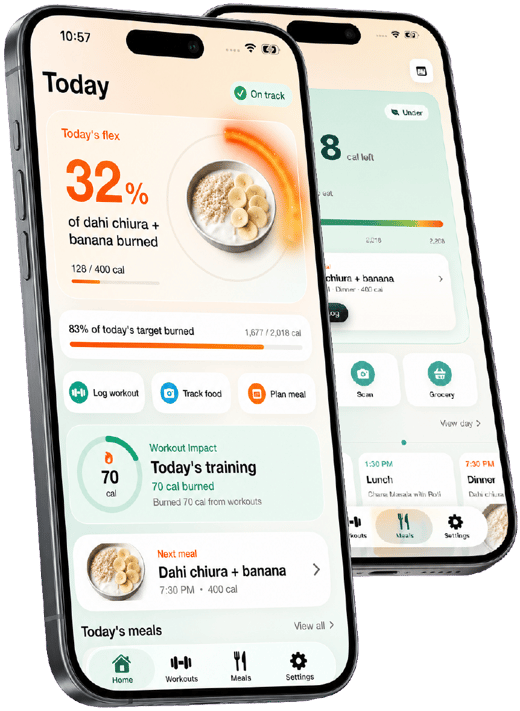
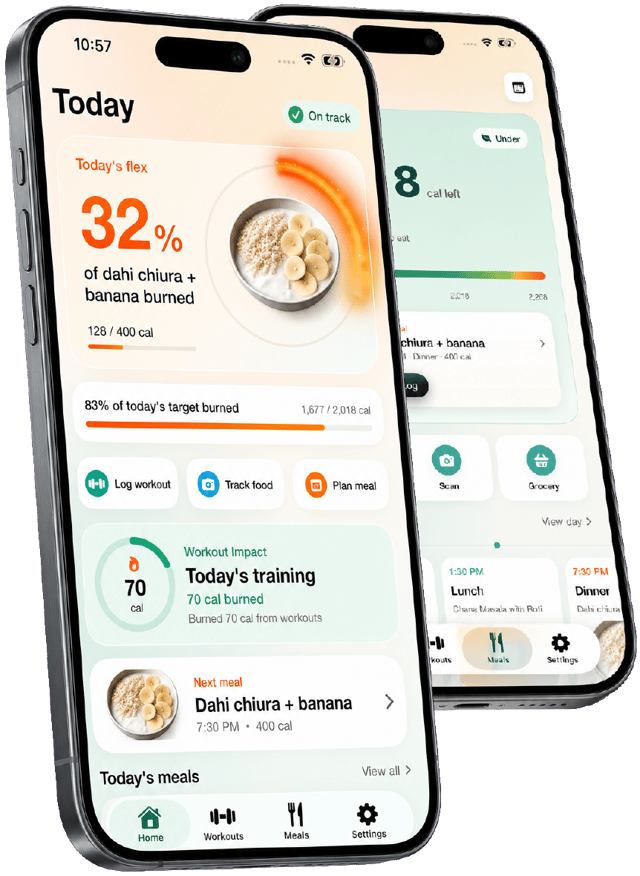
Burnplate builds a plan around your equipment and level, and logs sessions so you can see consistency build over time.
A plan built around your days and equipment
Tell Burnplate your days per week and what you have available, and it builds a core-and-hip-focused strength plan around that.
Session logging to track consistency
Log each session as you go — for back pain, showing up consistently matters more than any single workout, and the log makes that visible.
Calorie and protein targets that support recovery
Burnplate sets protein targets from your body and goal, supporting the muscle rebuilding that helps stabilize the spine.
The burn bar keeps movement visible
A walk or a core session still burns real calories — the burn bar shows how much of your day's food it covered, which keeps a gentler routine feeling worthwhile.
Practical guidance
Tips for training with back pain
Practical habits that keep a back-pain routine safe and effective.
- 01 Start smaller than feels necessary
Beginning with less volume than you think you need reduces the odds of a flare-up in the first week or two.
- 02 Walk daily if you can
Regular walking is one of the most consistently recommended activities for non-specific low back pain.
- 03 Avoid prolonged sitting
Long stretches of sitting often aggravate back pain more than movement does — break sitting up every 30–45 minutes.
- 04 Learn to hip hinge
Bending from the hips instead of rounding the lower back protects the spine during everyday lifting, not just during workouts.
- 05 Stop a movement that sharply worsens pain
Mild muscle fatigue is normal; a sharp increase in pain during a movement means stop and modify, not push through.
- 06 See a doctor for red-flag symptoms
Numbness, weakness, or pain radiating down a leg needs medical evaluation before continuing any exercise plan.

Build the plan around your week
Build my workout plan Tell Burnplate your days, equipment and level and it builds a progressive workout plan, logs every session, and connects what you burn to what you eat.
Questions
Workout planner for back pain: FAQ
What is the best workout for lower back pain?
For most non-specific low back pain, a routine built around core stability exercises like dead bugs, bird dogs and planks, plus hip and glute strengthening, is well supported. These train the spine's support system without repeatedly flexing it, which is the motion that often aggravates pain.
Should I rest or exercise with back pain?
Current guidance generally favors staying active over prolonged rest for non-specific low back pain. Brief rest of a day or two can help acute flare-ups, but extended bed rest tends to weaken supporting muscles and can slow recovery.
What exercises should I avoid with back pain?
Heavy spinal flexion movements like traditional sit-ups, and any exercise that produces sharp or radiating pain, are usually the ones to avoid or modify. Twisting under heavy load is also worth easing into carefully rather than starting at full intensity.
Can core exercises really help back pain?
Yes, for many people. A stronger core and hip complex share the load the spine used to bear alone, which for a lot of non-specific back pain reduces how often it flares up. It's not a guarantee, and persistent or severe pain still needs a clinical evaluation.
How long until a back pain workout plan helps?
Many people notice improvement within 4–6 weeks of consistent core and hip strengthening, though timelines vary widely by cause and severity. Consistency across several short sessions a week tends to matter more than the intensity of any one workout.
Can Burnplate build a workout plan for back pain?
Yes. Tell Burnplate your equipment, level and days per week, and it builds a core-and-hip-focused plan, then logs your sessions so you can see how consistently you're training over time.
