
Gradually declining testosterone through this decade contributes to slower muscle protein synthesis and a shift toward more abdominal fat, even at a stable body weight.
Why it's different
Why the math changes after 50
A calorie target for a 50-year-old man isn't just a smaller version of his 30-year-old target — the composition of what he's eating has to shift to protect a body that's losing muscle faster than it used to.
~2,200 kcal/day estimate for a moderately active man over 50
1.2–1.6 g protein per kg body weight — the main defense against age-related muscle loss
150 min weekly moderate activity most guidelines recommend for heart health after 50
Age-related muscle loss accelerates through midlife, and since muscle is metabolically active tissue, losing it lowers the resting calorie burn that used to be taken for granted.
Two men eating the same calorie total can end up with very different outcomes if one is hitting a much higher protein target — the total number matters less than where it comes from now.
Sodium, saturated fat and fiber start carrying more weight in a food plan after 50, as cardiovascular risk factors become more relevant alongside the calorie total.
What it looks like
A sample day for a man over 50
Built around roughly 2,200 calories for a moderately active man over 50. Less active men, and men in a deliberate deficit, should run lower.
Example day
Daily targets
Calories ~2,200 Maintenance estimate for a moderately active man over 50; less active men run lower
Protein 1.2–1.6 g/kg Higher than standard adult guidance to help preserve muscle mass
Fiber 30–38 g Supports heart and metabolic health through this decade
Sodium under 2,300 mg General ceiling many guidelines suggest as cardiovascular risk rises with age
Saturated fat moderate Swapping some for unsaturated fat supports heart health without cutting calories
A logged day
7:00 AM Eggs, oats, berriesProtein and fiber to start 480 kcal
10:30 AM Greek yogurt and almondsKeeps energy steady into lunch 220 kcal
12:30 PM Turkey chili, brown riceProtein-forward lunch 560 kcal
3:30 PM Protein shake and a bananaPre- or post-workout fuel 260 kcal
6:30 PM Steak, sweet potato, saladAnchors the day's protein target 620 kcal
Evening Cottage cheeseSlow-digesting protein before bed 110 kcal
How Burnplate handles it
How Burnplate fits a man over 50
Burnplate treats calorie and protein targets as connected to training, not a number tracked in isolation from what's actually protecting muscle.
Targets built for muscle, not just a deficit
Calorie and macro targets come from your body, goal and activity, with protein weighted higher to reflect what actually protects muscle at this age.
The workout planner meets the tracker
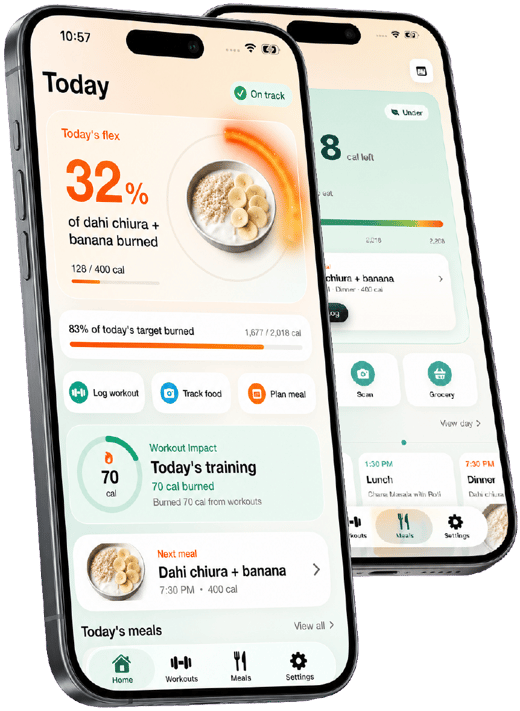
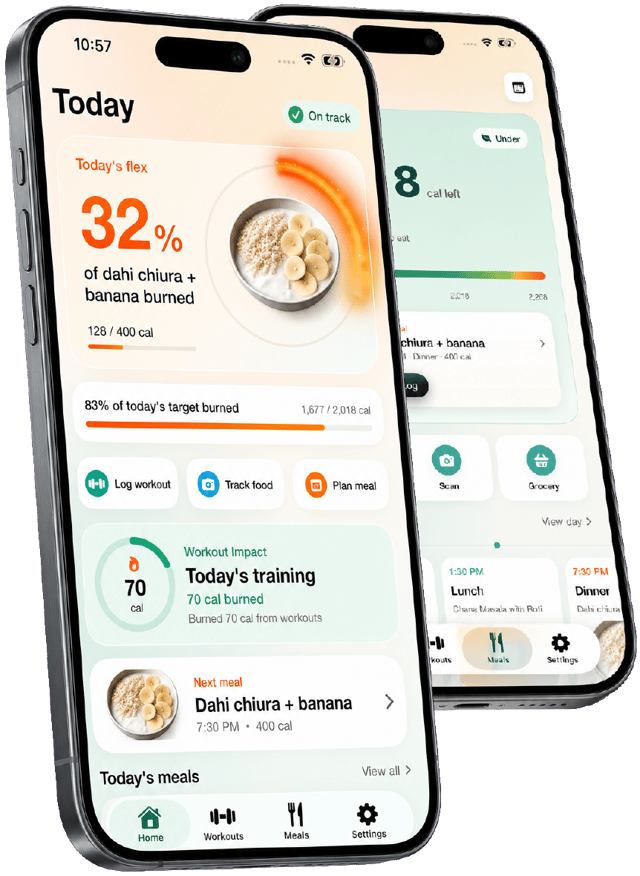
Burnplate builds a progressive strength plan around your days and equipment, and logs every session alongside your food — one picture, not two apps.
Photo logging for a busy schedule
Snap a plate and confirm the read instead of typing into a search bar — logging stays fast enough to survive a real week.
See training and food on one screen
The burn bar shows how much of a meal your training and steps have offset, so a bigger dinner after a lifting session isn't guesswork.
Practical guidance
Practical tips for men over 50
Habits that address the actual drivers of the shift — muscle loss and cardiovascular risk — rather than just the calorie total.
- 01 Lift something twice a week, minimum
Resistance training is the single most direct counter to age-related muscle loss — cardio alone doesn't address it.
- 02 Don't cut protein at maintenance
Protein needs stay elevated even at maintenance calories — dropping it back to younger-adult levels undercuts the muscle-protection benefit.
- 03 Rethink the beer-and-takeout calories
Liquid calories and restaurant sodium tend to climb quietly in this decade — they're usually the easiest place to find room without losing satisfaction.
- 04 Track blood-pressure habits too
Sodium and fiber start mattering as much as total calories — both are easy to track alongside the calorie total.
- 05 Sleep affects the number on the scale
Poor sleep affects testosterone and appetite hormones — treating sleep as part of the plan, not separate from it, matters more at this age.
- 06 A slow cut beats a crash diet
Aggressive deficits risk losing muscle along with fat — a modest 300–500 kcal deficit protects the muscle the protein target is trying to build.

Track it with a photo, not a search bar
Start tracking free Burnplate sets your calorie and macro targets, logs meals from a photo, and shows how much of each meal your workouts and steps have burned off.
Questions
Calorie tracker for men over 50: FAQ
How many calories should a 50-year-old man eat?
A moderately active man over 50 typically needs around 2,000–2,400 calories a day to maintain weight, though this varies with muscle mass and activity level. It's usually somewhat lower than his maintenance calories at 30, mainly because of gradual muscle loss rather than age itself.
Does testosterone decline affect weight?
Gradually declining testosterone through midlife contributes to slower muscle protein synthesis and a shift toward more abdominal fat, even without a change in total body weight. It's one factor among several — activity level and diet quality still matter at least as much.
How much protein does a man over 50 need?
Most guidance for men over 50 points to 1.2–1.6 g of protein per kg of body weight, above the standard adult RDA of 0.8 g/kg. The higher target helps offset accelerating muscle loss and works best paired with regular resistance training.
Is it harder to build muscle after 50?
Muscle can still be built after 50, but the process is slower due to declining testosterone and reduced muscle protein synthesis efficiency. Consistent resistance training and adequate protein remain the two levers that work — they just require more patience than they did at 30.
What's a healthy rate of weight loss for men over 50?
A modest 300–500 kcal daily deficit, producing roughly 0.5–1 lb of loss per week, is generally considered safer than aggressive cutting at this age because it's less likely to take muscle along with fat. Pairing it with resistance training and a higher protein target helps protect muscle during the deficit.
Can Burnplate build a plan around lifting?
Yes — the workout planner builds a progressive strength plan around your days per week, equipment and level, logs your sessions, and connects that training to your food targets through the burn bar.
