
Even with ideal training, sleep and protein, the body can only build a limited amount of muscle per week. A large surplus doesn't speed that process up — it just adds more fat around the same rate of muscle gain.
Why it's different
Why a lean bulk beats a dirty bulk
A bigger surplus does not build muscle faster past a certain point — it just adds fat faster. The evidence on muscle protein synthesis and body recomposition both point to a controlled, moderate surplus as the more effective approach.
10-20% above maintenance is the surplus range that supports muscle growth without excess fat
1.6-2.2g protein per kg of body weight to make sure the surplus builds muscle, not just weight
0.25-0.5 lb of weight gain per week is a pace that stays mostly muscle over a multi-month bulk
A dirty bulk that adds 15-20 lb of mostly fat means a long, demoralizing cut afterward that risks losing some of the muscle gained. A lean bulk keeps the eventual cut shorter and less punishing.
Muscle tissue partitions incoming calories toward growth more efficiently when body fat is lower to moderate. Staying leaner through a bulk keeps that partitioning working in your favor for longer.
No surplus size builds muscle without progressive overload in the gym. The meal plan supplies the calories and protein; the lifting program is what actually creates the stimulus to use them.
What it looks like
A sample day on a lean-bulk meal plan
Built around a 15% surplus for a lifter with roughly 2,600 maintenance calories — about 3,000 calories a day with protein and carbs prioritized around training.
Example day on the plan
~3,000 calories180 g+ protein340 g+ carbs5 meals/day
7:00 AM Eggs, oats & berries4 whole eggs, ¾ cup oats, mixed berries, honey 620 kcal
10:30 AM Protein shake + oats1 scoop protein powder, ½ cup dry oats blended in, milk 400 kcal
1:00 PM Chicken, rice & veg200 g chicken breast, 1.5 cups rice, roasted vegetables, olive oil 700 kcal
4:30 PM (pre-lift) Rice cakes + banana + yogurt3 rice cakes, banana, ¾ cup Greek yogurt 420 kcal
7:30 PM Salmon, potatoes & salad180 g salmon, 1.5 cups roasted potatoes, side salad, olive oil 620 kcal
9:30 PM Cottage cheese + almonds1 cup cottage cheese, 20 almonds 300 kcal
Smart swaps
Unlimited snacking to hit calories Structured 5-6 meal scheduleReaches the same total calories without the fat-gain risk of unlimited eating.
Fast food as the calorie source Home-cooked, protein-forward mealsSimilar calories with far more protein and micronutrients per meal.
Carbs spread evenly all day Carbs concentrated around trainingPuts more fuel where it's used, supporting harder sessions and better recovery.
Sugary weight-gainer shakes Whole-food meals plus one protein shakeCuts added sugar while still hitting the calorie and protein targets easily.
How Burnplate handles it
How Burnplate manages your bulking phase
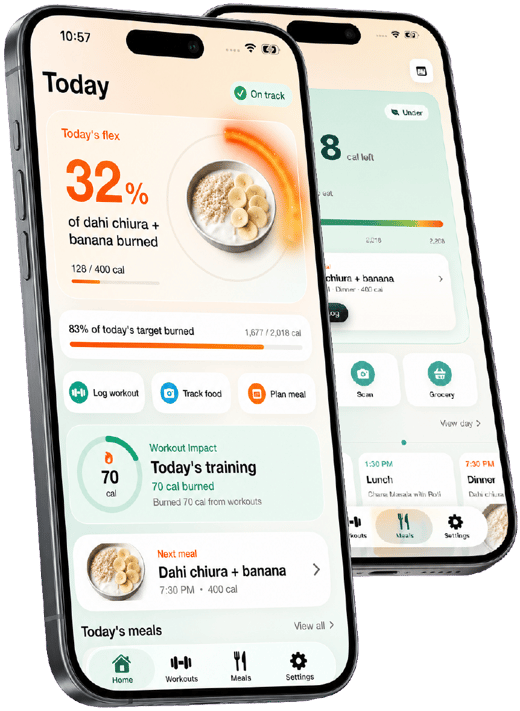
Burnplate keeps the surplus controlled and ties the meal plan directly to your training program.
A surplus sized to your goal pace
Burnplate calculates maintenance calories from your stats and sets a 10-20% surplus, aiming for the 0.25-0.5 lb/week pace that keeps a bulk lean.
A 7-day meal plan with a grocery list
The AI meal plan builds a full week of high-protein, higher-calorie meals around your preferences, with a consolidated grocery list for weekly meal prep.
A workout program to use the surplus
Burnplate's workout builder creates a progressive lifting plan around your days and equipment, logging sets and reps so training and eating stay paired.
Weight-trend tracking spots a hot bulk
Logging weight regularly shows the trend line, not just daily noise, so you can catch the surplus running too fast before it turns into a dirty bulk.
Practical guidance
Meal prep and bulking tips that keep it lean
Habits that keep a bulk in the 'lean' category instead of drifting into 'see food, eat food'.
- 01 Prep protein in bulk once a week
Cook a large batch of chicken, beef or tofu on one day so every meal has its protein source ready to go.
- 02 Weigh in weekly and check the trend
Gaining faster than about 0.5 lb a week for more than a month usually means the surplus is larger than needed.
- 03 Time carbs around your hardest sessions
Save the biggest carb portions for the pre- and post-workout meals on your heaviest lifting days.
- 04 Cap the 'extra' food, don't eliminate it
A lean bulk still allows some flexible eating — just bound it instead of treating every meal as unlimited.
- 05 Track body composition, not just weight
A tape measure or periodic photos catch whether gains are trending toward muscle or mostly fat.
- 06 Plan the cut before you need it
Knowing roughly when the bulk phase ends keeps the surplus from drifting on indefinitely.

Get the week planned in one tap
Build my meal plan Burnplate builds a 7-day meal plan around your calories, protein and food preferences, writes the grocery list, and lets you swap any meal you don't feel like.
Questions
Meal planner for bulking: FAQ
What is the best meal plan for bulking?
One built on a controlled surplus of 10-20% above maintenance, with protein around 1.6-2.2 g/kg and carbs concentrated around training sessions. This is what's usually called a lean bulk, and it adds muscle with far less unwanted fat than eating without limits.
How many calories should I eat when bulking?
Roughly 10-20% above your maintenance calories, which for most lifters works out to a 300-500 calorie daily surplus. Burnplate calculates your maintenance from your stats and activity level and sets the surplus from there rather than using a flat number.
What's the difference between bulking and dirty bulking?
A lean bulk uses a controlled, moderate surplus that adds mostly muscle with some fat; a dirty bulk eats without much limit and adds weight quickly, but a large share of it is fat. The lean approach takes longer to show a big number on the scale but leaves less to cut later.
How much weight should I gain per week while bulking?
About 0.25-0.5 lb a week is a pace most research associates with staying mostly muscle rather than fat. Faster gains are possible but tend to shift the ratio toward fat, especially past the first few months of a training program.
Is meal prep important for bulking?
Very — hitting a high calorie and protein target every day is much easier when meals are prepped in advance rather than decided meal by meal. Burnplate's weekly meal plan and consolidated grocery list are built for exactly this kind of batch prep.
Does Burnplate track bulking progress?
Yes. Burnplate calculates your surplus and protein targets, builds the meal plan and pairs it with a progressive workout program, and lets you log weight over time so you can see the trend and catch a bulk running faster than intended.
