
Fiber and most sugar alcohols don't raise blood sugar the way digestible carbs do, so keto tracking subtracts them from total carbs to get net carbs. A food tracker that only shows total carbs will read as far more restrictive than keto actually requires.
Why it's different
Why keto tracking is different from calorie counting
A standard calorie tracker treats a gram of carbs, protein and fat as interchangeable toward one number. Keto depends on hitting a specific ratio — high fat, moderate protein, very low net carbs — where getting the split wrong can stall ketosis even at the right calorie total.
20–50 g net carbs a day is the typical range that keeps most people in nutritional ketosis
70–75% of daily calories from fat on a standard ketogenic macro split
1.2–1.7 g/kg protein per kg of body weight — enough to preserve muscle without pulling you out of ketosis
Excess protein can convert to glucose through gluconeogenesis, which is why keto macros hold protein moderate — enough to protect muscle, not so much it competes with fat for fuel. This is the opposite instinct of most high-protein diets.
Getting to 70%+ of calories from fat usually takes deliberate additions — oil, butter, fatty cuts, nuts — because most default eating patterns don't naturally reach that ratio. Hitting the fat target is as much a tracking job as staying under the carb limit.
Hidden carbs in sauces, dressings and processed foods are the most common reason people stall out of ketosis without realizing why. Consistent tracking in the first couple of weeks is what catches these before they become a pattern.
What it looks like
A sample day on a 1,800-calorie keto macro split
Fat carries most of the calories, protein sits moderate, and net carbs stay under 30 g for the day. The structure — fat-forward meals with a green vegetable, not a starch — is what keeps the ratio on track.
Example day
Daily targets
calories ~1,800 set from your goal; keto changes the split, not necessarily the total
net carbs 20–30 g total carbs minus fiber; the number that determines ketosis
fat 140 g (70%) the primary fuel source on keto — added deliberately, not incidental
protein 95 g (21%) moderate on purpose, enough to protect muscle
A logged day
7:30 AM 3-egg omelette with cheese, cooked in butter420 kcal — fat-forward from the first meal 6g net carbs
11:00 AM Bulletproof coffee (coffee + butter + MCT oil)230 kcal — pure fat, no protein or carbs 0g net carbs
1:00 PM Grilled chicken thigh, avocado, leafy greens + olive oil540 kcal — fat added via oil and avocado, not just the meat 7g net carbs
4:00 PM String cheese + macadamia nuts260 kcal — high-fat, low-carb snack 3g net carbs
7:00 PM Salmon in butter, asparagus, side salad with ranch440 kcal — fatty fish plus added fat from the dressing 8g net carbs
How Burnplate handles it
How Burnplate tracks a keto macro split
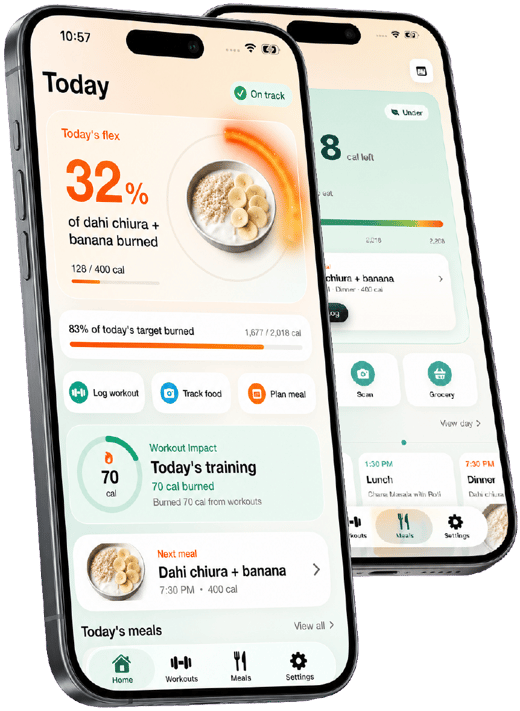
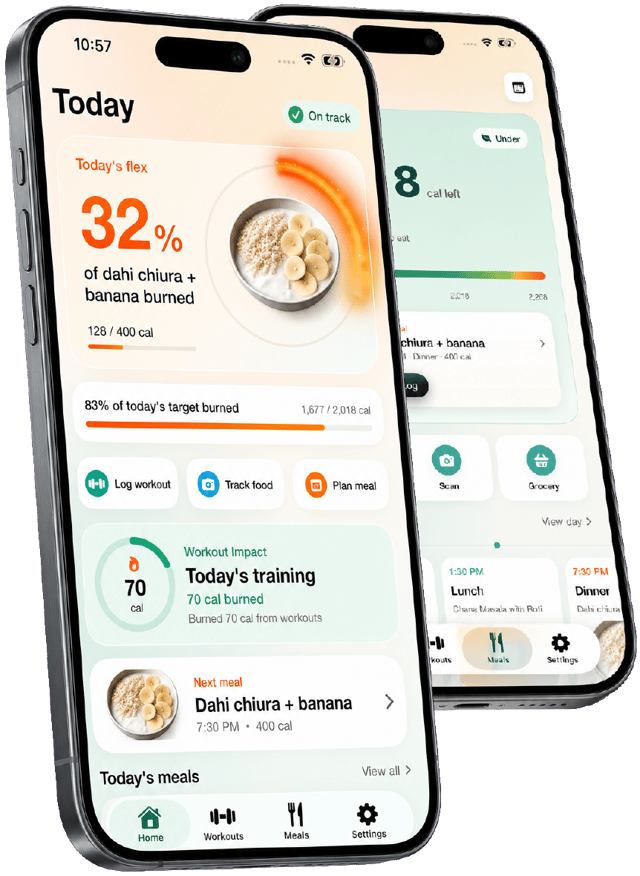
Burnplate sets and tracks the full macro breakdown, not just calories, so a keto day can be checked against fat, protein and net carbs the way ketosis actually requires.
Macro targets set to your keto ratio
Set your calorie goal and Burnplate breaks it into fat, protein and carb targets built for keto — roughly 70% fat, moderate protein, minimal carbs — instead of a generic balanced split.
Net carbs tracked separately from total carbs
Log a meal and see net carbs (total minus fiber) against your daily limit, so a high-fiber vegetable doesn't eat into your carb budget the way it would on a total-carb tracker.
Photo logging for fat-forward meals
Snap a photo of a meal with added butter, oil or avocado and adjust the portions so the fat actually gets counted — easy to undercount when it's a splash of oil rather than a visible food item.
AI meal plan built around your keto split
Generate a 7-day plan that targets your fat, protein and net-carb numbers with a consolidated grocery list, so hitting the ratio doesn't mean building every meal from scratch yourself.
Practical guidance
Keto tracking tips
Practical habits that keep the macro split — not just the calorie total — on track.
- 01 Track everything for the first two weeks
Hidden carbs in sauces, dressings and drinks are the most common reason people stall out of ketosis without knowing why.
- 02 Add fat on purpose
Butter, olive oil, avocado and fatty cuts of meat — most people under-hit their fat target unless they add it deliberately, not just avoid carbs.
- 03 Watch net carbs, not total carbs
Fiber-heavy vegetables can look carb-heavy on a total-carb label but cost very little net carb — don't avoid them unnecessarily.
- 04 Don't over-shoot protein
More protein isn't automatically better on keto — too much can work against ketosis through gluconeogenesis. Stick to your moderate target.
- 05 Read labels for sugar alcohols
Maltitol behaves differently from erythritol in the body — some sugar alcohols do raise blood sugar despite being marketed as keto-friendly.
- 06 Expect an adjustment week
Fatigue, headaches or irritability in the first several days ('keto flu') are common as the body shifts fuel sources — usually resolves as electrolytes and fat intake stabilize.

Track it with a photo, not a search bar
Start tracking free Burnplate sets your calorie and macro targets, logs meals from a photo, and shows how much of each meal your workouts and steps have burned off.
Questions
Calorie tracker for keto: FAQ
What is a good macro split for keto?
A common starting split is roughly 70–75% of calories from fat, 20–25% from protein, and 5–10% from net carbs — often translating to under 20–50 g of net carbs a day. Individual needs vary with body size, activity and goals, so the exact grams should come from a calculator using your numbers, not a fixed template.
How many net carbs can I eat on keto?
Most people aim for 20–50 g of net carbs a day to maintain ketosis, with 20 g being a stricter starting point and up to 50 g workable for some, especially with higher activity levels. Net carbs subtract fiber (and often sugar alcohols) from total carbs, which is why a tracker that only shows total carbs can be misleading on keto.
How much fat should I eat on a keto calorie calculator?
Fat typically makes up 70–75% of total daily calories on keto, since it replaces carbs as the primary fuel source. At 1,800 calories, that's roughly 140 g of fat a day — usually requiring deliberate additions like oil, butter or avocado rather than happening by default.
Why is my protein target lower than expected on keto?
Keto intentionally keeps protein moderate — high enough to protect muscle, but not so high that excess protein converts to glucose and interferes with ketosis. This is different from high-protein diets, where protein is pushed as high as comfortably possible.
Can Burnplate track keto macros, not just calories?
Yes. Set a keto-style calorie and macro split and Burnplate tracks fat, protein and net carbs against those targets on every logged meal, whether logged by photo or search.
How long does it take to enter ketosis?
Most people reach nutritional ketosis within 2–4 days of consistently staying under their net carb limit, though it can take up to a week or two for some. Consistent tracking in that window is what catches hidden carbs before they reset the clock.
