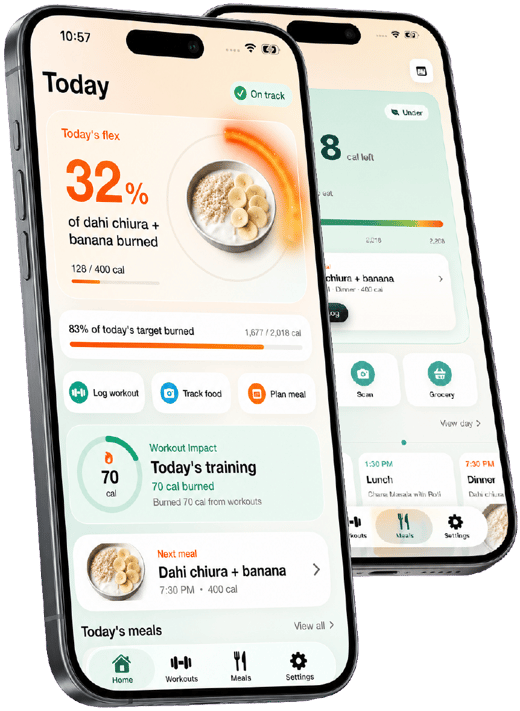

Carbohydrate and total calorie needs should scale up on high-volume or high-intensity days and scale back on rest days. A single fixed calorie target either underfuels the hard days or overshoots the easy ones.
Why it's different
Why athletes need a different meal plan
A generic calorie target assumes a flat, unchanging day. An athlete's day isn't flat — training volume swings from a rest day to a two-a-day, and the meal plan has to move with it or performance and recovery both suffer.
1.2–2 g/kg the daily protein range that supports recovery and adaptation across most sports
5–7 g/kg carbohydrate per kilogram of body weight on moderate-to-heavy training days
20–25 g protein per meal is a practical target for spreading intake across 4–5 eating occasions
Spreading protein across four or five meals, rather than loading it into one or two, better supports muscle repair after training than the same total eaten in fewer, larger meals.
Carbs before a session top off glycogen for the work ahead; protein and carbs after it start the recovery clock. The same food eaten at the wrong time does less for performance.
Sweat losses from training add a nutrition variable a sedentary meal plan never has to account for — fluid and sodium needs rise with training volume and heat, not just with body size.
What it looks like
A sample day on an athlete's meal plan
Around 2,700 calories on a moderate training day, with carbs concentrated around the session and protein spread evenly across five meals.
Example day on the plan
~2,700 calories330–370 g carbs150–170 g protein5 meals/day
6:30 AM Pre-training oats1 cup oats, banana, honey, small scoop protein powder 480 kcal
9:30 AM Post-training recovery bowlGreek yogurt, granola, berries, 1 scoop whey 460 kcal
1:00 PM Chicken, rice & veg180 g chicken, 1.5 cups rice, mixed vegetables, olive oil 700 kcal
4:00 PM Fruit & nut butter1 banana, 2 tbsp peanut butter 290 kcal
7:30 PM Salmon, potatoes & greens170 g salmon, 1.5 cups roasted potatoes, big salad 620 kcal
9:00 PM Cottage cheese1 cup cottage cheese before bed 180 kcal
Smart swaps
A big single lunch Protein and carbs split into 5 smaller mealsBetter supports recovery than the same calories concentrated in one or two sittings.
Training fasted A small carb snack 60–90 minutes beforeTops off glycogen for the session without a heavy stomach.
Skipping the post-training window A protein-and-carb snack within an hour after trainingStarts glycogen replenishment and muscle repair sooner rather than later.
Water only during long sessions An electrolyte drink for sessions over 60–90 minutesReplaces sodium losses a generic hydration plan doesn't account for.
How Burnplate handles it
How Burnplate plans around your training
Burnplate connects your meal plan to your training instead of treating them as two separate trackers — so the food actually matches the work you're doing.
A 7-day plan built around your targets
Set your calorie and protein targets and Burnplate builds a week of meals timed around your usual training pattern, with a grocery list ready for one shopping trip.
One-tap swaps that hold macros steady
Swap any meal and Burnplate keeps the day's calories and protein in range, so a change in plans doesn't mean recalculating your fueling.
Workout planner built into the same app
Sessions logged in Burnplate's workout planner feed the same picture as your meals, so training and fueling live on one screen instead of two apps.
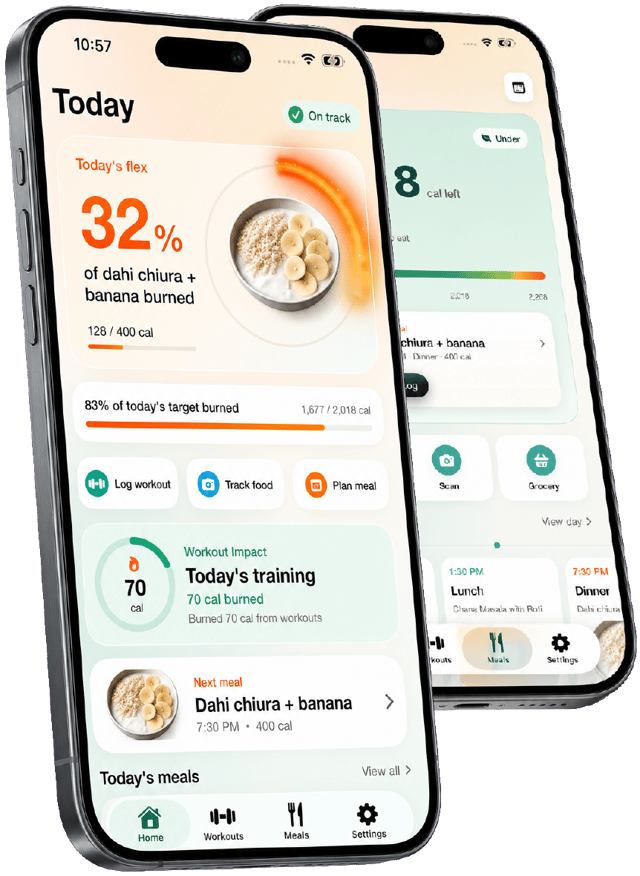
The burn bar ties a session to a meal
See what percentage of a meal a training session burned off — a direct, visible link between the work you put in and the food it's fueling.
Practical guidance
Nutrition tips for athletes
Practical habits that make training-day fueling more consistent without overhauling your whole diet.
- 01 Fuel the session, not just the day
A small carb snack before a hard session and a protein-carb meal after it matters more than hitting the same daily total spread randomly.
- 02 Spread protein across the day
Four to five meals with 20–25 g of protein each support recovery better than the same total in one or two large meals.
- 03 Scale carbs to training volume
Increase carbohydrate on your hardest training days and pull it back on rest days rather than eating the same amount every day.
- 04 Don't skip the recovery window
Eating protein and carbs within about an hour of finishing a hard session gives recovery a head start.
- 05 Hydrate on long or hot sessions
Water alone doesn't replace the sodium lost in sweat during sessions over an hour or in heat.
- 06 Sleep is part of the nutrition plan
Recovery nutrition does less work without adequate sleep — treat consistent sleep as seriously as the food itself.

Get the week planned in one tap
Build my meal plan Burnplate builds a 7-day meal plan around your calories, protein and food preferences, writes the grocery list, and lets you swap any meal you don't feel like.
Questions
Meal planner for athletes: FAQ
How many calories should an athlete eat?
It depends heavily on training volume, body size and goal, but many athletes need 2,400–3,500+ calories on training days, adjusted down on rest days. Burnplate estimates a starting target from your body, goal and activity level, then you adjust based on results.
How much protein does an athlete need per day?
Most sport nutrition guidance puts athlete protein needs around 1.2–2.0 g per kilogram of body weight daily, higher for strength and power sports and lower for pure endurance work. Spreading it across 4–5 meals supports recovery better than concentrating it in one or two.
What should athletes eat before training?
A carbohydrate-focused snack 1–3 hours before training, such as oats, a banana or toast with honey, tops off glycogen without sitting heavy in the stomach. Lighter, faster-digesting carbs work best closer to the session.
What should athletes eat after a workout?
A combination of protein and carbohydrate within about an hour of finishing — a recovery shake, Greek yogurt with fruit, or a meal with both — supports glycogen refill and muscle repair. The exact ratio matters less than getting both nutrients in reasonably soon.
Does Burnplate build meal plans around training?
Yes — Burnplate generates a 7-day meal plan from your calorie and protein targets and logs your workouts in the same app, so your fueling and training show up together instead of in two separate trackers.
How do I know if I'm eating enough as an athlete?
Consistent energy through sessions, stable or improving performance, and steady recovery are better day-to-day signals than the scale alone. Persistent fatigue, frequent illness or stalled performance despite consistent training often points to underfueling.
