
Calorie and protein needs can shift substantially within the same school year as a teen moves through a growth spurt. A number that fit six months ago may already be too low — this is normal and expected, not a sign of anything wrong.
Why it's different
Why teen calorie needs don't follow adult rules
A teenager's body is doing something an adult's isn't: building new bone, muscle and tissue on top of daily activity. That changes what 'adequate' looks like, and it's why generic adult calorie or diet advice doesn't transfer well to this age group.
~2,200 typical daily calories for an active teen — needs vary hugely by growth stage
1–1.5g/kg protein per kg bodyweight to support growth and training
1,300mg calcium most teens need daily for bone density that peaks in adolescence
Under-fueling during adolescence can affect growth, bone density and, for girls, menstrual health — risks that don't apply the same way to a fully grown adult cutting calories. The emphasis for teens should be on adequacy, not on eating less.
A teen playing a sport several times a week can need considerably more calories and protein than a less active peer of the same age and size — closer to the higher end of typical ranges, not the average.
Roughly 90% of peak bone mass is built by the late teen years. Calcium and vitamin D intake during adolescence has a lasting effect on bone health decades later in a way that's hard to make up for afterward.
What it looks like
A sample day for an active teenager
Built for a moderately active teen with calorie and nutrient needs geared toward growth and school-day activity, not weight loss.
Example day
Daily targets
Calories 2,200 kcal a typical level for an active teen — adjust for growth stage and sport
Protein 90 g roughly 1.2 g/kg to support growth and any regular training
Carbs 280 g fuels school-day energy and after-school activity
Fat 70 g supports hormone development during puberty
Calcium 1,300 mg built into meals for bone growth, not left to a supplement
A logged day
7:00 AM Cereal, milk, bananamilk contributes meaningfully to the calcium target 420 kcal
12:00 PM (school lunch) Turkey sandwich, yogurt, fruita realistic school-lunch plate, not a restrictive one 560 kcal
3:30 PM (after school) Cheese, crackers, applerefuels after a school day and before practice 300 kcal
5:30 PM (practice) —activity logged; the burn bar shows how much practice covered —
7:00 PM Chicken, pasta, broccolithe day's main meal, sized for an active evening 650 kcal
8:30 PM Glass of milkan easy way to close the calcium target before bed 150 kcal
How Burnplate handles it
How Burnplate supports teens and their families
For this age group, the tools are about learning and visibility, not restriction.
A target built from age and activity, not an adult diet chart
Burnplate calculates calorie and nutrient needs based on age, activity and growth stage, rather than applying a generic adult weight-loss target to a teenager.
Photo logging that makes portions easy to learn
Snap a photo of a meal and see the estimate — a low-pressure way for a teen to build an accurate sense of portions without a parent's guesswork.
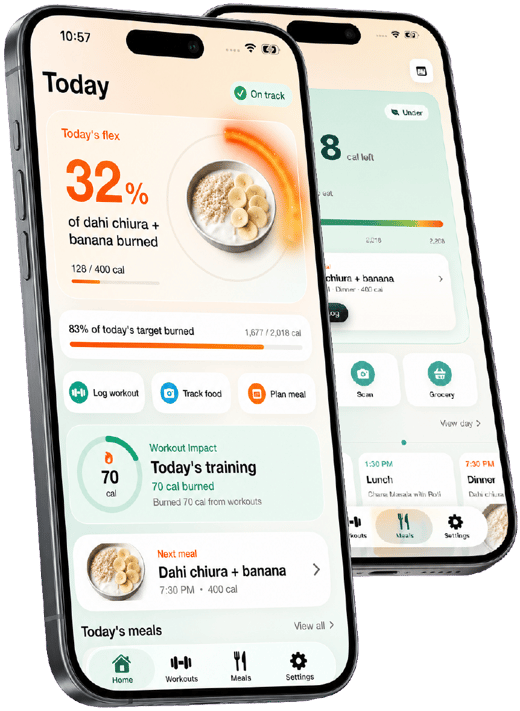
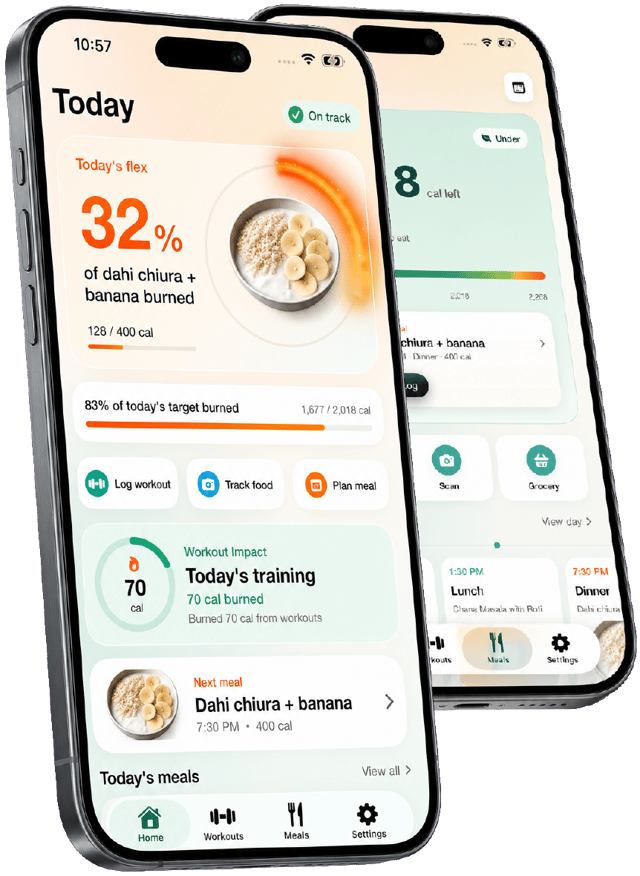
The burn bar shows what practice and sport already covered
For teen athletes, seeing how much of the day's needs training already accounted for helps make sense of why an active day calls for more food.
Groups keep a family in one account space
Burnplate's groups feature lets a parent and teen share an account space, so a parent can stay involved without the teen needing a separate, unsupervised app.
Practical guidance
Tips for supporting a teen's nutrition
Guidance focused on adequacy and understanding, not calorie restriction.
- 01 Focus on adequacy, not a target to stay under
For teens, the goal of tracking is understanding whether needs are being met — not finding ways to eat less.
- 02 Expect needs to change with growth
A number that was accurate a few months ago may need revisiting after a growth spurt or a change in activity level.
- 03 Prioritize calcium-rich foods daily
Milk, yogurt, cheese and fortified alternatives are the easiest way to consistently hit the calcium target this age group needs.
- 04 Fuel around practice, not just meals
Active teens often need a snack before or after practice in addition to regular meals — skipping it can leave a real gap by dinner.
- 05 Keep the conversation about energy, not appearance
Framing food around having enough energy for school, sport and growth is healthier for this age group than framing it around weight or body image.
- 06 Involve a pediatrician for anything beyond general awareness
Specific concerns about weight, growth or eating patterns in a teenager should go through a pediatrician or registered dietitian, not general online guidance.

Track it with a photo, not a search bar
Start tracking free Burnplate sets your calorie and macro targets, logs meals from a photo, and shows how much of each meal your workouts and steps have burned off.
Questions
Calorie tracker for teenagers: FAQ
How many calories should a teenager eat?
It varies widely by age, sex, growth stage and activity level, but a calorie calculator for teenagers typically estimates a range from about 1,800 to 3,200 calories a day. Active teens and those in a growth spurt often need the higher end of that range.
Is it healthy for a teenager to count calories?
For most teens, the goal should be understanding whether they're eating enough to support growth and activity, not restricting intake. Calorie awareness can be useful for learning portions and nutrition, but active dieting in teens should generally involve a pediatrician or registered dietitian.
Do teen athletes need more calories?
Yes, often significantly more than less active peers — regular training or competitive sport can raise a teen's calorie and protein needs well above the general range for their age and size.
Should teenagers try to lose weight?
Weight-loss decisions for a growing teenager should involve a pediatrician, since under-fueling during adolescence carries risks to growth, bone density and hormonal development that don't apply the same way to adults. The safer general focus is adequate, balanced nutrition rather than restriction.
Can parents see a teen's food log?
Yes — Burnplate's groups feature lets a family share one account space, so a parent can stay aware of a teen's logging without the teen needing a separate, unmonitored app.
