Chest, back, arms, legs, shoulders — training one muscle group a day sounds thorough but usually means legs get rushed or dropped entirely. Full-body or push/pull/legs splits trained more often build strength faster with less wasted training time.
Why it's different
Why the typical men's workout routine underperforms
Testosterone gives men a real edge in building muscle, but a lot of that advantage gets wasted on imbalanced programming.
3–5×/week strength sessions weekly is the range that builds real strength without wrecking recovery
1:1 the push-to-pull set ratio that keeps shoulders healthy and posture from caving forward
150 min weekly moderate cardio most cardiovascular health guidelines recommend, on top of lifting
A workout plan loaded with bench and overhead pressing but light on rows and pull-ups pulls the shoulders forward over time. Matching push volume with pull volume protects the shoulder joint and keeps posture upright.
Lifting builds strength and muscle, but it doesn't replace cardiovascular training. Adding even two moderate cardio sessions a week protects heart health long after the muscle gains show up in the mirror.
Training every muscle group hard every single day without rest days slows strength gains and raises injury risk. Sleep, protein and at least one full rest day a week are what let the training actually work.
What it looks like
A sample week on a workout plan for men
A push/pull/legs structure repeated twice, with cardio and a full rest day. This is a typical shape for a Burnplate-built workout planner for men at an intermediate level.
Example week
5 Days/week50–60 min Session lengthIntermediate LevelFull gym Equipment
Monday Push Bench press 4×6 · Overhead press 3×8 · Incline dumbbell press 3×10 · Triceps pressdown 3×12
Tuesday Pull Deadlift 3×5 · Row 4×8 · Lat pulldown 3×10 · Barbell curl 3×12
Wednesday Legs Squat 4×6 · Romanian deadlift 3×8 · Leg press 3×10 · Calf raise 4×15
Thursday Cardio + core 25–30 min moderate cardio · Hanging leg raise 3×12 · Plank 3×45s
Friday Push + pull Incline press 3×8 · Pull-up 4×8 · Lateral raise 3×15 · Face pull 3×15
Saturday Legs + cardio Front squat 3×8 · Walking lunge 3×12 · 15 min interval cardio
Sunday Rest Full rest
How Burnplate handles it
How Burnplate builds a workout plan for men
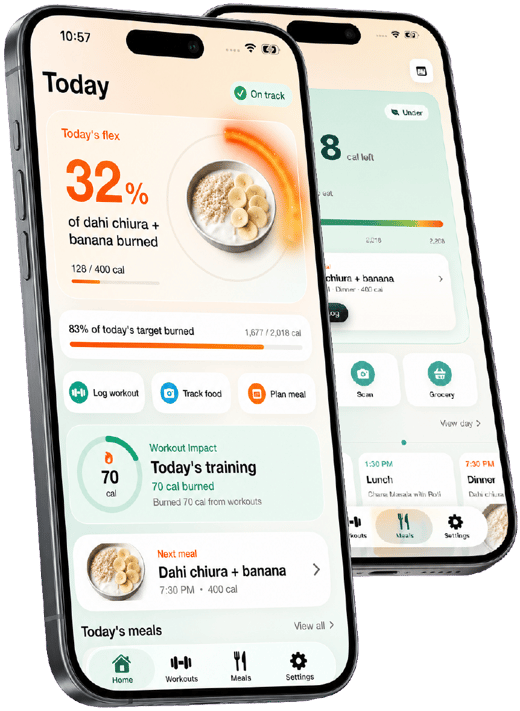
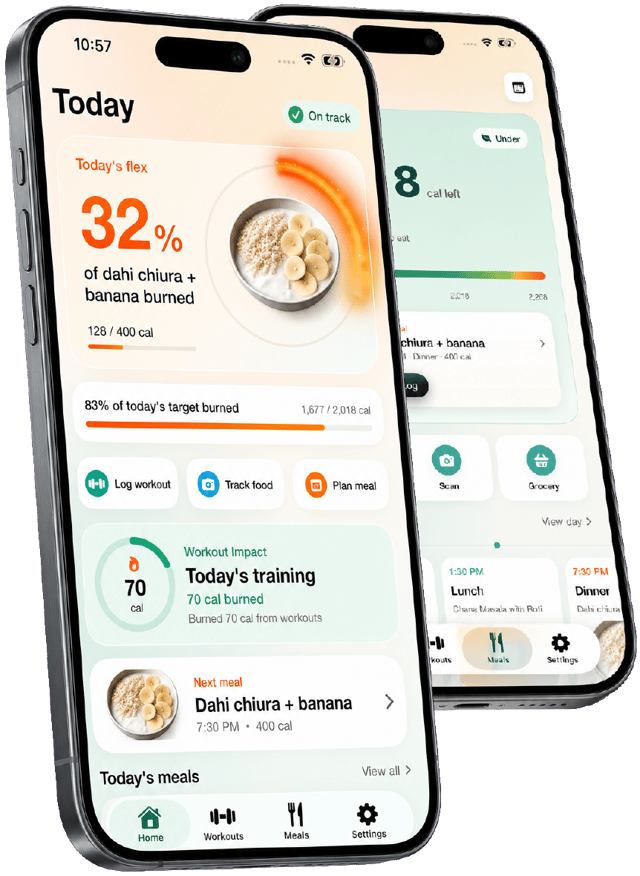
Burnplate's workout planner for men builds the balance above automatically, then tracks whether the plan is working.
A progressive plan around your split
Enter your days per week, equipment and level and Burnplate builds a push/pull/legs or full-body plan that balances muscle groups instead of defaulting to a chest-heavy split.
Every lift logged, sets and weight
Log each session and Burnplate keeps your full workout history, so you know exactly when to add weight and when a lift has plateaued.
Calorie and protein targets from your goal
Whether you're building muscle or cutting fat, Burnplate sets calorie and protein targets from your body and goal, with a daily balance so you're not guessing.
See training and food connected
The burn bar shows how much of your day's calories a session and your steps have covered, linking the gym work to what's on your plate.
Practical guidance
Tips for a more balanced men's workout plan
Fixes for the most common gaps in a self-built workout routine for men.
- 01 Train legs as hard as chest
Squats and deadlifts build more total muscle and burn more calories per session than any upper-body lift.
- 02 Match pull volume to push volume
For every set of bench or overhead press, do a set of rows or pull-ups to keep shoulders balanced.
- 03 Add two cardio sessions, non-negotiable
Twenty to thirty minutes of moderate cardio twice a week protects heart health without cutting into strength gains.
- 04 Take one full rest day weekly
Muscle grows during recovery, not the workout — a true rest day isn't wasted time, it's part of the plan.
- 05 Track the weight, not just the feel
A workout that feels hard isn't the same as one that's progressing. Log the numbers and add load deliberately.
- 06 Eat enough to support the training
A muscle-building phase needs a calorie surplus; running a deficit while trying to build size works against the goal.

Build the plan around your week
Build my workout plan Tell Burnplate your days, equipment and level and it builds a progressive workout plan, logs every session, and connects what you burn to what you eat.
Questions
Workout planner for men: FAQ
What is the best workout routine for men?
A push/pull/legs or full-body split trained four to five days a week, with equal attention to legs, pulling movements and cardio, outperforms a chest-focused bro split for both strength and long-term joint health. Balance across muscle groups matters more than any single exercise.
How many days a week should men work out?
Three to five days works for most goals. Three full-body sessions a week build strength efficiently for a busy schedule; four to five days lets you split push, pull and leg work and add more total volume for muscle growth.
How does a workout planner for men adjust for beginners versus advanced lifters?
Burnplate's planner uses the level you set to adjust volume and exercise selection — beginners get full-body sessions with simpler movements and more recovery, while advanced lifters get split routines with higher weekly set counts.
Do men need cardio if they're already lifting weights?
Yes. Strength training builds muscle and bone density, but it doesn't substitute for cardiovascular training. Most guidelines recommend around 150 minutes of moderate cardio a week in addition to resistance training for heart health.
How much protein do men need to build muscle?
Most sports nutrition guidance puts muscle-building protein needs around 1.6–2.2 g per kilogram of body weight daily, spread across three to four meals. Going well above that range doesn't meaningfully speed muscle growth for most people.
Why do workout routines for men so often skip leg day?
Legs are harder to train — squats and deadlifts are more fatiguing and less visible in a mirror than chest and arms, so they get deprioritized. A structured plan that schedules legs like any other muscle group fixes this automatically.
