
If the day's protein target doesn't change but the meal count drops from five to two or three, each meal has to carry noticeably more — often 40–60 g instead of 25–30 g.
Why it's different
Why intermittent fasting is a scheduling plan, not a diet plan
Fasting windows control timing; they don't set calories, protein or food quality on their own. A meal plan built for intermittent fasting has to do the same nutritional job as any other plan — just inside fewer hours.
16:8 is the most common intermittent fasting window — 16 hours fasting, 8 hours eating — though 14:10 and 18:6 are also widely used
40–60 g protein per meal is typical on a 2–3 meal fasting window, since the daily protein target has fewer meals to spread across
2–3 meals usually fit inside an 8-hour window comfortably without meals feeling rushed or oversized
Compressing eating into 6–8 hours naturally caps how much most people comfortably eat, which helps for fat loss but can undershoot calorie or protein needs if meals aren't planned with intention.
16:8 is the most common starting point, but 14:10 is easier for beginners and 18:6 or one larger meal a day (OMAD) are common variations — the number isn't fixed by any rule, just personal fit.
Coffee or tea without added calories doesn't meaningfully break a fast for most people's goals. What actually matters is whether the meals inside the window add up to the day's targets.
What it looks like
A sample 16:8 intermittent fasting day
An 8-hour eating window (noon to 8 PM) covering the full day's roughly 2,000 calories and 150 g protein across three meals.
Example day on the plan
~2,000 calories150 g protein12 PM–8 PM eating window16 hours fasting window
8:00 AM Black coffee (fast continues)Black coffee or plain tea, water 0 kcal
12:00 PM Chicken, rice & vegetable bowl200 g chicken, 1 cup rice, roasted vegetables, olive oil 650 kcal
3:30 PM Greek yogurt, berries & granola1.5 cups Greek yogurt, berries, ¼ cup granola, honey 480 kcal
6:30 PM Salmon, potatoes & salad180 g salmon, roasted potatoes, large salad, olive oil 620 kcal
7:45 PM Whey shake if protein's short1 scoop whey, water or milk 150 kcal
Smart swaps
Two meals that undershoot protein Three meals with a named protein source eachFewer meals need to work harder — skipping a protein source at any one drags the whole day short.
Breaking the fast with something small A full, protein-forward first mealThe first meal in the window is doing extra work; a light one just pushes the deficit into the rest of the day.
Black coffee with cream during the fast Plain black coffee or teaCream adds calories that technically end the fasted state, even if small.
Skipping water during the fast Water, and electrolytes if training fastedSixteen hours without food is also sixteen hours without food's water content — hydration needs go up, not down.
How Burnplate handles it
How Burnplate fits a plan into your eating window
Burnplate sets your daily calorie and protein targets regardless of schedule, then helps you hit them inside whatever window you're using.
Daily targets that don't assume five meals
Burnplate's calorie and protein targets are daily totals, not per-meal rules, so a 16:8 or 18:6 schedule fits the same targets a normal eating pattern would.
Photo logging built for fewer, bigger meals
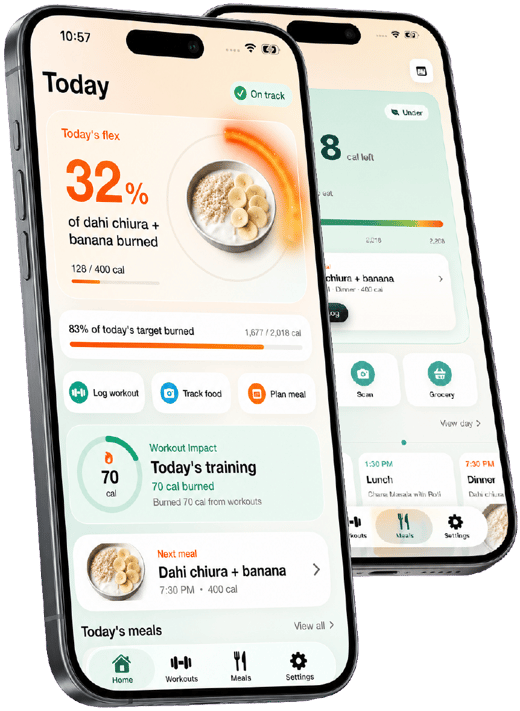
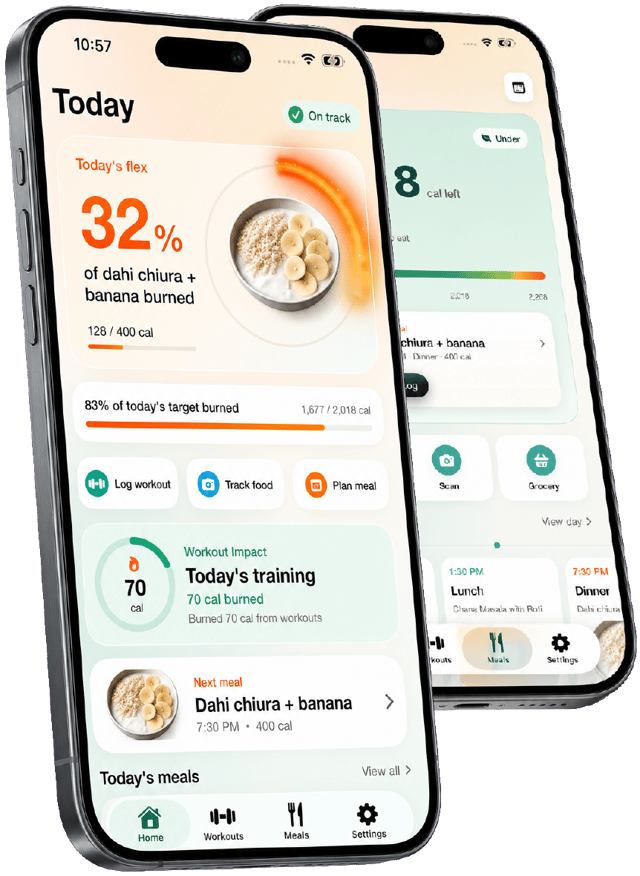
Log each meal in the window with a photo and Burnplate tracks the running total, making it easy to see mid-window whether the last meal needs to be bigger to close the day out.
A meal plan sized to 2–3 meals a day
Burnplate's AI meal plan can build a week around fewer, larger meals instead of five small ones, so each one is already sized to carry its share of the day.
The burn bar works the same, fasted or not
Training fasted or fed, Burnplate's burn bar still shows what percentage of your day's target your workout and steps have covered.
Practical guidance
Tips for intermittent fasting that doesn't leave you under-fed
Habits that keep a compressed eating window from quietly turning into under-eating.
- 01 Front-load protein in the first meal
Breaking the fast with a protein-forward meal makes the rest of the window's target easier to hit.
- 02 Start with 14:10 or 12:12 if 16:8 feels hard
A shorter fast is still effective and easier to sustain than jumping straight to a longer window.
- 03 Hydrate through the fasting hours
Water, black coffee and plain tea are the default — dehydration is a common reason early fasting feels worse than it needs to.
- 04 Don't skip protein because the window is short
Two or three meals still need a full protein source each — a smoothie or salad alone rarely carries enough.
- 05 Time the window around your schedule, not a rule
A 12–8 window suits a late dinner habit; a 9–5 window suits early risers — the effectiveness comes from consistency, not a specific clock time.
- 06 Break a long fast gently if it's been extended
After 18+ hours, a very large, heavy meal can feel rough — starting with something moderate before the main meal is more comfortable.

Get the week planned in one tap
Build my meal plan Burnplate builds a 7-day meal plan around your calories, protein and food preferences, writes the grocery list, and lets you swap any meal you don't feel like.
Questions
Meal planner for intermittent fasting: FAQ
What is a good meal plan for intermittent fasting?
One that fits your full daily calorie and protein target into fewer, larger meals — typically two or three — rather than assuming the target shrinks along with the eating window. A 16:8 schedule with 40–60 g of protein per meal is a common, workable structure.
Does intermittent fasting work without changing what I eat?
It can create a mild calorie deficit just by compressing the eating window, but it works better paired with a deliberate meal plan — otherwise it's easy to either overeat in a shorter window trying to compensate, or under-eat protein without noticing.
What breaks a fast during intermittent fasting?
Anything with meaningful calories — food, cream in coffee, sugar in tea. Black coffee, plain tea and water don't meaningfully break a fast for most people's goals, though anyone fasting for a specific medical reason should follow their doctor's guidance on this.
How many meals fit in a 16:8 intermittent fasting diet plan?
Most people fit two or three meals comfortably into an 8-hour window, sized larger than they would be across five smaller meals. Some do one large meal a day (OMAD) inside an even shorter window, though that requires larger, more calorie-dense meals to hit targets.
Can Burnplate build a meal plan for intermittent fasting?
Yes. Burnplate sets your daily calorie and protein targets regardless of eating schedule, and its AI meal plan can build fewer, larger meals sized to fit inside a compressed window, with a grocery list and one-tap swaps.
