
Declining estrogen shifts fat storage toward the abdomen, and visceral fat can increase during the transition even when total body weight stays roughly the same.
Why it's different
Why menopause changes the calorie equation
The frustration of "nothing's changed but the number's going up" has a real hormonal explanation — estrogen decline affects fat storage, muscle mass and sleep all at once.
~1,600 kcal/day estimate for a moderately active woman in menopause
1.2–1.6 g protein per kg body weight — helps offset muscle loss that speeds up now
2–5 lb typical weight gain during the menopause transition even without diet changes
Hot flashes and disrupted sleep, common through perimenopause, affect the hormones that regulate hunger and fullness — which can shift cravings and intake independent of any conscious choice.
Estrogen decline accelerates both muscle loss and bone density loss at the same time, which is why protein and calcium both need more attention during this stage than before it.
An eating pattern that held weight steady for years can stop working through menopause, not because it changed, but because the body processing it did.
What it looks like
A sample day during menopause
Built around roughly 1,600 calories for a moderately active woman navigating the menopause transition.
Example day
Daily targets
Calories ~1,600 Maintenance estimate for a moderately active woman in menopause; adjust to your activity
Protein 1.2–1.6 g/kg Higher than general adult guidance to help preserve muscle through the transition
Calcium 1,200 mg Guidelines step up after 51 as bone density risk rises
Fiber 25 g Supports the metabolic and cardiovascular shifts of this stage
Added sugar limited Can worsen hot flashes and sleep quality for some women
A logged day
7:00 AM Greek yogurt, flaxseed, berriesProtein plus phytoestrogen-rich flax 330 kcal
10:30 AM Hard-boiled eggs and an appleSteady energy, no sugar crash 220 kcal
12:30 PM Grilled salmon, farro, greensProtein and fiber at lunch 440 kcal
3:30 PM Cottage cheese and walnutsAnother protein touchpoint 210 kcal
6:30 PM Chicken, roasted vegetables, quinoaBalanced, protein-anchored dinner 410 kcal
How Burnplate handles it
How Burnplate fits menopause
Burnplate builds targets around what's actually shifting during menopause instead of a formula that assumes nothing has changed.
Targets that account for the shift
Calorie and macro targets come from your body, goal and activity, with protein weighted higher to reflect what's protective during this transition.
Strength training meets the tracker
The workout planner builds a progressive strength plan around your days and equipment — the most direct counter to menopause-related muscle loss.
Photo logging on the days you're exhausted
Snap a plate instead of typing a search — logging that survives the low-energy days that come with disrupted sleep.
See training and food on one screen
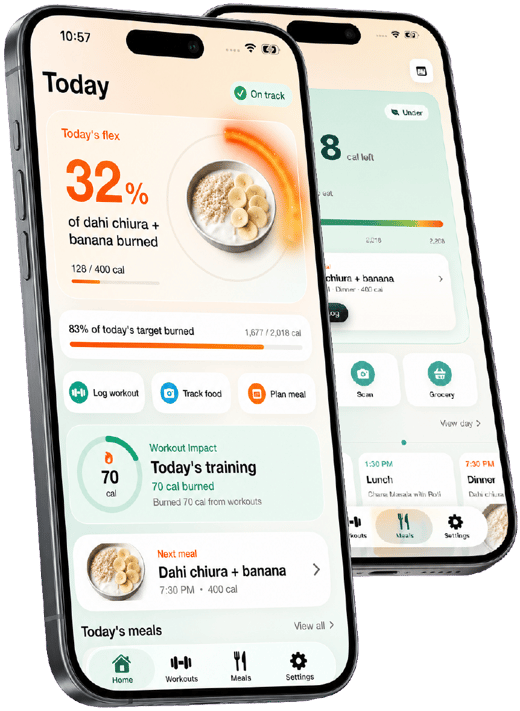
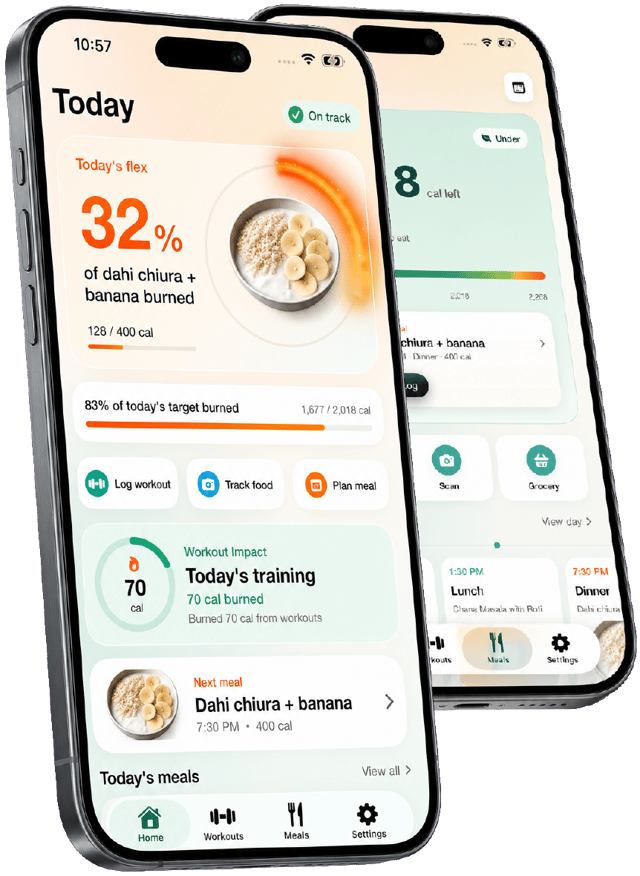
The burn bar shows how much of a meal your training and steps have offset, connecting the two habits worth doubling down on now.
Practical guidance
Practical tips for managing weight through menopause
Habits with the most evidence behind them for this specific transition, not generic weight-loss advice.
- 01 Add resistance training if you haven't
Strength work is the most direct counter to the accelerated muscle loss driving the metabolic shift.
- 02 Protect sleep as hard as diet
Disrupted sleep from hot flashes affects hunger hormones the next day — treating sleep as part of the plan changes outcomes.
- 03 Watch alcohol and hot-flash triggers
Alcohol, caffeine and spicy food are common hot-flash triggers for some women, and hot flashes disrupt the sleep that affects everything else.
- 04 Don't cut calories at a stall
A stall during menopause is often hormonal, not a sign to eat less — cutting further risks losing more muscle instead of fat.
- 05 Prioritize calcium and vitamin D daily
Bone density work happens quietly and is easy to miss while focused on the calorie total alone.
- 06 Give it 8-12 weeks before judging
Hormonal shifts make results slower and noisier than they used to be — a short trial isn't enough signal either way.

Track it with a photo, not a search bar
Start tracking free Burnplate sets your calorie and macro targets, logs meals from a photo, and shows how much of each meal your workouts and steps have burned off.
Questions
Calorie tracker for menopause: FAQ
Does menopause slow your metabolism?
Indirectly — declining estrogen accelerates muscle loss, and less muscle mass means a lower resting metabolic rate. It's not that menopause itself burns fewer calories directly, but the downstream effect on body composition genuinely lowers maintenance calories over the transition.
How many calories should I eat during menopause?
A moderately active woman in menopause typically needs around 1,600–1,800 calories a day to maintain weight, though this varies with muscle mass and activity level. It's often somewhat lower than her pre-menopause maintenance calories, even without any change in habits.
Why am I gaining weight in menopause without eating more?
Fat storage shifts toward the abdomen as estrogen declines, and muscle loss accelerates at the same time — both can show up on the scale or in how clothes fit, independent of any change in food intake. It's a hormonal shift, not a sign that something's being done wrong.
Is a calorie tracker for menopause worth using?
It can help by making protein and calcium visible alongside the calorie total, which matter more during this transition than they did before it. The main value is catching drift and staying consistent through a stage where results are slower and less predictable than usual.
How much protein do I need during menopause?
Most guidance suggests 1.2–1.6 g of protein per kg of body weight during menopause, above the standard adult RDA of 0.8 g/kg. The higher target helps offset the accelerated muscle loss that comes with declining estrogen.
Can Burnplate help with menopause weight changes?
Yes — it sets calorie and protein targets from your body and activity, builds a strength-training plan through the workout planner, and shows training's effect on your day through the burn bar, connecting the two habits that matter most through this transition.
