Age-related muscle loss speeds up after 60 to 70, which is why mainstream geriatric nutrition guidance puts senior protein needs meaningfully above the general adult minimum of 0.8 g/kg.
Why it's different
Why a senior meal plan is different
A plan built for a 30-year-old trying to lose weight and a plan built for a healthy 70-year-old should not look the same, even at the same calorie level. The macros and the appetite pattern both change.
1.1 g/kg daily protein target for healthy older adults, above the general 0.8 g/kg minimum
1,200 mg daily calcium target for adults over 50 to support bone density
25–30 g daily fiber target most older adults fall well short of
Smaller stomach capacity, altered taste and smell, and some medications can suppress appetite even as protein needs stay high — favoring nutrient-dense food over just less food.
Calcium and vitamin D targets rise with age, and B12 absorption tends to decline regardless of intake because stomach acid production drops — fortified foods often matter more here than at 40.
Texture, fiber tolerance and interactions like vitamin K with blood thinners can shape a realistic plan more than they would for a younger adult.
What it looks like
A sample day built for protein and bone health
Around 1,800 calories with protein spread evenly across three meals rather than backloaded at dinner, which uses it for muscle more effectively.
Example day on the plan
~1,800 Calories80–90 g Protein1,200 mg Calcium28 g Fiber
7:30 AM Greek yogurt, berries, walnutsProtein and calcium to start the day 380 kcal
10:00 AM Cottage cheese and pearA light, protein-forward snack 200 kcal
12:30 PM Turkey chili with beansProtein and fiber in one bowl 480 kcal
3:00 PM Cheese and whole-grain crackersAn easy afternoon protein source 220 kcal
6:30 PM Baked fish, quinoa, steamed greensA light, easy-to-chew dinner 520 kcal
Smart swaps
All the protein saved for dinner 20–30 g of protein at each mealSpreading protein through the day uses it for muscle better than one large dose at night
Skipping meals when not hungry Small, protein-forward snacks insteadAppetite naturally drops with age; smaller frequent meals hit targets without forcing large portions
Low-fat everything out of habit Full-fat dairy and healthy fats where calories run lowMany seniors under-eat calories; nutrient-dense fats close the gap without needing huge portions
Plain water with meals Milk or a fortified alternativeAn easy way to add calcium and protein without extra chewing or planning
How Burnplate handles it
How Burnplate plans a senior's week
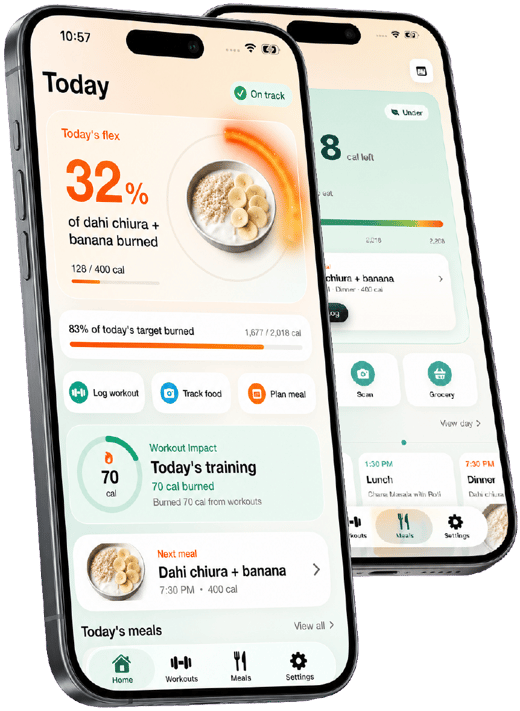
Burnplate sets targets that reflect what changes with age, not just a smaller version of a younger adult's plan.
Protein-first targets, not just calories
Calorie and protein goals are set together, so a lighter appetite doesn't quietly mean falling short on protein.
Photo logging that doesn't require typing
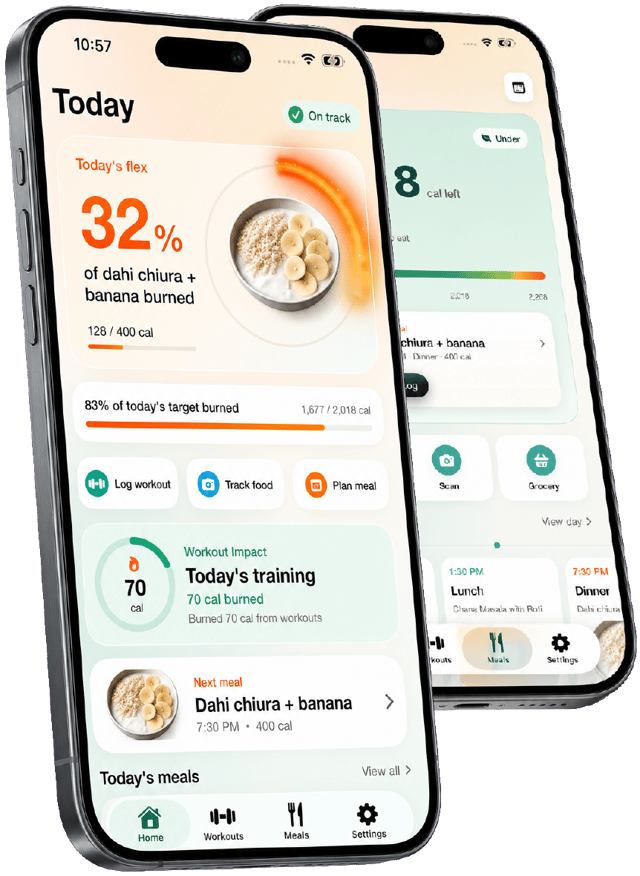
Snap a plate and confirm it — fast for anyone who finds a detailed food diary tedious.
A 7-day plan sized to real appetite
The AI meal plan can build around smaller, more frequent meals instead of three large ones.
Strength-building workouts in the same app
The workout planner includes strength sessions appropriate to level, which pairs with higher protein to protect muscle mass.
Practical guidance
Meal-planning tips for healthy aging
Small habits that make it easier to hit protein and calcium targets without a big appetite to work with.
- 01 Put protein first on the plate
Serving protein before starch or vegetables helps ensure it gets eaten even with a smaller appetite.
- 02 Snack with intention
Cheese, yogurt, nuts and hummus add protein and calories without requiring a full meal.
- 03 Ask about vitamin D and B12
Both commonly run low in older adults regardless of diet quality, and supplementing is often simpler than food alone.
- 04 Check medication-food interactions
Some blood thinners interact with vitamin K-rich greens; ask a pharmacist about your specific list.
- 05 Drink on a schedule, not just thirst
Thirst signals weaken with age, so a habit of drinking with meals matters more than waiting to feel thirsty.
- 06 Keep resistance training in the plan
Protein without any strength training still lets muscle mass slide; even two sessions a week helps retain it.

Get the week planned in one tap
Build my meal plan Burnplate builds a 7-day meal plan around your calories, protein and food preferences, writes the grocery list, and lets you swap any meal you don't feel like.
Questions
Meal planner for seniors: FAQ
How much protein should seniors eat per day?
A common range is 1.0 to 1.2 grams per kilogram of body weight, above the general adult minimum of 0.8 g/kg. For someone managing an illness or recovering from surgery, some guidelines go higher — ask a doctor or dietitian for your specific number.
Why do calorie needs drop but protein needs stay high with age?
Lower muscle mass and activity reduce total calorie burn, but the body also becomes less efficient at using dietary protein for muscle repair as it ages. The result is a smaller calorie budget that has to carry a relatively larger protein share.
What vitamins do seniors commonly need more of?
Vitamin D, calcium and B12 are the three most often flagged. Vitamin D and calcium support bone density, and B12 absorption tends to decline with age regardless of how much B12-rich food someone eats, due to reduced stomach acid.
Can a meal planner app help an older adult eat better?
It can, especially one that tracks protein alongside calories and uses fast logging like a photo of a plate. Burnplate's 7-day meal plan and grocery list also remove some of the planning effort that can make cooking feel like too much.
How much fiber should seniors get daily?
Roughly 25 to 30 grams a day is the common target, similar to younger adults, though intake tends to drop with age. Vegetables, beans, fruit and whole grains close most of the gap without needing a supplement.
Do seniors need to eat more frequently?
Many do better with smaller, more frequent meals than three large ones, since appetite and stomach capacity often shrink with age. Three meals plus one or two protein-forward snacks is a common, workable pattern.
