Matches are built from repeated short sprints and direction changes, not sustained pace. Conditioning that mimics that pattern — short hard bursts, brief recovery, repeat — transfers to the pitch far better than steady jogging.
Why it's different
Why a workout plan for soccer players is built around match day
A soccer workout plan for soccer players isn't a running plan with a ball added — it has to train repeated sprinting specifically, protect against the sport's signature injuries, and never compete with match recovery.
6–8 g/kg carbohydrate per kg bodyweight many players load the day before and day of a match
3–4x/wk strength and conditioning sessions most in-season plans fit around matches
9–12 km distance many outfield players cover across a full 90-minute match
High-speed running and sudden cutting put real strain on the hamstrings and knees. Targeted strength work, especially for the hamstrings and hips, measurably lowers injury rates in players who do it consistently.
Once matches start, the goal of training shifts from building fitness to maintaining it without adding fatigue that shows up on match day.
Glycogen depletion late in a match is a real, measurable driver of slower sprint times and more mistakes — match-day fueling isn't optional for a player who wants to finish as fast as they started.
What it looks like
A sample in-season training week for soccer players
A four-day training week structured around a Saturday match, balancing recovery, strength and conditioning.
Example week
4 training days Days/week20–60 min Session lengthClub to competitive LevelField + basic weights Equipment
Monday Recovery Light mobility work and 20 min easy bike, the day after a match
Tuesday Strength + speed Squats 3x6 · Nordic hamstring curls 3x6 · Sprint starts 6x20m
Wednesday Conditioning 8x30s hard shuttle runs with 90s rest between
Thursday Strength + power Single-leg RDL 3x8 · Box jumps 3x5 · Core circuit
Friday Light technical work 30 min ball work with short activation sprints
Saturday Match day 90-minute match
Sunday Rest or active recovery Easy walk and stretching
How Burnplate handles it
How Burnplate plans a soccer player's week
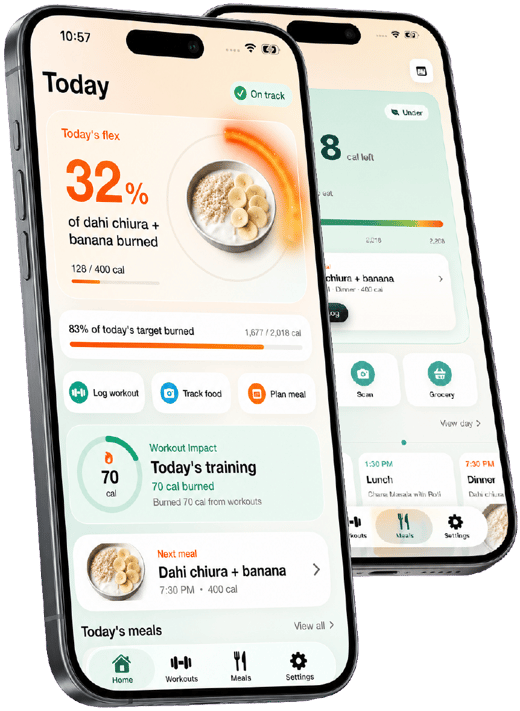
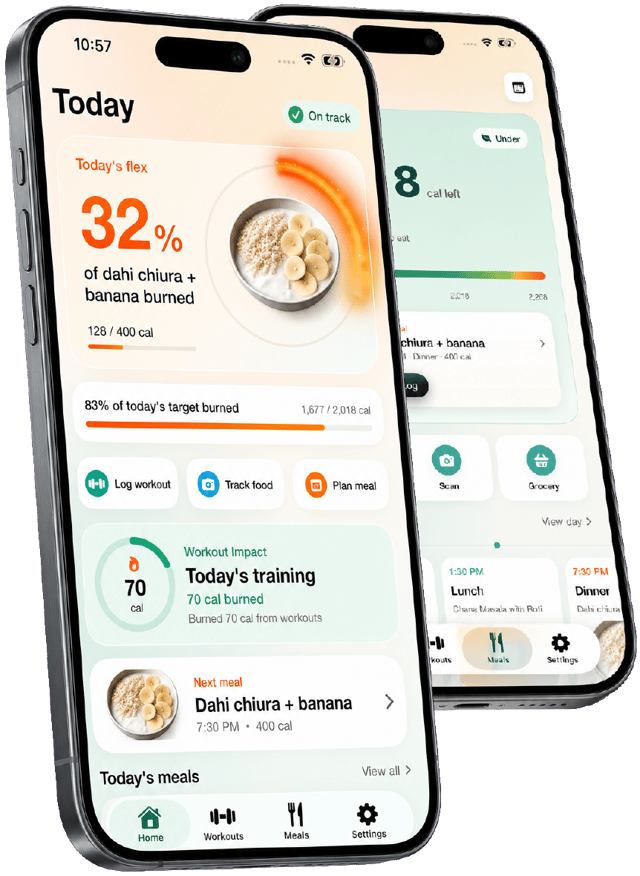
Burnplate fits strength and conditioning around your match schedule and scales fueling for game day.
A plan built around your match schedule
Tell Burnplate your training days and when matches fall, and it fits strength and conditioning sessions around them without adding fatigue right before a game.
Every session and match logged
Log training sessions and matches, and Burnplate keeps a history so you can see strength and conditioning progress across a season.
The burn bar after a match or hard session
After a match or hard conditioning day, Burnplate shows how much of your next meal you've burned off, tying recovery nutrition to what the day actually cost.
Calorie and carb targets that scale on match day
Your daily targets adjust upward around matches, supporting the higher carbohydrate intake players need to fuel a full 90 minutes.
Practical guidance
Training tips for soccer players
Habits that keep speed and legs intact across a full season.
- 01 Load carbs the day before a match
Higher carbohydrate intake in the 24 hours before kickoff supports glycogen stores that carry you through the final third of the match.
- 02 Prioritize hamstring and groin strength
Nordic curls, RDLs and adductor work are among the most evidence-backed exercises for cutting soccer's most common non-contact injuries.
- 03 Use the day after a match for recovery
Light movement and mobility work the day after a match clears fatigue faster than either full rest or hard training.
- 04 Hydrate and replace sodium in heat
Match-day sweat losses in hot conditions are significant — water alone doesn't replace what's lost.
- 05 Treat sleep as part of the training plan
Recovery between matches and training sessions depends heavily on sleep — short sleep blunts both performance and injury resilience.

Build the plan around your week
Build my workout plan Tell Burnplate your days, equipment and level and it builds a progressive workout plan, logs every session, and connects what you burn to what you eat.
Questions
Workout planner for soccer players: FAQ
What is a good workout plan for soccer players?
A good workout plan for soccer players fits 2-3 strength and conditioning sessions around a weekly match, emphasizing hamstring and hip strength, repeated-sprint conditioning, and recovery the day after games.
How many calories does playing soccer burn?
A competitive 90-minute match commonly burns 700-1,100 calories for many players, depending on position, intensity and bodyweight — central midfielders who cover the most ground tend toward the higher end.
What should soccer players eat before a match?
A carb-forward meal 3-4 hours before kickoff, topping off glycogen stores, is standard match-day practice — many players also load slightly higher carbohydrate intake the day before a match.
How often should soccer players lift weights?
In-season, 2-3 shorter, lower-fatigue strength sessions a week is typical, focused on maintaining the strength built in preseason without adding soreness that affects match performance.
How can soccer players prevent hamstring injuries?
Regular hamstring strengthening — Nordic curls are the most studied — along with adequate warm-up and managing high-speed running load, are the most consistently supported ways to reduce hamstring injury risk in soccer.
