
The lower calories go, the more protein has to do the job of protecting muscle. That's why cutting protein guidance sits at the very top of the general range — 2–2.2 g/kg — rather than the 1.6 g/kg floor used for maintenance or a bulk.
Why it's different
Why cutting is riskier for muscle than a general diet
A cut usually starts from a higher calorie baseline after a bulk, with training volume built up to match. Dropping calories fast without adjusting protein or training risks losing a large share of what the bulk built.
600 kcal a typical deficit for a standard cutting pace, about 1–1.5 lb a week
2–2.2g/kg protein at the top of the range to protect muscle during a hard cut
~10% the strength dip that can show up near the end of an aggressive cut
The scale and the mirror lag behind what's actually happening. Watching whether your main lifts hold steady week to week tells you faster whether the deficit is too aggressive.
Trying to maintain full bulking-phase volume on cutting-phase calories is a common way cuts stall or backslide. Trimming volume slightly while keeping intensity high preserves most of the muscle-protecting signal.
Cutting too aggressively (25%+ deficit) accelerates fat loss but disproportionately increases muscle loss and performance drop, especially in the final weeks when body fat is already low.
What it looks like
A sample day while cutting
Built for a lifter with a maintenance estimate around 2,600 calories running a 600 kcal deficit while training four days a week.
Example day
Daily targets
Calories 2,000 kcal roughly 600 below maintenance for a standard cutting pace
Protein 175 g about 2 g/kg — the top of the range to protect muscle
Carbs 160 g trimmed but enough to support training sessions
Fat 55 g kept lean without dropping so low it hurts recovery
A logged day
7:00 AM Egg whites, whole eggs, berrieshigh protein, low calorie start 350 kcal
12:00 PM Turkey, rice, broccoliprotein and carbs sized around the training session ahead 480 kcal
3:00 PM Protein shake, rice cakeskeeps protein climbing without much volume 250 kcal
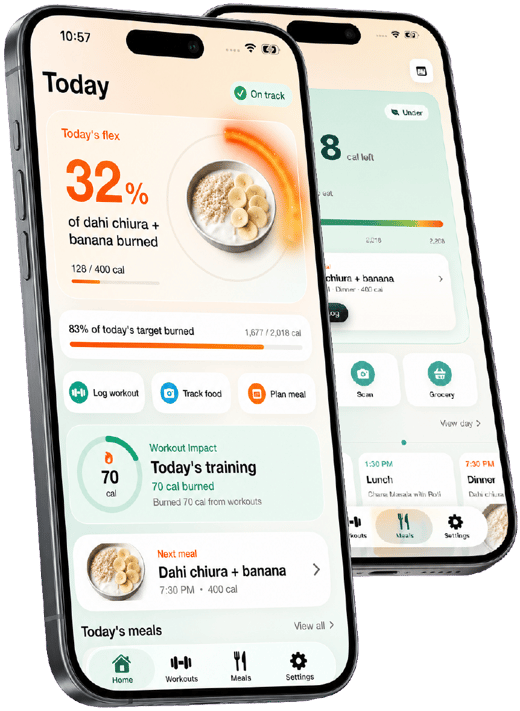
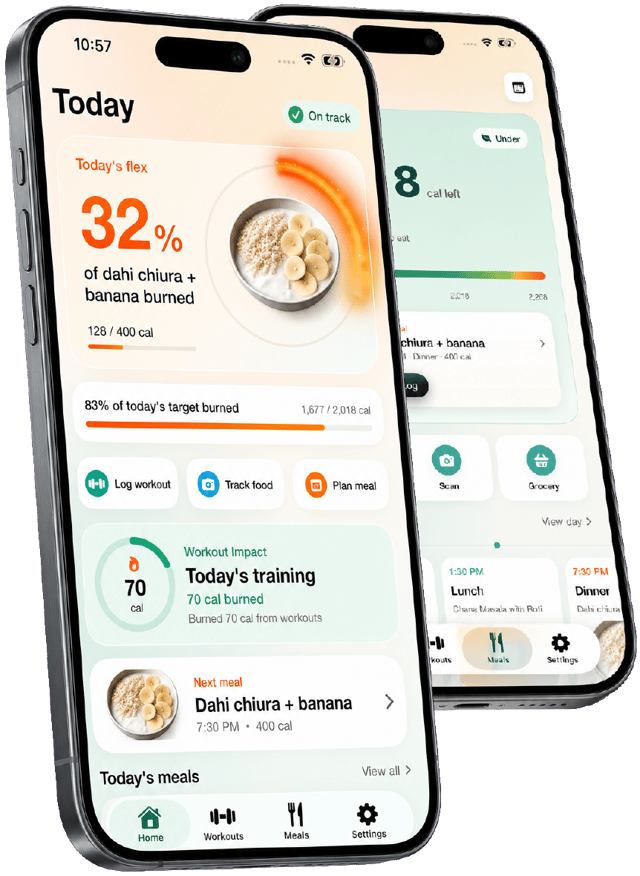
6:00 PM (lift session) —training logged; the burn bar shows the deficit's real size today —
7:30 PM White fish, potatoes, saladthe day's biggest meal, still well inside target 580 kcal
9:00 PM Greek yogurtfinal protein hit, closes the day near 2,000 160 kcal
How Burnplate handles it
How Burnplate handles a cutting phase
The goal is a deficit precise enough to trust, without losing sight of what the training is doing.
Targets that hold protein high as calories drop
Burnplate sets a deficit while keeping protein at the top of the recommended range, instead of cutting all three macros evenly.
A workout planner that adjusts alongside the cut
Keep training logged through the cut so volume and intensity trends are visible — the earliest signal that a deficit has gotten too aggressive.
Photo logging precise enough for a tighter target
A cutting deficit leaves less room for error than a loose maintenance log. Photo logging with portion adjustment keeps the numbers honest day to day.
The burn bar shows exactly what training adds
See how much of today's deficit came from training versus diet alone, so you're not guessing whether a hard session earned extra food.
Practical guidance
Tips for cutting without losing your lifts
The difference between a clean cut and one that erodes a bulk usually comes down to these habits.
- 01 Start the deficit moderate
500–600 calories below maintenance is enough for most cuts. Save a more aggressive deficit for the final few weeks if needed.
- 02 Track your top lifts weekly
A small dip in reps or weight is normal fatigue. A steady multi-week decline is a sign the deficit or protein needs adjusting.
- 03 Trim volume before trimming intensity
Drop a set or two per exercise before lowering the weight on the bar — intensity is what protects strength best on lower calories.
- 04 Keep protein non-negotiable
When appetite drops late in a cut, protein is the last macro to sacrifice — carbs and fat can flex more without hurting muscle retention.
- 05 Plan a diet break if the cut runs long
A week near maintenance every 6–8 weeks on a longer cut helps training performance and adherence without meaningfully slowing fat loss.

Track it with a photo, not a search bar
Start tracking free Burnplate sets your calorie and macro targets, logs meals from a photo, and shows how much of each meal your workouts and steps have burned off.
Questions
Calorie tracker for cutting: FAQ
How many calories should I eat while cutting?
A deficit of 500–750 calories below maintenance is a standard cutting calculator range, producing roughly 1–1.5 pounds of loss per week for most lifters while keeping training performance manageable.
How do I keep my strength while cutting?
Keep protein at the top of the recommended range (2–2.2 g/kg), trim training volume slightly rather than stopping training, and avoid deficits larger than about 25% of maintenance, which is where strength loss tends to accelerate.
How long should a cut last?
Most cuts run 8–12 weeks, long enough to make real fat-loss progress without the extended muscle-loss risk and diet fatigue that come with much longer deficits. Very lean targets sometimes need a longer, more moderate cut.
What's a refeed or diet break, and do I need one?
A refeed is a day at maintenance calories within a cut; a diet break is a full week or two at maintenance during a longer cut. Both help training performance, hunger and adherence — useful on cuts running past six to eight weeks, optional on shorter ones.
Should I cut cardio or add it during a cut?
Light to moderate cardio or extra steps can widen the deficit without much interference to lifting, but adding a lot of high-intensity cardio on top of reduced calories increases the risk of losing muscle alongside fat.
