
Aggressive deficits (25%+ below maintenance) accelerate muscle loss alongside fat loss, especially without resistance training. A 15–20% deficit is often the better tradeoff for someone who wants to keep strength and shape.
Why it's different
Why fat loss needs a different target than 'weight loss'
A generic weight-loss calorie target gets the scale moving. A fat-loss target is built to make sure what's moving is fat specifically — which changes how big the deficit should be and how much protein needs to be in it.
20–25% deficit below maintenance that trims fat without cratering training
1.8–2.2g protein per kg — the higher end of the range specifically for a cut
10k steps a day that quietly adds 300–400 kcal to your daily burn
With less total food coming in, protein has to do more work to prevent muscle breakdown. The 1.8–2.2 g/kg range used for fat loss sits above general weight-loss guidance for exactly this reason.
Cutting calories while also cutting training removes the signal your body needs to preserve muscle. Keeping resistance training in place — even at reduced volume — is what turns a calorie deficit into fat loss instead of just weight loss.
Non-exercise activity like walking is a large, controllable part of daily burn that doesn't add the fatigue or hunger a hard cardio session does — making it one of the easiest levers to widen a deficit sustainably.
What it looks like
A sample day built for fat loss
Built for someone with a maintenance estimate around 2,400 calories running a moderate 20% deficit with resistance training in place.
Example day
Daily targets
Calories 1,900 kcal roughly 20% below maintenance for steady fat loss
Protein 150 g about 2 g/kg — the top of the range to protect muscle
Carbs 170 g fuels lifting sessions without pushing calories too high
Fat 60 g enough for hormones and satiety, trimmed from the total
A logged day
7:00 AM Egg whites, whole eggs, toasthigh protein, low volume start 380 kcal
12:00 PM Turkey chili, side saladhigh protein, high fiber, keeps you full 460 kcal
3:30 PM Protein shakecloses the protein gap without much volume 160 kcal
6:00 PM (lift session) —resistance training logged; burn bar updates the day's balance —
7:30 PM Cod, quinoa, roasted vegetablesthe day's largest meal, still well inside target 600 kcal
9:00 PM Greek yogurtfinal protein hit, rounds the day to 1,900 total 150 kcal
How Burnplate handles it
How Burnplate handles a fat-loss phase
The goal is a deficit that leaves training intact, which means every tool has to talk to every other tool.
Macro-specific targets, not just a calorie number
Burnplate sets protein high while trimming carbs and fat to hit the deficit — the split that's shown to protect muscle better than an even cut across all three.
Photo logging accurate enough for a tighter target
Fat loss needs more precision than a loose maintenance log. Photo logging with portion adjustment keeps day-to-day numbers honest without manual weighing.
The burn bar connects training to the deficit
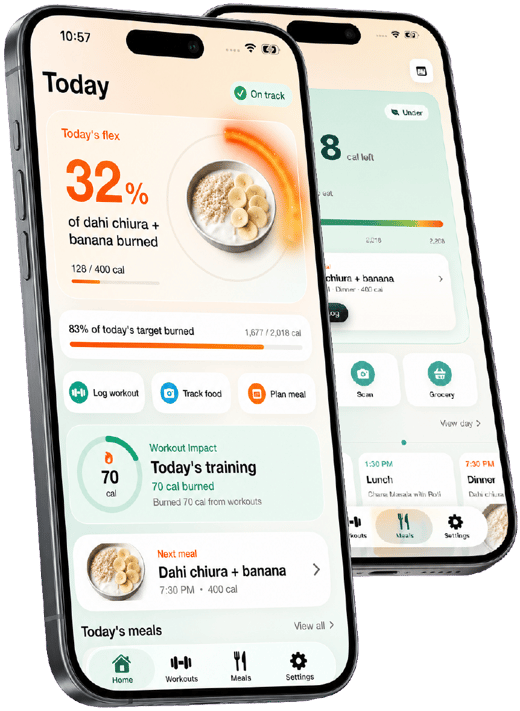
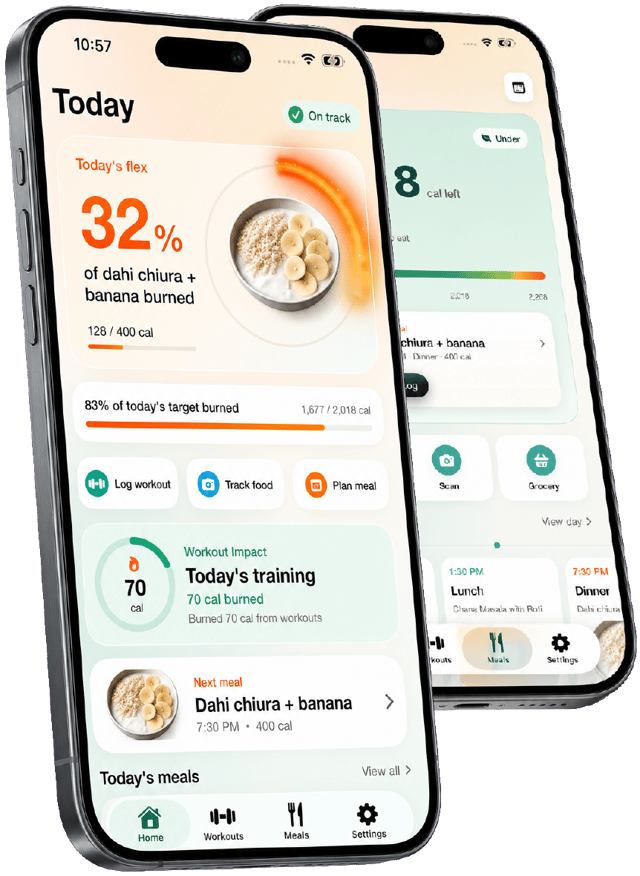
See exactly how much your lifting session and daily steps have added to today's burn, instead of guessing whether you've 'earned' more food.
A workout planner that keeps resistance training in the plan
Burnplate builds a training program around your schedule so the workouts that protect muscle during the cut are actually scheduled, not left to chance.
Practical guidance
Tips for losing fat without losing your training
The difference between fat loss and just weight loss usually comes down to these habits.
- 01 Don't cut training volume too early
Keep lifting sessions close to normal for the first few weeks of a cut — energy dips are usually manageable, and the training signal is what protects muscle.
- 02 Front-load protein at every meal
Hit protein first, then fill remaining calories with carbs and fat. It's the easiest way to stay near 2 g/kg without overthinking every meal.
- 03 Use steps as your adjustable lever
If the deficit needs to widen, add 1,000–2,000 steps before cutting food further — it's easier to sustain and doesn't compete with recovery.
- 04 Track strength, not just weight
If your lifts are holding steady or only dropping slightly, the deficit is likely protecting muscle. A sharp strength drop is a sign the deficit or protein needs adjusting.
- 05 Plan a diet break every 6–10 weeks
A week or two near maintenance during a long fat-loss phase helps recovery and adherence without meaningfully slowing overall progress.

Track it with a photo, not a search bar
Start tracking free Burnplate sets your calorie and macro targets, logs meals from a photo, and shows how much of each meal your workouts and steps have burned off.
Questions
Calorie tracker for fat loss: FAQ
What's the difference between weight loss and fat loss?
Weight loss is any drop in scale weight, which can come from fat, muscle or water. Fat loss specifically targets fat while trying to preserve muscle — which requires higher protein and continued resistance training, not just a calorie deficit.
How big should my deficit be for fat loss?
A moderate deficit of 15–25% below maintenance is generally the sweet spot for a macro calculator for fat loss — large enough to see steady progress, small enough to protect muscle and keep training quality high.
Do I need to lift weights during a fat loss phase?
Yes, if the goal is fat loss specifically rather than just weight loss. Resistance training is the signal that tells your body to hold onto muscle while calories are reduced; without it, more of the weight lost tends to come from lean tissue.
How much protein do I need for fat loss?
Most guidance for a deficit points to 1.8–2.2 g of protein per kg of bodyweight — higher than general weight-loss recommendations — because protein needs increase as total calories come down.
Will cardio or steps speed up fat loss?
They add to the deficit, but steps are usually the better lever than intense cardio because they add less fatigue that could compromise lifting sessions. Both should support the deficit, not replace the calorie tracking that actually drives it.
