Eggs, dairy, legumes, tofu and tempeh all provide solid protein, but none of them show up on a plate automatically the way a chicken breast does. A vegetarian plan puts one of them at every meal deliberately.
Why it's different
Why vegetarian eating needs a plan, not just a meat swap
Removing meat and fish from a plate is simple. Replacing what they were providing — complete protein, easily absorbed iron and B12 — takes a bit more intention, especially for anyone active.
1.0 g/kg protein per kg body weight is a common vegetarian target, slightly above the general 0.8 g/kg minimum
18 mg iron a day is the standard target for menstruating women; plant iron absorbs less efficiently than meat's
2.4 mcg B12 a day is covered by eggs and dairy for most vegetarians — it's not naturally in plant foods
Non-heme iron from beans, spinach and fortified grains absorbs far less efficiently than the iron in meat. Pairing those foods with vitamin C — citrus, peppers, tomatoes — meaningfully improves how much the body actually takes up.
Unlike iron or protein, B12 genuinely isn't in plant foods in meaningful amounts. Vegetarians who eat eggs and dairy regularly usually cover it; anyone eating those rarely should watch this specifically.
You don't need to combine rice and beans in the same bite — hitting a range of protein sources across the day covers the full amino acid profile just as well as pairing them at every meal.
What it looks like
A sample vegetarian day
Around 1,900 calories with protein from eggs, dairy and legumes at every meal, and iron paired with vitamin C at lunch and dinner.
Example day on the plan
~1,900 calories100–110 g protein18 mg iron30 g+ fiber
7:30 AM Veggie omelette & toast3 eggs, spinach, peppers, feta, 1 slice whole-grain toast 420 kcal
10:30 AM Greek yogurt & fruit1 cup Greek yogurt, orange, walnuts 260 kcal
1:00 PM Lentil & spinach bowl1 cup lentils, sautéed spinach, tomato, lemon, feta 480 kcal
4:00 PM Hummus & vegetables½ cup hummus, carrots, bell pepper 220 kcal
7:00 PM Tofu stir-fry & rice180 g tofu, mixed vegetables, ½ cup rice, sesame oil 500 kcal
Smart swaps
White rice alone Rice plus beans or lentilsTurns a carb side into a real protein contribution.
Tea with a meal Tea between meals insteadTannins in tea can reduce iron absorption when had right alongside an iron-rich meal.
Plain salad Salad with beans, cheese or egg on topWithout added protein, a salad-only meal rarely covers its share of the day's target.
Spinach on its own Spinach with lemon or bell pepperVitamin C alongside plant iron noticeably improves how much of it the body absorbs.
How Burnplate handles it
How Burnplate builds a vegetarian week
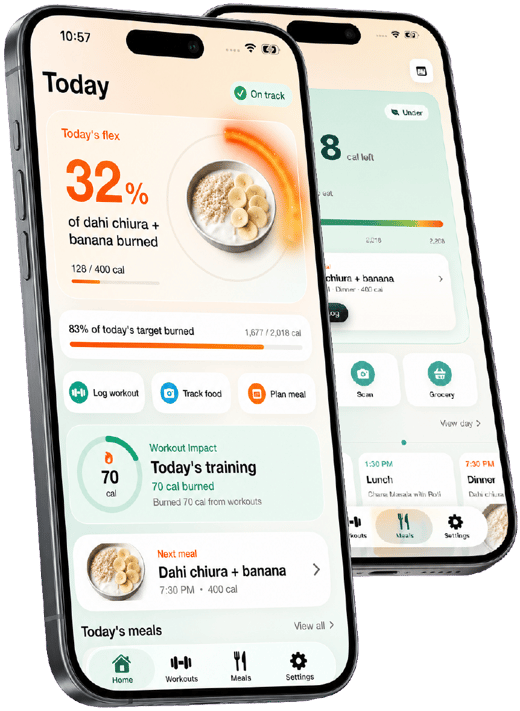
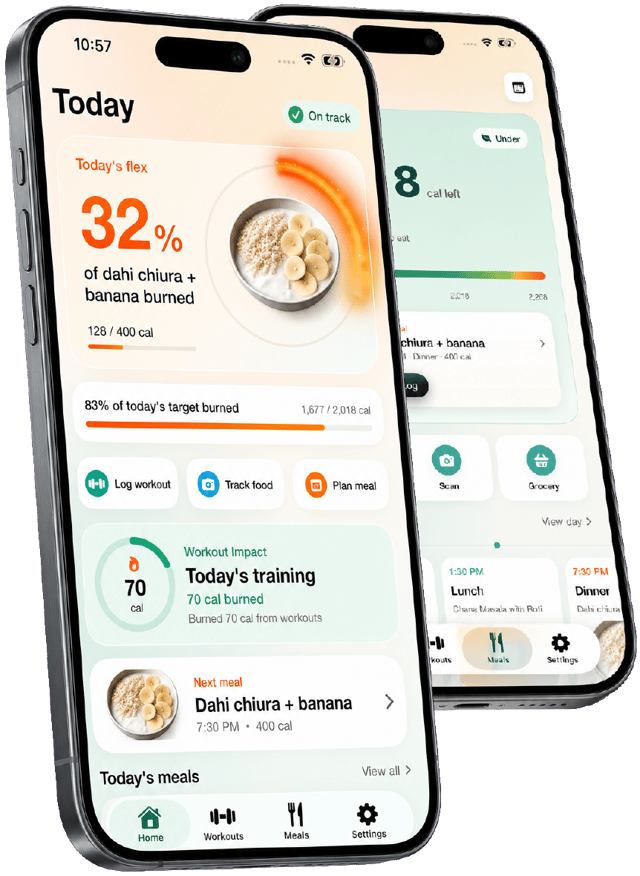
Burnplate sets protein and calorie targets from your body and goal, then builds meals around vegetarian sources instead of meat.
Protein and calorie targets set for you
Burnplate calculates your daily protein and calorie targets from your body, goal and activity, so a vegetarian plan has a clear number to hit rather than a guess.
A 7-day vegetarian plan with a grocery list
Set your food preference to vegetarian and Burnplate's AI meal plan builds a week around eggs, dairy, legumes and tofu, with a consolidated shopping list.
Photo logging for home-cooked and restaurant meals
Snap a plate at a vegetarian-friendly restaurant and Burnplate estimates calories and protein, so eating out doesn't break the plan.
Swap any meal, keep protein on track
Not in the mood for tofu? Swap it for another vegetarian meal and Burnplate keeps the day's protein and calories in range.
Practical guidance
Tips for a vegetarian meal plan that actually works
Habits that keep protein, iron and B12 covered without turning every meal into a research project.
- 01 Name the protein before you cook
Decide whether it's eggs, dairy, legumes or tofu before planning the rest of the meal — it keeps the target from being an afterthought.
- 02 Batch-cook legumes weekly
A pot of lentils or chickpeas made once covers several lunches and adds protein and iron to anything.
- 03 Keep eggs and Greek yogurt stocked
Both are fast, complete-protein options for mornings and snacks when there's no time to cook.
- 04 Pair iron-rich plants with vitamin C
Add citrus, tomato or peppers to bean and leafy-green dishes to improve iron absorption.
- 05 Check B12 if dairy and eggs are rare
Anyone eating little dairy or eggs should ask a doctor about a B12 supplement — it's the one nutrient plants don't provide.
- 06 Don't rely on cheese as the default protein
It's easy to over-lean on cheese for protein; legumes and eggs deliver more protein per calorie.

Get the week planned in one tap
Build my meal plan Burnplate builds a 7-day meal plan around your calories, protein and food preferences, writes the grocery list, and lets you swap any meal you don't feel like.
Questions
Meal planner for vegetarians: FAQ
What is a good diet for vegetarians who want enough protein?
A vegetarian diet that hits protein leans on eggs, dairy, legumes, tofu and tempeh at every meal, aiming for roughly 1.0 g of protein per kg of body weight a day — a bit above the general minimum, especially for anyone active.
What should a vegetarian meal plan include?
A named protein source at each meal (eggs, dairy, beans, lentils or tofu), iron-rich plants paired with vitamin C, and a reliable source of B12 like dairy or eggs. Whole grains and a wide range of vegetables round it out.
How do vegetarians get enough iron?
Mainly from lentils, beans, tofu, spinach and fortified grains, paired with vitamin C — citrus, peppers or tomatoes — at the same meal to improve absorption, since plant iron is absorbed less efficiently than iron from meat.
Is vegetarian meal prep harder than a regular meal plan?
Not really — it just needs a protein source named at each meal instead of defaulting to meat. Batch-cooking legumes and keeping eggs and Greek yogurt on hand makes vegetarian meal prep about as fast as any other style.
Can Burnplate build a vegetarian meal plan?
Yes. Set your food preference to vegetarian and Burnplate's AI meal plan builds a 7-day week around eggs, dairy, legumes and tofu, sized to your calorie and protein targets, with a grocery list and one-tap swaps.
