
Producing breast milk burns roughly 450–500 extra calories a day while exclusively nursing, according to USDA dietary guidance — a real, quantifiable addition, not a rounding error.
Why it's different
Why breastfeeding changes the calorie math
Milk production is metabolically expensive, and the instinct to immediately cut calories after birth runs directly against what a nursing body actually needs in the early months.
+450–500 extra calories per day while exclusively breastfeeding, per USDA guidance
1.1 g/kg protein target — similar to pregnancy, to support milk production
~128 oz typical fluid intake many nursing parents need to feel adequately hydrated
Consistently eating below what breastfeeding requires can affect both milk supply and a parent's own energy and recovery, particularly in the early weeks when supply is being established.
Most guidance suggests waiting until breastfeeding is well established, often around two months, before pursuing intentional weight loss, and then doing so gradually rather than through a large deficit.
Fluid needs rise noticeably while nursing, since a significant portion of milk volume is water — thirst alone often isn't a reliable enough signal in the newborn stretch.
What it looks like
A sample day while exclusively breastfeeding
Built around a pre-pregnancy maintenance estimate of roughly 2,000 calories, plus the ~475-calorie addition for exclusive breastfeeding.
Example day
Daily targets
Calories +450–500 Added to your pre-pregnancy maintenance estimate while exclusively breastfeeding
Protein 1.1 g/kg Similar to pregnancy needs — supports milk volume and your own recovery
Fluids ~128 oz Many nursing parents need noticeably more than the standard baseline
Iodine & choline priority nutrients Both pass through milk and support infant development
Calcium 1,000 mg Your body draws on calcium stores for milk if intake falls short
A logged day
7:00 AM Eggs, avocado toast, orange juiceProtein and fluids to start 480 kcal
10:00 AM Smoothie: yogurt, banana, spinach, milkEasy calories between feeds 320 kcal
12:30 PM Chicken, rice, black beans, salsaProtein-forward lunch 560 kcal
3:00 PM Trail mix and a cheese stickGrab-and-go energy for a one-handed snack 280 kcal
6:30 PM Salmon, farro, roasted vegetablesDHA and iron at dinner 540 kcal
9:00 PM Milk and a granola barExtra calories for overnight feeds 300 kcal
How Burnplate handles it
How Burnplate fits a breastfeeding parent
Burnplate isn't a lactation tool and doesn't replace guidance from a doctor or lactation consultant. It helps a nursing parent track intake without accidentally under-eating.
A target that adds calories back in
Set a maintenance or slight-surplus goal and Burnplate calculates the calorie and protein target from your body and activity, so the breastfeeding addition doesn't get lost in manual math.
Photo logging for one-handed days
Snap a plate between feeds instead of typing into a food search — logging that survives a day with a newborn.
Protein and carbs tracked, not just a number
Macro targets keep protein visible day to day, which matters for both milk production and your own recovery, not just the calorie total.
A shared space if a partner's helping
Groups let a partner see and log meals in the same account space — useful when someone else is doing a lot of the cooking in these first months.
Practical guidance
Practical tips for tracking while breastfeeding
Ways to use a calorie tracker in the newborn stretch without it working against your supply or your energy.
- 01 Eat to hunger, then add a little more
Breastfeeding hunger tends to run ahead of a calculator's estimate — treat the number as a floor, not a ceiling.
- 02 Don't chase pre-pregnancy calories yet
Cutting back to a pre-pregnancy calorie level while exclusively nursing usually means eating meaningfully below what milk production requires.
- 03 Protein and fluids matter too
Hitting the calorie number while running low on protein or fluids still leaves supply and energy vulnerable.
- 04 Watch supply, not just the scale
If supply dips alongside a calorie deficit, that's a signal to add calories back before troubleshooting anything else.
- 05 Keep easy, one-handed food stocked
Cheese sticks, trail mix, yogurt and smoothies close the gap on days when a real meal isn't realistic.
- 06 Weight loss can wait a few months
Most guidance favors waiting until breastfeeding is established, often around two months, before pursuing a deliberate deficit.

Track it with a photo, not a search bar
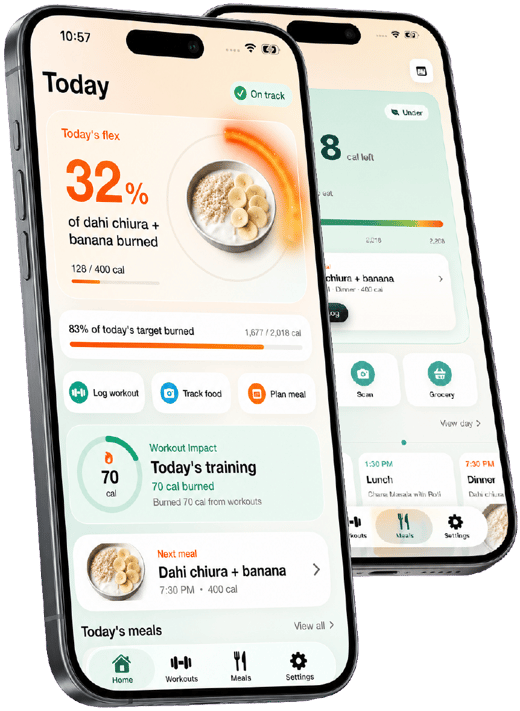
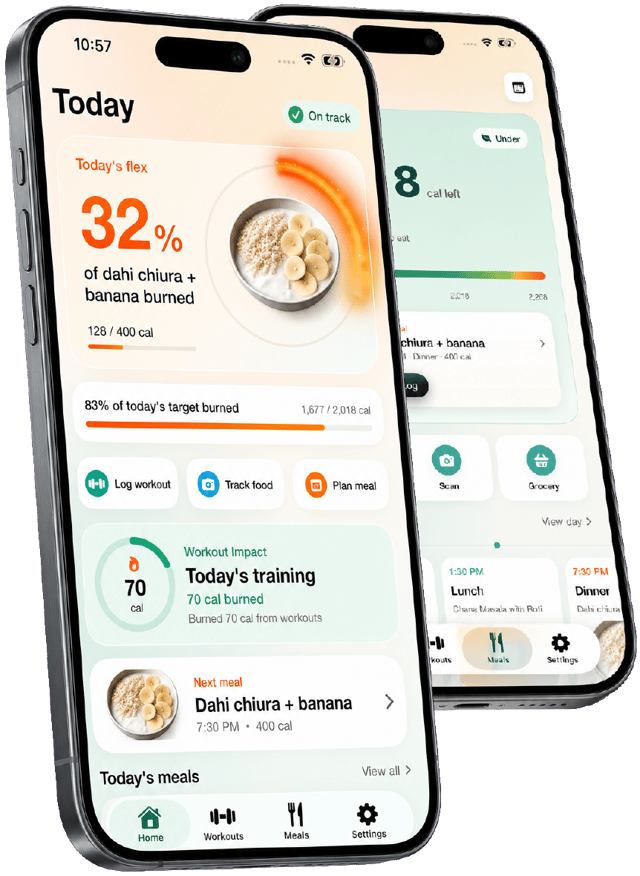
Start tracking free Burnplate sets your calorie and macro targets, logs meals from a photo, and shows how much of each meal your workouts and steps have burned off.
Questions
Calorie tracker for breastfeeding: FAQ
How many extra calories do you need while breastfeeding?
Roughly 450–500 extra calories a day while exclusively breastfeeding, added on top of your pre-pregnancy maintenance calories, according to USDA dietary guidance. The need drops as a baby starts solids and nurses less frequently, so it's worth revisiting the target over time rather than treating it as fixed.
Can undereating affect milk supply?
Consistently eating well below what breastfeeding requires can affect both milk supply and the nursing parent's own energy, especially in the early weeks. It's not usually the first thing to troubleshoot for a supply dip, but it's worth ruling out before assuming something else is wrong.
Is a calorie counter for breastfeeding accurate?
It can give a reasonable estimate — pre-pregnancy maintenance plus roughly 450–500 calories for exclusive nursing — but actual needs vary with how often and how long a baby feeds, plus your own activity level. Treat it as a starting point, and adjust based on hunger and energy rather than the number alone.
When is it safe to start losing weight while nursing?
Most guidance suggests waiting until breastfeeding is well established, often around two months, before pursuing intentional weight loss, then doing so gradually with a modest deficit. A sudden, large calorie cut earlier than that carries more risk to supply and energy than it's usually worth.
Do I need extra protein while breastfeeding?
Yes — protein needs while breastfeeding run similar to pregnancy, around 1.1 g per kg of body weight, to support milk production and your own recovery. Most nursing parents can hit this through normal meals without a dedicated protein supplement.
Does Burnplate account for breastfeeding calorie needs?
You can set your calorie goal to reflect the extra 450–500 calories breastfeeding requires, and Burnplate calculates a macro target from your body and activity from there. It doesn't provide lactation-specific medical guidance — that belongs with a doctor or lactation consultant.
