No single plant protein has the same amino acid profile as meat or eggs. Rotating legumes, tofu, tempeh, seitan and whole grains across the week covers the full range without needing to combine them at every meal.
Why it's different
Why a vegan diet plan needs more intention than "eat plants"
Vegan eating removes every animal source at once, which means several nutrients that used to arrive automatically now need a deliberate plan instead.
1.0–1.2 g/kg protein per kg body weight, slightly above standard targets since some plant proteins digest less completely
250 mcg B12 a day (or 2.4 mcg via a food-form supplement) is the reliable way to cover the one nutrient no plant provides
1.1–1.6 g ALA omega-3s a day from flax, chia or walnuts, since fish is off the table
B12 is made by bacteria, not plants or animals directly — animals get it from their diet or supplementation. On a fully plant-based diet, a supplement or fortified food is the only reliable source; deficiency develops slowly and is easy to miss.
Both are present in beans, lentils, tofu and grains, but absorb less efficiently without meat in the meal. Vitamin C at the same sitting and soaking or sprouting grains and legumes both help meaningfully.
Without fish, the plant omega-3 ALA (flax, chia, walnuts, hemp) becomes the main source, though the body converts it to the more active forms inefficiently. Algae-based supplements are the vegan option for those directly.
What it looks like
A sample vegan day
Around 1,900 calories with protein rotated across legumes, tofu and grains, B12 from a supplement, and flaxseed covering omega-3s.
Example day on the plan
~1,900 calories95–105 g proteinsupplement B121.5 g+ omega-3 (ALA)
7:30 AM Tofu scramble & toast200 g tofu, turmeric, spinach, 1 slice whole-grain toast, avocado 440 kcal
10:30 AM Overnight oats with flax½ cup oats, plant milk, 1 tbsp ground flax, banana 320 kcal
1:00 PM Black bean & quinoa bowl1 cup black beans, ½ cup quinoa, peppers, salsa, avocado 500 kcal
4:00 PM Hummus & vegetables½ cup hummus, carrots, cucumber 220 kcal
7:00 PM Tempeh stir-fry & rice180 g tempeh, mixed vegetables, ½ cup rice, sesame oil 460 kcal
Smart swaps
Almond milk for protein needs Soy milkSoy milk carries meaningfully more protein per cup than almond, oat or rice milk.
White rice alone Rice plus beans, lentils or tofuTurns a carb side into a genuine protein contribution for the meal.
Skipping a B12 source A daily or weekly B12 supplementThe one nutrient plant foods don't reliably provide — not optional on a fully vegan diet.
Oil-based dressing only Add ground flax or chia to a mealAn easy, tasteless way to hit the day's omega-3 target.
How Burnplate handles it
How Burnplate builds a vegan week
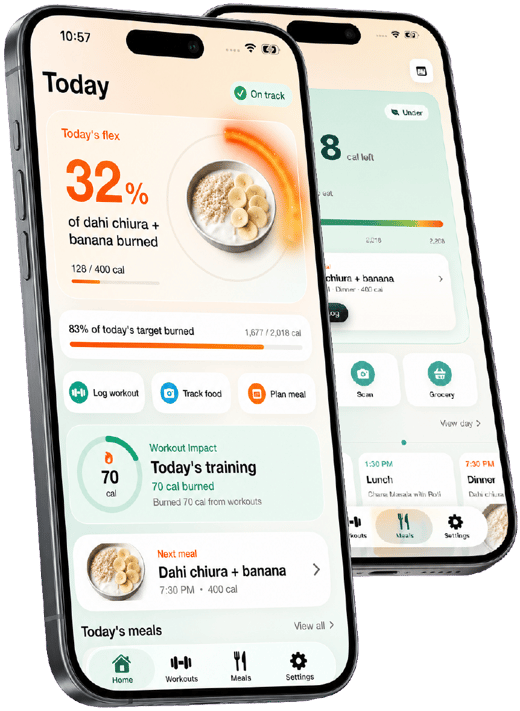
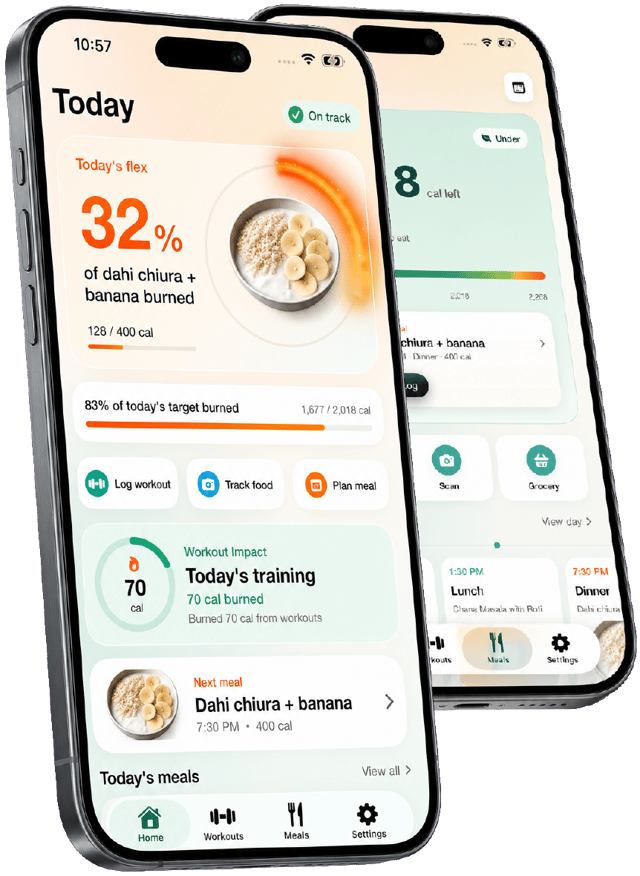
Burnplate builds meals from your calorie and protein targets using entirely plant-based sources when you set that preference.
Protein and calorie targets set for you
Burnplate calculates your daily protein and calorie targets from your body, goal and activity, giving a vegan plan a clear number instead of a guess.
A 7-day vegan plan with a grocery list
Set your food preference to vegan and Burnplate's AI meal plan builds a week around tofu, tempeh, legumes and whole grains, with a consolidated shopping list.
Photo logging for vegan meals out
Snap a plate at a plant-based restaurant and Burnplate estimates calories and protein, so eating out stays part of the plan instead of a blind spot.
Swap any meal, keep the plan vegan and on target
Not feeling the tempeh? Swap it for another vegan meal and Burnplate keeps the day's protein and calories in range.
Practical guidance
Tips for vegan meal prep that covers the gaps
The handful of habits that make a vegan diet plan nutritionally solid, not just animal-free.
- 01 Set a recurring B12 reminder
It's the one nutrient a fully plant-based diet can't reliably provide without a supplement or fortified food — make it automatic.
- 02 Rotate protein sources through the week
Tofu, tempeh, seitan, lentils and beans each bring a slightly different amino acid profile — rotating covers more ground than repeating one.
- 03 Add ground flax or chia daily
A tablespoon in oats, a smoothie or a salad is the easiest way to hit an omega-3 target without thinking about it.
- 04 Batch-cook a grain and a legume weekly
A pot of rice or quinoa and a pot of beans or lentils turns most meals into a five-minute assembly.
- 05 Choose fortified plant milk
Many plant milks are fortified with B12, calcium and vitamin D — check the label and pick one that is.
- 06 Pair iron-rich plants with vitamin C
Beans, lentils and leafy greens absorb iron better alongside citrus, peppers or tomatoes at the same meal.

Get the week planned in one tap
Build my meal plan Burnplate builds a 7-day meal plan around your calories, protein and food preferences, writes the grocery list, and lets you swap any meal you don't feel like.
Questions
Meal planner for vegans: FAQ
How do vegans get enough protein?
By rotating legumes, tofu, tempeh, seitan and whole grains across meals, typically targeting 1.0–1.2 g of protein per kg of body weight — slightly above standard targets since some plant proteins digest a bit less completely than animal protein.
Do vegans need to take supplements?
B12 is the one supplement that's essentially required on a fully plant-based diet, since no plant reliably provides it. Many vegans also supplement algae-based omega-3s and check vitamin D and iron status periodically with a doctor.
What does a vegan meal prep day look like?
It's built around a protein source at every meal — tofu, tempeh, beans or lentils — plus a grain, vegetables and a fat source like avocado or nuts, with flax or chia worked in for omega-3s. See the sample day above for a full 1,900-calorie example.
Can a meal plan for vegans meet all nutrient needs?
Yes, when it's built deliberately around protein rotation, a B12 supplement, iron paired with vitamin C, and an omega-3 source like flax, chia or an algae supplement. Nothing about it requires more effort than following any other structured diet plan.
Does Burnplate support a vegan diet plan?
Yes. Set your food preference to vegan and Burnplate's AI meal plan builds a 7-day week around plant-based protein sources, sized to your calorie and protein targets, with a grocery list and one-tap swaps.
