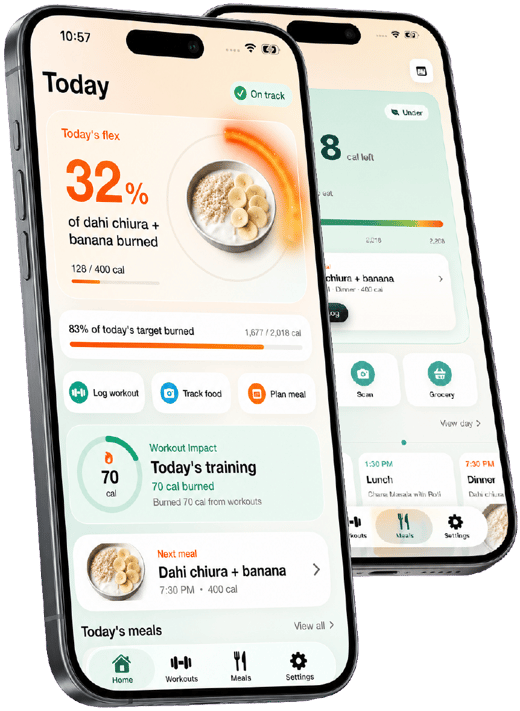

Just as dieters underestimate what they eat, people trying to gain weight often overestimate it. Without logging, a day that feels like 'a lot of food' can land 400–600 calories short of the actual surplus needed.
Why it's different
Why 'just eat more' doesn't work for most people
Gaining weight is a calorie surplus, the mirror of losing weight — but it fails for a different reason. Appetite naturally caps how much most people eat, so 'eat more' without a target usually produces the same calories as last week.
300 kcal a daily surplus that adds roughly 0.5–1 lb a week without excess fat gain
1.6 g/kg protein target so the added weight is mostly muscle, not just fat
3–4×/day meal frequency that makes a surplus achievable without stuffing two meals
A 100–150 calorie surplus is easily lost in normal day-to-day weight noise. A tracked target of 300–500 calories above maintenance is large enough to actually register as gained weight within a few weeks.
Muscle can only be built so fast, even with perfect training. A surplus much larger than 500 calories a day mostly adds fat, not the muscle and strength most people trying to gain weight actually want.
For naturally lean eaters, low appetite — not metabolism — is usually the limiting factor. Calorie-dense foods and more frequent, smaller meals make hitting the target far easier than three large ones.
What it looks like
A sample day in a weight-gain surplus
Built for someone with an estimated maintenance around 2,500 calories aiming for a steady 300 kcal surplus. Scale it to your own numbers.
Example day
Daily targets
Calories 2,800 kcal roughly 300 above maintenance for steady, controlled gain
Protein 150 g about 1.6 g/kg so the surplus builds muscle, not just fat
Carbs 340 g the easiest lever for adding calories without excess fat
Fat 85 g calorie-dense, useful for hitting the target without huge portions
A logged day
7:30 AM Oats, whole milk, peanut butter, bananaa calorie-dense start that isn't a huge plate 620 kcal
11:00 AM Trail mix and a protein shakean easy add-on meal between breakfast and lunch 450 kcal
1:00 PM Chicken, rice, avocado bowlthe day's biggest single meal 700 kcal
4:30 PM Greek yogurt, granola, honeycloses the gap without another full sit-down meal 380 kcal
7:30 PM Salmon, pasta, olive oil, vegrounds the day out well past maintenance 650 kcal
How Burnplate handles it
How Burnplate handles a weight-gain surplus
The goal is the opposite of most calorie apps: not restriction, but making sure enough food is actually happening.
A target that factors in the surplus you need
Burnplate calculates your maintenance calories and adds the surplus for your goal, so the number you're aiming for already accounts for steady weight gain.
Photo logging catches days you under-ate
Snap a photo of each meal and Burnplate totals the day. It's common to discover a 'big eating day' actually landed 400 calories short — logging is what surfaces that.
A 7-day meal plan built around calorie-dense meals
Burnplate's AI meal plan builds a week of meals sized to your surplus and preferences, with a consolidated grocery list so hitting the number doesn't mean extra planning.
The burn bar shows what training used from the surplus
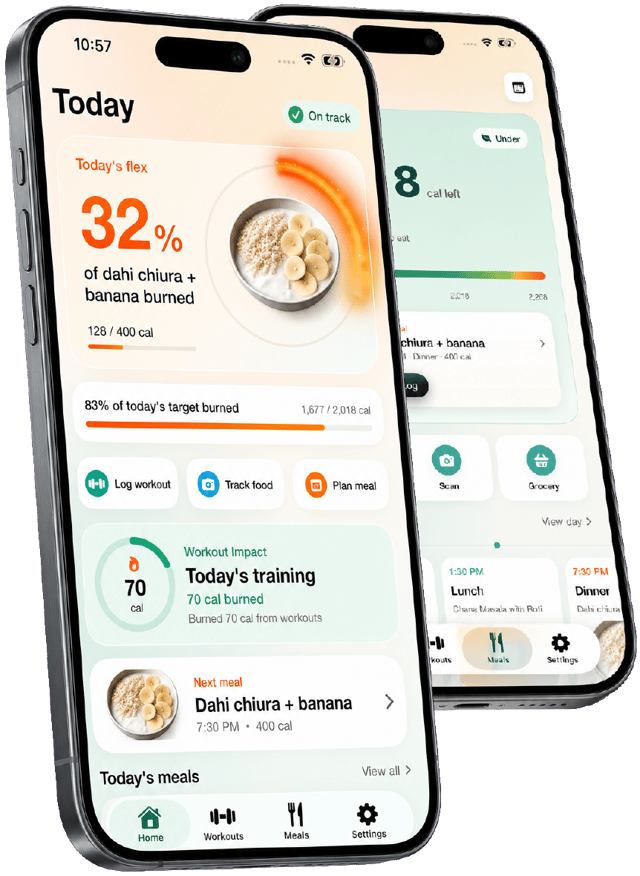
Training and daily steps eat into a surplus the same way they widen a deficit. The burn bar shows how much of today's extra calories your activity has already spent.
Practical guidance
Tips for gaining weight without overcomplicating it
Practical habits for people whose limiting factor is usually appetite, not willpower to restrict.
- 01 Drink some of your calories
A smoothie or whole milk adds hundreds of calories without the fullness of solid food — useful for low-appetite eaters.
- 02 Add fats to meals you already eat
Olive oil, nut butter and cheese raise a meal's calories substantially without adding volume that fills you up.
- 03 Eat on a schedule, not just when hungry
Low appetite can mean skipped meals. Set meal times and eat something even at a 5 out of 10 hunger level.
- 04 Track weekly weight, not daily
A 0.5–1 lb weekly gain is the target. Daily fluctuation from water and food volume will otherwise mask the real trend.
- 05 Pair the surplus with resistance training
Extra calories without training still gain weight, but mostly as fat. Lifting directs more of the surplus toward muscle.
- 06 Don't panic and double the surplus
If the scale hasn't moved in two weeks, add 150–200 calories, not 500. Big jumps overshoot into unnecessary fat gain.

Track it with a photo, not a search bar
Start tracking free Burnplate sets your calorie and macro targets, logs meals from a photo, and shows how much of each meal your workouts and steps have burned off.
Questions
Calorie tracker for weight gain: FAQ
How many calories should I eat to gain weight?
Most people gain steadily on a surplus of 300–500 calories above their maintenance level, which usually produces about 0.5–1 pound of gain per week. A calorie calculator gives a starting maintenance estimate; logging for two weeks confirms whether the surplus is actually landing.
Why can't I gain weight even though I feel like I eat a lot?
It's common to underestimate intake in the opposite direction dieters overestimate theirs — a day that feels like plenty of food can still land short of maintenance. Logging for a few days usually reveals a real gap between perceived and actual calories.
Will a calorie surplus make me gain fat instead of muscle?
Some fat gain is normal with any surplus, but keeping it moderate (300–500 kcal) and pairing it with resistance training and adequate protein directs more of the gain toward muscle. Very large surpluses mostly add fat regardless of training.
How fast should I expect to gain weight?
About 0.25–0.5 percent of bodyweight per week is a reasonable, mostly-muscle pace for someone training consistently. Faster gains are possible but increase the fat-to-muscle ratio of the weight added.
Does a calorie tracker help if I'm trying to gain, not lose?
Yes — the tracking problem is the same in both directions: know your target, log against it, adjust. Burnplate's targets, photo logging and meal planning work the same way whether the goal is a deficit or a surplus.
