
A 30-minute easy shakeout run and a 90-minute tempo session burn very different amounts. A calorie calculator for runners needs to account for pace and distance, not just log 'ran' as a single activity type.
Why it's different
Why a runner's calorie needs aren't flat
Generic calorie calculators use one activity multiplier for the whole week. A runner's actual burn swings hard between an easy 3-miler and a long run, and eating the same amount every day either underfuels the hard days or overshoots the easy ones.
5–7g/kg carbs per kg bodyweight is the range most runners need on heavy mileage days to keep glycogen topped up
1.2–1.6g protein per kg bodyweight helps runners hold onto muscle through high-mileage training blocks
30–60g/hr carbs during runs over 90 minutes is the range most runners need to avoid hitting a wall
Muscle glycogen stores typically support 60 to 90 minutes of running before they start running low. Long runs and race day need carbs eaten beforehand and, past 90 minutes, carbs during the run itself — under-fueling here is the most common cause of hitting a wall.
The muscle rebuilding that makes you faster happens on rest days, not during the run. Consistently undereating around hard training blocks raises injury risk and stalls the adaptation the training was supposed to produce.
Running is high-impact and creates real muscle breakdown, especially on long runs. Protein in the 1.2 to 1.6 g/kg range supports recovery and helps prevent the lean-mass loss that can come with high training volume and a calorie deficit.
What it looks like
A sample day: long-run Saturday
Built around a 12-mile long run in the morning. Carbs are loaded the night before and refueled immediately after — the goal is 5-7 g/kg on days like this, dropping back down on easy or rest days.
Example day
Daily targets
Calories ~2,900 well above rest-day maintenance to cover a 12-mile long run plus daily activity
Carbs ~450 g roughly 6 g/kg for a 75 kg runner on a long-run day — the number that prevents the wall
Protein ~115 g 1.5 g/kg range to support recovery from the run's muscle-damaging load
Sodium extra 500mg+ beyond normal intake to replace what's lost sweating for over 90 minutes
A logged day
6:30 AM Toast + honey + coffee, pre-runeasily digestible carbs 45 minutes before a long run 260 kcal
7:15 AM Run: 12 miles, energy gel at mile 6logged from the run — this is what raises the day's calorie target ~1,000 kcal burned
9:00 AM Recovery shake + banana, post-runcarbs and protein within 30-60 minutes to start glycogen refill 380 kcal
12:30 PM Turkey sandwich, sweet potato, fruitcarb-forward lunch continues the refuel 680 kcal
6:30 PM Salmon, rice, roasted vegetablesprotein and carbs both stay high through dinner on a long-run day 720 kcal
8:30 PM Greek yogurt + granolaevening carbs top off glycogen ahead of tomorrow's easy day 310 kcal
How Burnplate handles it
How Burnplate fuels a training week
Burnplate connects logged runs to your calorie and carb targets so a long-run day and a rest day don't get treated the same.
Calorie and carb targets built from your training load
Set your weekly mileage and goal, and Burnplate sizes calorie and carb targets to match — higher on long-run and workout days, lower on easy and rest days.
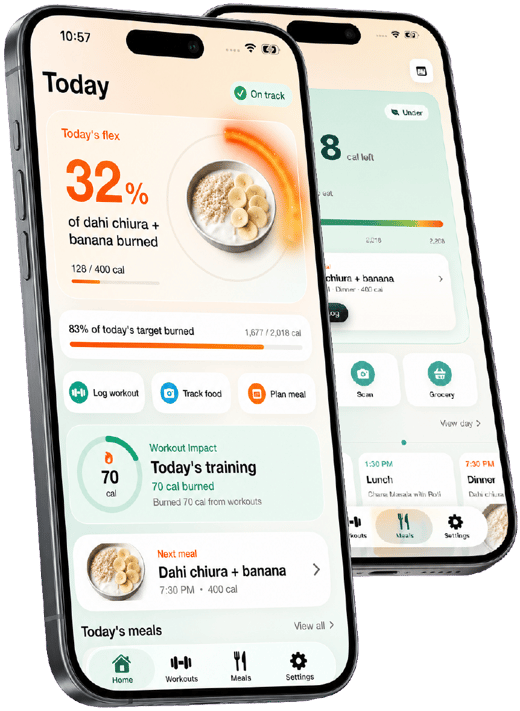
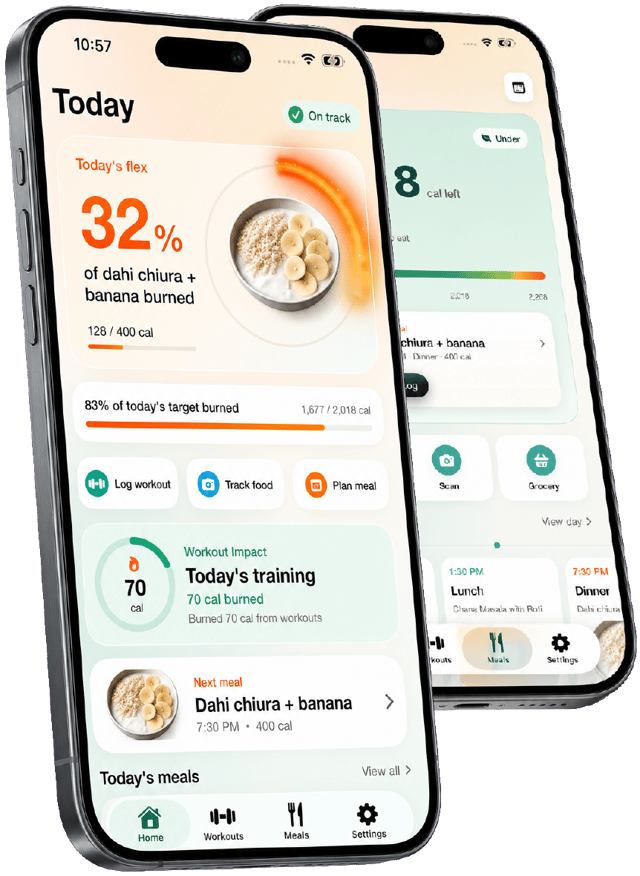
The burn bar shows exactly what a run earned back
Log a run and see the percentage of your next meal it's covered — a concrete way to see that the long run bought you the bigger dinner.
Photo logging for pre- and post-run fueling
Snap the pre-run toast or the recovery shake and Burnplate logs it in seconds, which matters when you're trying to hit a fueling window and not spend it typing into an app.
Macro targets that flex with carb needs
Protein, carbs and fat targets adjust so a heavy mileage week pulls more of its calories from carbs without you doing the math by hand.
Practical guidance
Fueling tips for runners
Practical habits that keep energy up on hard days and recovery on track between them.
- 01 Eat carbs before anything over 60 minutes
A small carb-focused snack 30-60 minutes pre-run reduces the chance of running out of fuel partway through.
- 02 Fuel during runs past 90 minutes
Gels, chews or sports drink providing 30-60 g of carbs per hour prevent the late-run crash on long efforts.
- 03 Refuel in the first hour after a hard run
Carbs and protein eaten soon after training start glycogen refill sooner and blunt next-day soreness.
- 04 Don't cut calories on hard training weeks
A calorie deficit is easiest to sustain on lower-mileage weeks — trying to cut and build mileage at the same time usually backfires.
- 05 Track sodium on hot, sweaty runs
Salty snacks or an electrolyte drink after a heavy-sweat run help replace what plain water doesn't.
- 06 Weigh yourself less, log runs more
Day-to-day weight swings with hydration and glycogen; consistent fueling around your training shows up in performance faster than on a scale.

Track it with a photo, not a search bar
Start tracking free Burnplate sets your calorie and macro targets, logs meals from a photo, and shows how much of each meal your workouts and steps have burned off.
Questions
Calorie tracker for runners: FAQ
How many calories should a runner eat?
It depends heavily on weekly mileage, pace and body size, so there's no single number. Many runners training 20-40 miles a week need 2,400-3,200 calories a day, higher on long-run and workout days and lower on rest days. Burnplate builds your specific target from your body, goal and logged training.
How many carbs should a runner eat per day?
A common range is 5-7 g of carbs per kg of bodyweight on higher-mileage days, and 3-5 g/kg on easy or rest days. For a 70 kg runner, that's roughly 350-490 g on a big training day. Carbs eaten the night before and morning of a long run matter most for avoiding the wall.
Does a calorie counter for runners need to track carbs separately from other calories?
Yes — for runners, carb timing matters as much as the total calorie count. A tracker that only shows total calories misses whether you're getting enough carbs before a long run, which is usually the actual cause of a bad training day, not an overall calorie shortfall.
Should I eat back the calories I burn running?
Largely yes, especially on long-run and workout days. Chronically underfueling training raises injury risk and can stall the fitness gains the training was meant to produce. Burnplate's burn bar shows how much a logged run adds back to your target so you're not guessing.
How much protein do runners need?
Most runners do well with 1.2-1.6 g of protein per kg of bodyweight per day, which is above general population guidelines but below what strength athletes typically target. It supports recovery from the repeated muscle-damaging load of running without needing to eat like a bodybuilder.
Can Burnplate help me fuel for a race?
Burnplate tracks calories, carbs and protein day to day, which is the foundation good race-day fueling is built on, including carb-loading in the days before a long race. It doesn't prescribe a specific race-week protocol — pair its tracking with guidance from a coach or sports dietitian for race-specific fueling.
