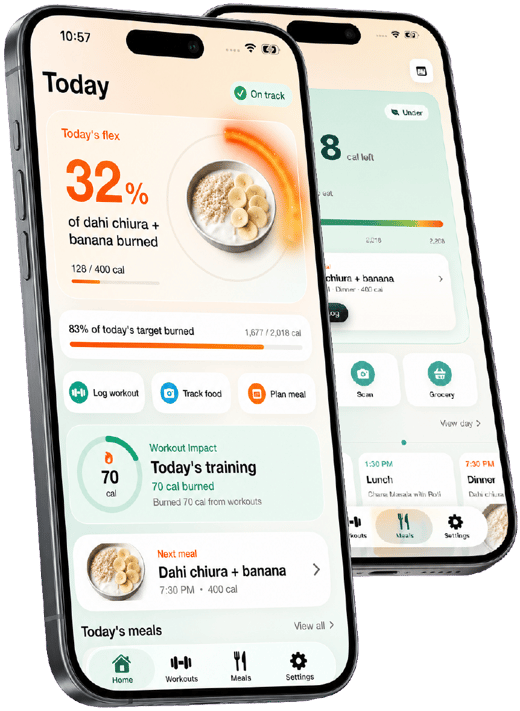

You can't control when your lab runs long or when the dining hall closes. What you can control is having a fast way to log whatever's actually available, whether that's a tray, a vending machine, or a late-night pizza slot.
Why it's different
Why a college calorie tracker looks different
Weight-loss apps built for someone with a home kitchen and a fixed 9-to-5 don't fit a student's week. Classes move, the only kitchen is shared, and the food in front of you was portioned by a cafeteria worker, not you.
1.2–1.6g protein per kg bodyweight keeps you full through a 3-hour lecture block without snacking
~2,300 calories a day is a common maintenance range for an active 19–22 year old — yours depends on size and sex
3 stops most students hit the dining hall or a planned snack roughly three times a day — the rest is noise
Self-serve stations mean the same 'chicken and rice' can be 400 calories or 800 depending on who's serving and how hungry you are. A photo-based calorie counter for college students reads the actual plate instead of assuming a standard serving.
Protein powder and chicken breast are expensive on a student budget. The targets that work are the ones built around dining hall staples, beans, eggs and a $10-a-week snack stash — not a grocery list that assumes a full kitchen.
Late nights, drinks and food that isn't logged because it 'doesn't count' add up fast. A tracker that's quick enough to use at 1 AM catches what a food diary never does.
What it looks like
A sample day for a college student
Built around a dining hall breakfast and lunch, a library snack, and a dinner that doesn't require a kitchen. Around 2,300 calories — Burnplate sets your exact number from your body, goal and activity.
Example day
Daily targets
Calories ~2,300 middle of a common range for an active student — yours may run higher or lower
Protein 110–130 g 1.2–1.6 g/kg keeps you full between the dining hall and the next class
Carbs 260–320 g fuels a full day of classes plus a study session without the 9 PM crash
Fiber 25–30 g the salad bar and fruit station make this one of the easiest targets to hit
Food budget ~$10/day realistic on a meal plan plus dorm snacks, without eating out every meal
A logged day
8:30 AM Dining hall eggs, oatmeal, bananaprotein-first before a 9 AM class beats a granola bar at 10:45 480 kcal
12:30 PM Grilled chicken bowl, rice, roasted vegthe reliable station at most dining halls, most days of the week 640 kcal
4:00 PM Greek yogurt + trail mix, library snackkeeps you out of the vending machine before dinner 300 kcal
7:00 PM Burrito bowl, extra beans, light ricecheap, filling, and easy to rebuild the same way tomorrow 660 kcal
11:00 PM Protein shake + apple, study snacklogged in ten seconds so it doesn't get skipped from the count 260 kcal
How Burnplate handles it
How Burnplate tracks a college schedule
No kitchen, no scale, and a phone that's already open between classes — that's the setup Burnplate is built to log against.
Snap a photo of the dining hall tray
Burnplate reads the plate, you confirm what it found and adjust the portion — faster than searching a food database that doesn't have your dining hall's actual recipe.
Targets sized to an actual 19-to-22-year-old
Calorie and protein targets are built from your body, goal and activity level, not a generic 2,000-calorie label that assumes an adult with a desk job.
The burn bar covers intramurals and the walk to class
Log a pickup basketball game or a fifteen-minute walk across campus and see how much of dinner it covers — a visible reason to take the long way.
Logs a 1 AM snack as fast as a dining hall lunch
Search or photo logging in under a minute, so the late-night slice actually gets counted instead of forgotten by morning.
Practical guidance
Tips for tracking calories in college
Small habits that fit a dorm-and-dining-hall life without adding another thing to plan for.
- 01 Scout your dining hall stations once
Log your usual plate the first week so future logging is a two-tap repeat instead of a fresh search every meal.
- 02 Keep a $10 snack stash in your room
Greek yogurt, fruit, nuts and protein bars fill the gaps between dining hall hours without a vending machine run.
- 03 Put protein on the plate first
Fill a quarter of the tray with protein before carbs — dining halls make it easy to load up on pasta and skip the chicken.
- 04 Log drinks before the night starts
A rough estimate before you go out beats trying to remember four drinks and a slice the next morning.
- 05 Walk the long way to your next class
Ten extra minutes of walking between buildings adds up over a semester and shows up in the burn bar.
- 06 Plan the Friday night instead of winging it
Knowing roughly what you'll eat and drink out lets you leave more room in the day's target ahead of time.

Track it with a photo, not a search bar
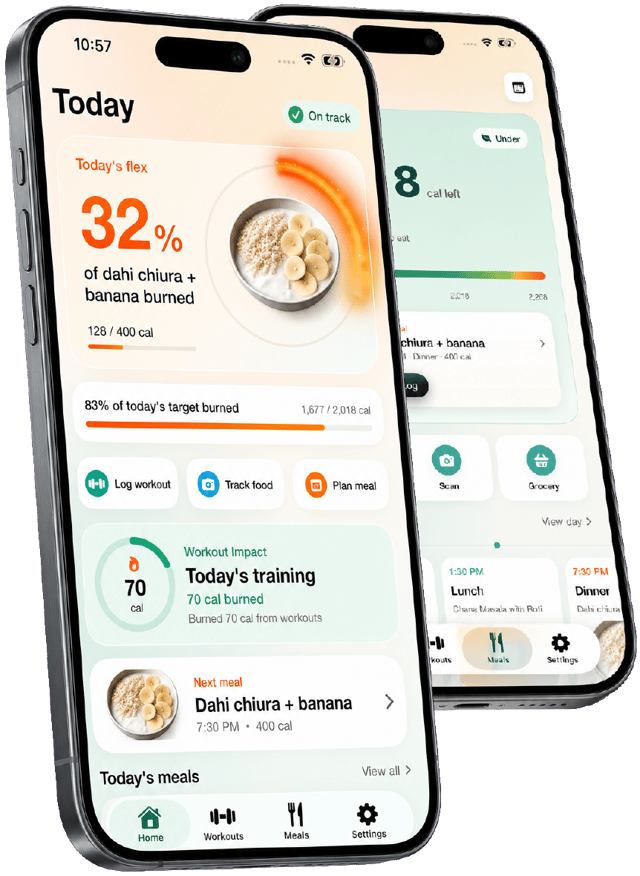
Start tracking free Burnplate sets your calorie and macro targets, logs meals from a photo, and shows how much of each meal your workouts and steps have burned off.
Questions
Calorie tracker for college students: FAQ
How many calories should a college student eat a day?
It depends heavily on your size, sex and how active you are, but many active students land somewhere between 2,000 and 2,800 calories a day for maintenance. Burnplate calculates your specific number from your body, goal and activity level rather than a single campus-wide figure.
How do I use a calorie calculator for college students without a kitchen?
The best approach is photo-based logging: take a picture of your dining hall tray or takeout container and let the app estimate the food and portions. That works whether you're eating from a meal plan, a microwave, or a dorm-room snack stash — no scale or cooking required.
How do I count calories at a dining hall?
Self-serve stations make guessing unreliable, since the same dish can be portioned very differently by different students. A photo calorie counter reads the actual plate in front of you and lets you adjust the portion, which is far more accurate than estimating from a printed nutrition sign.
Do late-night snacks and alcohol count toward my calories?
Yes, and they're usually the calories students forget to log. Alcohol has calories with no nutritional payoff, and late-night food is often eaten without much thought. Logging both, even roughly, is usually what closes the gap between a plan and what actually happened.
Can I track calories on a tight food budget?
Yes. The targets in this guide are built around dining hall staples, eggs, beans, yogurt and fruit rather than expensive supplements. A student can hit 110-130 g of protein a day on roughly ten dollars of food, especially with a meal plan covering two of the five daily stops.
Will Burnplate help with the 'freshman fifteen'?
It won't stop weight gain by itself, but the loss of routine that drives it usually comes from not seeing the numbers at all. Setting a target and logging dining hall meals with a photo makes the gap visible early, while it's still a pound or two instead of fifteen.
