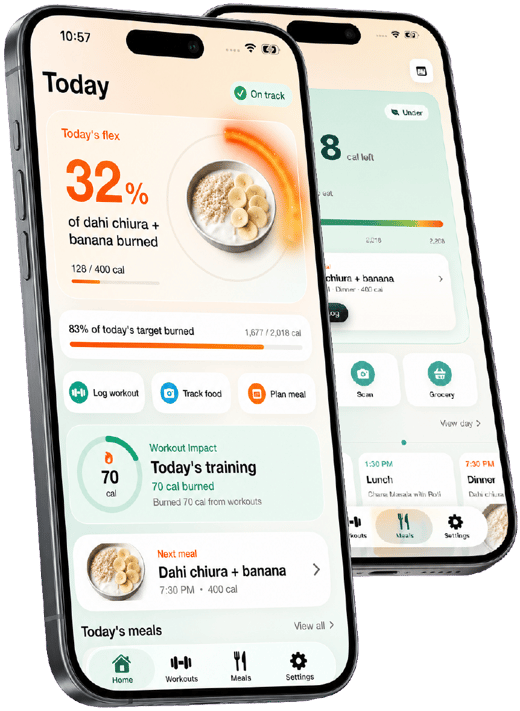

Treadmill and elliptical displays commonly overstate calories burned by 20–40%, because they can't account for individual fitness level or exact effort. Eating back what the machine claims is a fast way to erase a deficit without realizing it.
Why it's different
Why calorie tracking still matters when you 'eat a lot'
A higher average maintenance calorie level doesn't mean the number doesn't matter — it means the margin for error is bigger before it shows up, which makes it easier to drift for months without noticing.
2.2–3k typical daily calorie range for moderately active men — yours may differ
1.6 g/kg protein target many men miss despite eating enough total food
10k steps a day that moves the needle more than another 20 minutes at the gym
Many men hit their daily protein number but load most of it into dinner, leaving breakfast and lunch protein-light. Since muscle protein synthesis responds to protein arriving every few hours, an even spread does more with the same daily total.
Portion size, not just food quality, is the more common miss. Large servings of otherwise healthy food — a big bowl of pasta, a double portion of rice — can add up to a surplus even when nothing on the plate looks like junk food.
A 300-calorie daily miss shows up faster on a 1,800-calorie target than a 2,800-calorie one — which is exactly why men often go longer before a slow gain or stalled loss becomes obvious enough to address.
What it looks like
A sample day for an active man
Built for a moderately active man with an estimated maintenance around 2,800 calories running a moderate deficit for weight loss.
Example day
Daily targets
Calories 2,400 kcal roughly 400 below maintenance for a steady, sustainable pace
Protein 160 g about 1.7 g/kg, spread across the day rather than stacked at dinner
Carbs 250 g fuels training without needing to be restrictive
Fat 70 g enough for hormones and satiety without eating into the deficit
A logged day
7:00 AM Eggs, oats, whole milk40 g protein before noon, not left for dinner to cover 560 kcal
12:30 PM Chicken burrito bowlanother 40 g protein at lunch, high volume for the calories 620 kcal
3:30 PM Protein shake, bananacloses the protein gap without adding much volume 260 kcal
6:00 PM (gym session) —burn bar shows actual burn, not the machine's estimate —
7:30 PM Steak, rice, broccolithe day's largest meal, still landing on target 650 kcal
9:00 PM Greek yogurtfinal protein hit, rounds the day to 2,400 total 150 kcal
How Burnplate handles it
How Burnplate builds a target for men
The goal is a number grounded in your actual body and training, not a gym-machine estimate or a round default.
A calorie and macro target from your body, not a guess
Burnplate calculates your target from your stats, goal and activity level, so it reflects your actual maintenance rather than a generic assumption.
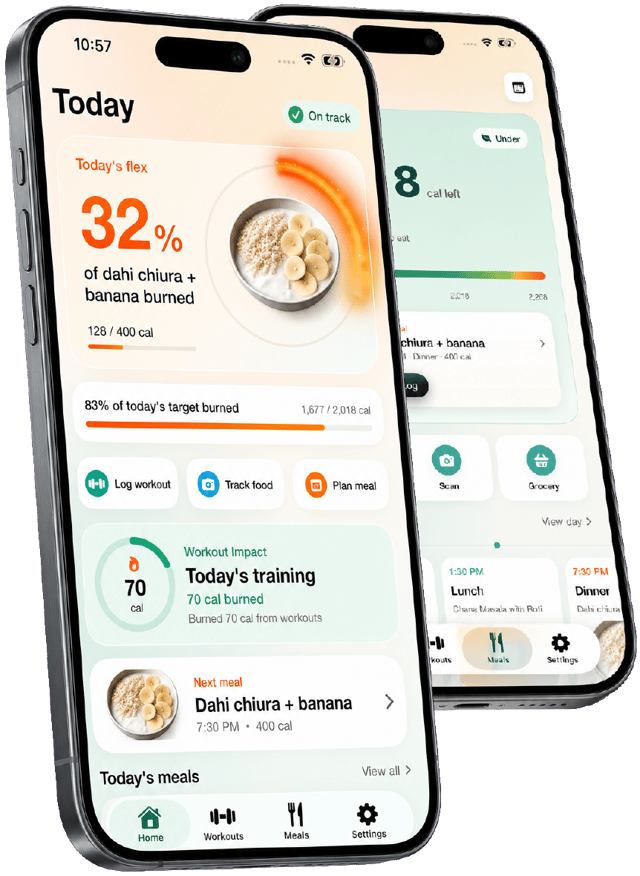
The burn bar shows real training burn, not machine estimates
See what your workout and daily steps actually contributed to today's balance, instead of the inflated number a cardio machine displays.
Photo logging that catches portion creep
Snap a photo of a meal and adjust the portion Burnplate estimates — the step that catches the 'healthy but oversized' plate before it adds up over a week.
A workout planner built around your schedule
Burnplate builds a progressive resistance or training plan around your days per week and equipment, and logs sessions so training and food targets stay connected.
Practical guidance
Tips for tracking calories without overthinking it
Habits that close the usual gaps without turning every meal into a spreadsheet.
- 01 Don't trust the cardio machine's number
Use it as a rough guide at most — logged, estimated burn from Burnplate's burn bar is a more honest number to eat against.
- 02 Spread protein across the day
Aim for 30–40 g at each of three to four meals instead of loading most of it into dinner.
- 03 Watch portions on 'healthy' meals
Rice, pasta and oils are easy to oversize even in otherwise balanced meals — a rough gram or cup estimate beats eyeballing.
- 04 Log at least a few days a week
Even partial tracking catches drift early. Going months without any log is the most common way a slow gain goes unnoticed.
- 05 Use steps as a lever before cutting food further
10,000 steps a day adds meaningfully to daily burn without the recovery cost of extra hard training sessions.

Track it with a photo, not a search bar
Start tracking free Burnplate sets your calorie and macro targets, logs meals from a photo, and shows how much of each meal your workouts and steps have burned off.
Questions
Calorie tracker for men: FAQ
How many calories should a man eat a day?
It depends on body size, muscle mass and activity level, but a calorie calculator for men typically puts moderately active adults somewhere between 2,200 and 3,000 calories a day for maintenance. Your actual number depends on your specific stats, not a flat average.
Why do calorie needs vary so much between men?
Muscle mass, height, age and daily activity level all move the number significantly — two men of the same weight can have maintenance calories several hundred apart if one carries noticeably more muscle or moves more throughout the day.
Is it true men can eat more and still lose weight?
On average yes, because men typically have a higher maintenance calorie level than women of similar height due to more muscle mass — but the same rules still apply: a deficit is still required, and portion creep still adds up.
How much protein does a man actually need?
Roughly 1.6 g per kg of bodyweight covers most goals, including muscle building and maintenance during a deficit. The more common issue isn't the daily total but how it's distributed — spreading it across meals works better than one large protein-heavy dinner.
Do gym machines overestimate calories burned?
Generally yes, often by 20–40%, since they can't fully account for individual fitness level, exact effort or body composition. Treat the displayed number as a rough estimate rather than something to eat back one-to-one.
