A body-part split needs 4–5 consistent days to cover everything. If your week is unpredictable, a full-body session three times a week hits every major muscle group even when a fourth day never happens.
Why it's different
Why a busy schedule needs a different kind of plan
Most workout plans are written assuming an hour, four gym visits a week, and a predictable calendar. Busy people need a plan that's built around the opposite — short sessions, wide margins, and no penalty for a missed day.
30 min a realistic session length that most people can protect on even a packed day
2×/week minimum frequency per muscle group needed to maintain or build strength, per ACSM guidance
6–8 moves total exercises per session when every one is a compound lift working multiple muscles at once
A squat, a row and an overhead press each work several muscle groups at once. Building a session around 6–8 compound moves gets you the coverage of a longer isolation-heavy workout in a third of the time.
Thirty minutes done consistently produces more progress over a year than a planned hour that only happens sporadically. A busy-people plan is designed around adherence first, volume second.
Every exercise switch, warm-up set and equipment hunt eats into your 30 minutes. A short plan works best with a small number of stations and simple transitions.
What it looks like
A sample week for busy people
Three full-body sessions a week, each built around compound lifts so nothing important gets skipped even when only 30 minutes are available.
Example week
3 Days/week30 min Session lengthAny LevelDumbbells or gym Equipment
Monday Full body A Goblet squat 3×10 · Push-up or bench press 3×10 · Bent-over row 3×10 · Plank 3×30s
Wednesday Full body B Romanian deadlift 3×10 · Dumbbell shoulder press 3×10 · Lat pulldown or pull-up 3×8 · Bike or walk 10 min
Friday Full body C Reverse lunge 3×10/leg · Incline dumbbell press 3×10 · Seated cable row 3×10 · Dead bug 3×10/side
How Burnplate handles it
How Burnplate handles a busy schedule
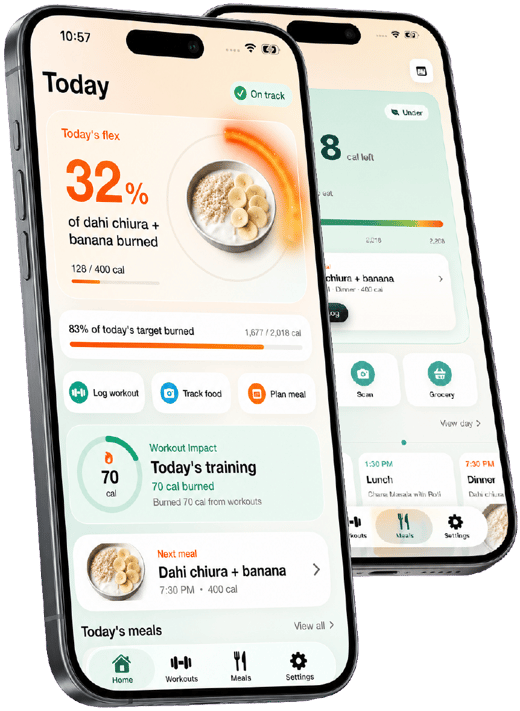
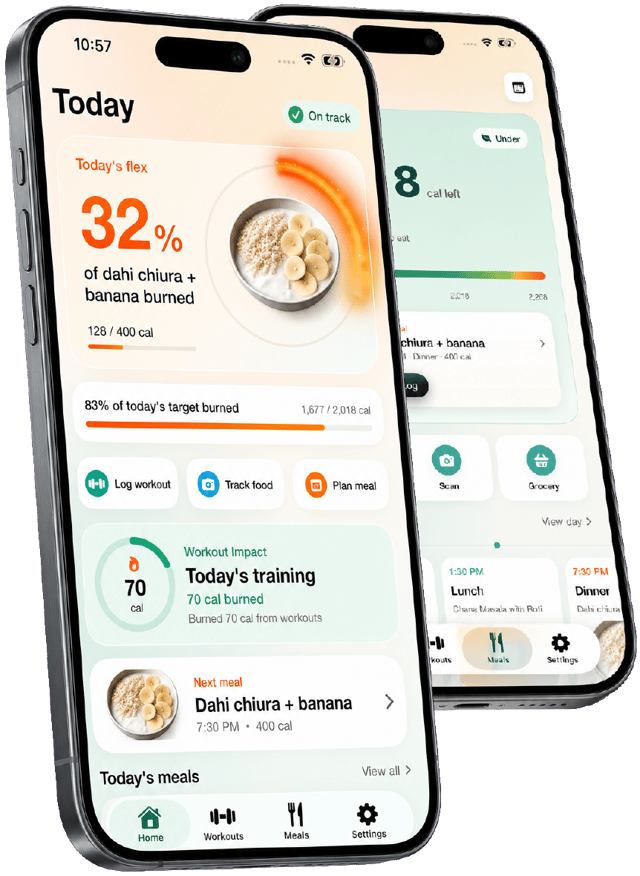
Burnplate builds around the time you actually have and makes logging fast enough that tracking never becomes the reason a session gets skipped.
A plan built for your real days, not an ideal week
Tell Burnplate how many days and how much time you have and it builds a progressive plan around exactly that — no assumption you'll find an extra hour.
Photo logging for meals on the go
Busy weeks mean more meals eaten out or on the run. Snap a photo, confirm what Burnplate found, and log it in seconds instead of searching a database.
The burn bar rewards a short session too
A 30-minute workout still shows up as a visible chunk of your day's calories burned — useful motivation on days when a short session is all that's realistic.
Session logging built for speed
Log sets and reps in a few taps so tracking doesn't add extra minutes to an already tight session.
Practical guidance
Tips for training consistently on a busy schedule
Small habits that protect a short workout plan from disappearing during a busy month.
- 01 Schedule it like a meeting
A workout that's on the calendar gets protected the same way a meeting does; one that's 'whenever I have time' rarely happens.
- 02 Keep a gym bag packed
Removing the 10 minutes of prep before a session is often the difference between going and skipping it.
- 03 Pick a default time, not a perfect one
The best time to train is the one you'll actually keep — first thing in the morning is popular precisely because nothing else has claimed it yet.
- 04 Lower the bar on hard weeks
A 15-minute version of the plan beats zero minutes; permission to do less keeps the habit alive through busy stretches.
- 05 Batch-prep food on your training days
Pairing meal prep with a gym day means one less decision competing for time later in the week.
- 06 Track workouts, not just time spent
A quick workout plan is easy to judge unfairly by how short it felt — tracking sets and reps shows the real progress a 30-minute session builds.

Build the plan around your week
Build my workout plan Tell Burnplate your days, equipment and level and it builds a progressive workout plan, logs every session, and connects what you burn to what you eat.
Questions
Workout planner for busy people: FAQ
What's a good workout plan for busy people?
A full-body routine done 2–3 times a week in 30-minute sessions covers every major muscle group without requiring a daily gym visit. Compound lifts like squats, rows and presses do the most work per minute, which is what makes a short plan effective.
Is a 30 minute workout plan enough to see results?
Yes, especially when sessions are built around compound movements and done consistently. Frequency and consistency matter more for most goals than session length — three solid 30-minute workouts a week outperform one long session that happens sporadically.
How many days a week should busy people work out?
Two to three days a week is realistic and effective for most busy schedules. Fewer than that makes it hard to maintain strength; more than that often isn't sustainable unless the calendar genuinely allows it.
What if I can only fit in 15 minutes some days?
A shorter version of a full-body session — 4–5 compound exercises for 2 sets each — is far better than skipping the day entirely. Keep a backup short session ready for exactly this situation.
Do I need a gym membership for a busy workout plan?
No. A pair of adjustable dumbbells at home covers most of a full-body quick workout plan. A gym adds convenience and heavier loading options but isn't required to see progress.
How do I stay consistent when my schedule changes weekly?
Build the plan around a minimum — for example, three sessions somewhere in the week — rather than fixed days, and treat any completed session as a win regardless of when it happened. Rigid schedules are usually what breaks first for busy people.
