
Cutting 1,000+ calories a day feels fast at first, but it tanks energy, wrecks workouts and makes bingeing far more likely. A 500–750 kcal deficit loses fat at a rate you can actually sustain for months, which is what the weight-loss research consistently shows works best.
Why it's different
Why most weight-loss plans don't last
The plan isn't the hard part — sticking with it past week two is. The plans that work share a few unglamorous traits: they're not too aggressive, they don't ban entire food groups, and they're boring in the best way.
500 kcal a daily deficit of about this size loses roughly 1 lb of fat a week for most adults
1.6 g/kg protein per kg of body weight helps preserve muscle while you're eating less overall
25 g+ fiber a day most people need to actually feel full on fewer calories
When calories drop, your body will pull energy from muscle as well as fat unless protein intake stays high. Aiming for roughly 1.6 g per kg of body weight protects the muscle you have, which keeps your metabolism higher as the number on the scale falls.
Plans built around lean protein, fiber and volume — think big salads, broth-based soups, whole fruit — keep you full on fewer calories than plans built around refined carbs and liquid calories. Satiety is a food-choice problem more than a discipline problem.
A rotating set of 5–6 meals you know the calories of removes the daily decision fatigue that derails most diets. Novelty is nice on Sunday; on Tuesday at 7 PM, a meal you've made ten times before is what keeps the streak alive.
What it looks like
A sample day on a weight-loss meal plan
Built around a 500 kcal deficit for a moderately active adult — roughly 1,700 calories with protein and fiber doing most of the work to keep you full.
Example day on the plan
~1,700 calories120 g+ protein28 g+ fiberunder 25 g added sugar
7:00 AM Greek yogurt bowl1 cup plain Greek yogurt, ½ cup berries, 2 tbsp granola 320 kcal
12:00 PM Chicken & veggie bowl150 g grilled chicken, ½ cup rice, roasted broccoli, salsa 480 kcal
3:30 PM Apple + peanut butter1 medium apple, 1 tbsp peanut butter 180 kcal
6:30 PM Salmon & big salad140 g salmon, mixed greens, chickpeas, olive oil dressing 520 kcal
8:30 PM Cottage cheese¾ cup cottage cheese, cinnamon 150 kcal
Smart swaps
Granola bar Hard-boiled eggs or Greek yogurtSimilar calories, far more protein and staying power between meals.
Soda or juice Sparkling water or black coffeeRemoves 150–200 liquid calories a day without touching your actual meals.
Fried sides Roasted or air-fried vegetablesCuts added oil calories while keeping the volume and crunch you're after.
Large pasta plate Half pasta, half protein and vegSame plate, roughly a third fewer calories, and it holds hunger longer.
How Burnplate handles it
How Burnplate builds your weight-loss plan
Burnplate turns your calorie and protein targets into a week of real meals, so the plan runs itself.
Targets set from your body and goal
Burnplate calculates your calorie and protein targets from your stats, activity and how fast you want to lose, then builds every meal to land inside them.
A 7-day plan with a grocery list
The AI meal plan generates a full week around your preferences and produces one consolidated shopping list, so planning takes minutes, not an evening.
Log in seconds, even off-plan
Snap a photo of any meal — plan or not — and Burnplate logs the calories and macros automatically, so an unplanned lunch never breaks your tracking.
See training close the gap
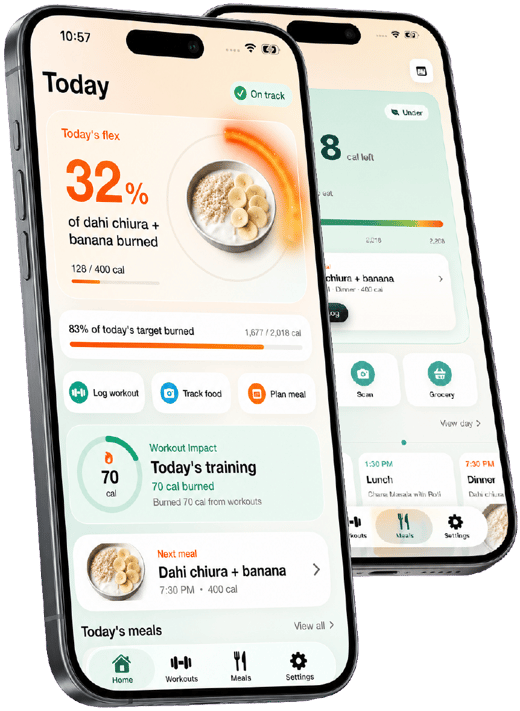
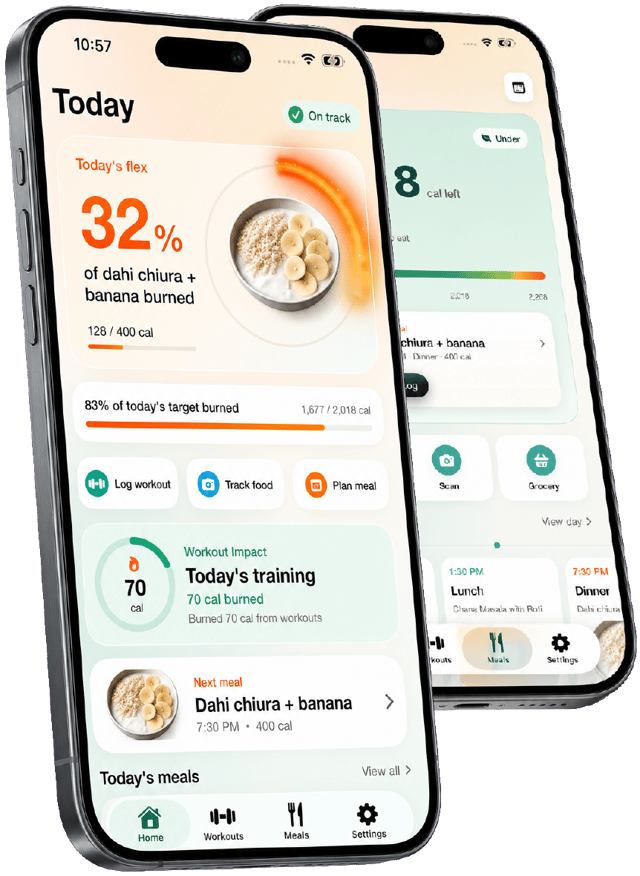
The burn bar shows what percentage of a meal your workouts and steps have offset, connecting the deficit you're eating to the activity that's helping it along.
Practical guidance
Weight-loss meal-planning tips that actually hold up
Small structural choices that make a deficit easier to sustain for months, not just a week.
- 01 Protein at every meal, not just dinner
Spreading protein across the day controls hunger far better than saving it all for one meal.
- 02 Plan for your hungriest hour
Most people have one time of day they raid the pantry. Put a real, planned snack there instead of leaving it to chance.
- 03 Cook once, eat four times
Batch-cook a protein and a grain on Sunday and you remove the daily decision that derails most plans.
- 04 Weigh in weekly, not daily
Day-to-day weight swings with water and food volume. A weekly average is the number that actually tracks fat loss.
- 05 Keep one meal flexible
Building in a planned restaurant meal or takeout night each week makes the other six easier to hold to.
- 06 Don't zero out fat
Very low-fat plans are harder to stick to and can affect hormones. Keep fat around 25–30% of calories rather than cutting it to the bone.

Get the week planned in one tap
Build my meal plan Burnplate builds a 7-day meal plan around your calories, protein and food preferences, writes the grocery list, and lets you swap any meal you don't feel like.
Questions
Meal planner for weight loss: FAQ
How many calories should I eat to lose weight?
Most adults lose weight steadily on a deficit of 500–750 calories a day below maintenance, which works out to roughly 1 to 1.5 lb of fat loss a week. The exact number depends on your current weight, activity level and sex — Burnplate calculates it from your stats rather than using a flat number for everyone.
What is the best meal plan for weight loss?
There isn't one universal plan — the best one is whichever moderate deficit you can actually eat for months. What matters more than the specific foods is hitting a protein target of roughly 1.6 g per kg of body weight and getting enough fiber to stay full, which any eating style can be built around.
How much protein do I need to lose weight?
Aim for around 1.6 g of protein per kg of body weight per day, and don't go much below 1.2 g/kg even on a lower-calorie plan. Protein preserves muscle while you're in a deficit, which is what keeps your metabolism from dropping as fast as the scale does.
Can meal prep really help with weight loss?
Yes — people who prep meals in advance tend to eat closer to their calorie target because the decision is already made. Having a calorie-counted lunch ready removes the moment where hunger and convenience usually win out over the plan.
How does Burnplate build a weight-loss meal plan?
Burnplate calculates your calorie and protein targets from your body, goal and activity level, then generates a 7-day plan of meals that hit those numbers, plus a consolidated grocery list. You can swap any meal and it keeps the day's calories in range automatically.
Do I need to exercise to lose weight with a meal plan?
No — weight loss is driven primarily by the calorie deficit in your meal plan. Exercise helps preserve muscle, improves how much you can eat while losing, and Burnplate's burn bar shows how much of a meal your activity has offset, but it isn't required for the plan to work.
