Sodium makes the body hold onto fluid, raising blood pressure; potassium helps the kidneys excrete more sodium. A diet that's low in one and high in the other does more than either change alone.
Why it's different
Why high blood pressure needs its own approach
Blood pressure is unusually responsive to diet compared with other conditions — the DASH trials showed effects within weeks, which is part of why it's the most-recommended dietary approach for hypertension.
<2,300 mg sodium a day is the general upper limit; 1,500 mg is the stricter DASH target for a bigger effect
4,700 mg potassium a day from food is the DASH target that helps counter sodium's effect on blood pressure
8-14 mmHg average systolic drop shown in DASH diet trials, in the range of a single blood-pressure medication
Roughly three-quarters of dietary sodium in a typical US diet comes from packaged and prepared foods. Cooking more meals at home is usually the biggest lever, even without adding less salt at the table.
Built specifically to lower blood pressure, it emphasizes vegetables, fruit, whole grains, low-fat dairy and lean protein, and has shown drops comparable to a first-line medication in trials.
Losing even 5-10 lb often produces a measurable drop in blood pressure on its own, working alongside — not instead of — the DASH-style food changes.
What it looks like
A sample day for high blood pressure
Around 1,680 calories built the DASH way: vegetables and fruit at most meals, lean protein, low-fat dairy, and sodium kept under control by cooking at home.
Example day on the plan
set to your goal caloriesunder 2,300 mg sodium4,700 mg from food potassiumlow-fat, lean dairy / protein
7:30 AM Oatmeal with banana and walnuts½ cup oats, 1 banana, walnuts, cinnamon 420 kcal
12:00 PM Turkey and white bean soup with side saladlow-sodium broth, white beans, turkey, mixed greens 460 kcal
3:00 PM Plain yogurt with berries¾ cup plain yogurt, ½ cup berries 200 kcal
6:30 PM Grilled chicken, sweet potato and spinach5 oz chicken, roasted sweet potato, sauteed spinach 520 kcal
8:00 PM An orange1 medium orange 80 kcal
Smart swaps
Regular canned soup or broth Low-sodium or no-salt-added versionsCanned soups are one of the biggest hidden sodium sources in a normal day
Deli meat or bacon Fresh-cooked chicken, turkey or fishCured and processed meats carry several times the sodium of the same cut cooked fresh
Salted snack foods Fruit, unsalted nuts or plain popcornRemoves a fast sodium hit and adds potassium and fiber instead
Restaurant or takeout meals often Home-cooked meals most nightsRestaurant food averages far higher sodium per meal than the same dish cooked at home
How Burnplate handles it
How Burnplate plans a DASH-style week
Burnplate builds the two sides of the DASH pattern at once: lower sodium sources and higher potassium foods.
Calorie targets support the weight-loss lever
Burnplate's personalized calorie target supports the modest weight loss shown to lower blood pressure on its own, alongside the food-quality changes.
A 7-day plan built DASH-style
The AI meal plan can favor vegetables, fruit, whole grains and lean protein within your preferences, with a grocery list that keeps high-sodium staples out of the cart.
Log a meal, see what's driving sodium
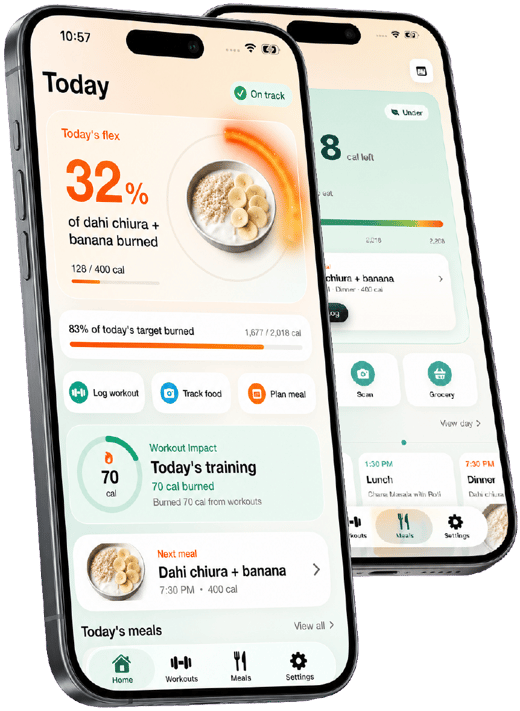
Photo or text logging surfaces what's in a meal, useful for noticing which foods are quietly high in sodium.
Activity tracked next to food
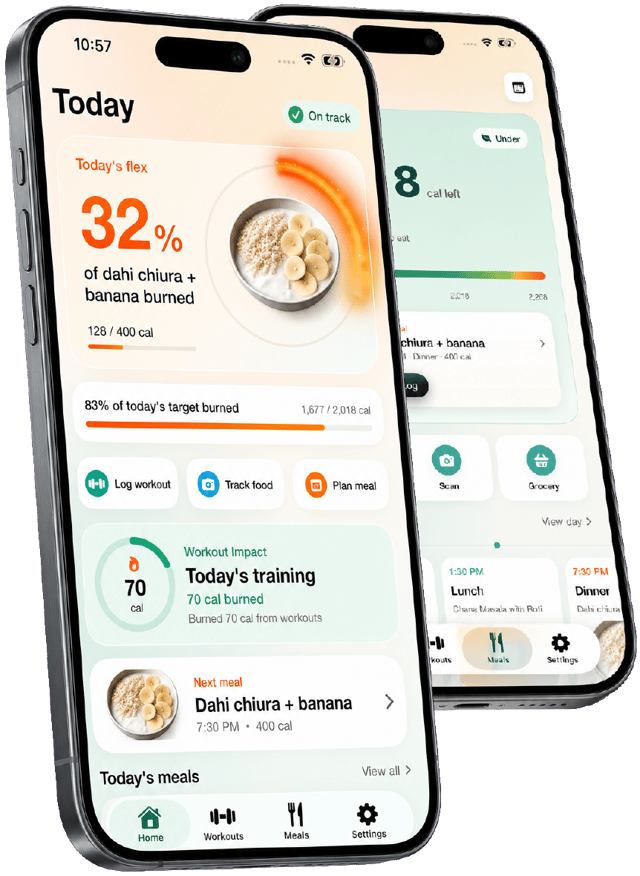
Regular activity has its own blood-pressure-lowering effect; Burnplate shows workouts and steps alongside meals on the same screen.
Practical guidance
Tips that help with high blood pressure
Practical habits that shift both sides of the sodium-potassium balance.
- 01 Cook more meals at home
This is the single biggest sodium lever for most people, since packaged and restaurant food carries most of the sodium in a typical diet.
- 02 Rinse canned beans and vegetables
A quick rinse removes a meaningful share of the added sodium from canning liquid.
- 03 Build plates around vegetables and fruit first
This is the fastest way to raise potassium intake without thinking about specific foods.
- 04 Check labels for sodium, not just fat
Sodium hides in bread, sauces and cereal as much as in obviously salty snacks — the label is the only reliable check.
- 05 Limit alcohol
More than moderate drinking raises blood pressure; guidelines suggest up to 1 drink a day for women and 2 for men.
- 06 Track blood pressure at home, same time of day
A consistent home routine shows the trend, not just a single reading, and helps you see whether food changes are working.

Get the week planned in one tap
Build my meal plan Burnplate builds a 7-day meal plan around your calories, protein and food preferences, writes the grocery list, and lets you swap any meal you don't feel like.
Questions
Meal planner for high blood pressure: FAQ
What is the best diet for high blood pressure?
The DASH diet has the strongest evidence — vegetables, fruit, whole grains, low-fat dairy and lean protein, low in sodium and saturated fat. Trials show it can lower systolic pressure by 8-14 mmHg, in the range of a first medication.
What is a DASH meal plan?
A day-to-day eating pattern built around the DASH research: roughly 4-5 servings each of vegetables and fruit, whole grains, low-fat dairy, lean protein, and limited sodium, sweets and saturated fat.
What should a meal plan for high blood pressure include?
Meals built around vegetables, fruit, whole grains and lean protein, cooked mostly at home to control sodium, with potassium-rich foods like beans, leafy greens and bananas at most meals.
What is the best diet for hypertension without medication?
DASH combined with a sodium target under 2,300 mg, or 1,500 mg for a bigger effect, and regular activity is the most evidence-backed non-medication approach, though some people still need medication alongside it.
How much sodium should I eat with high blood pressure?
General guidance caps sodium at 2,300 mg a day, with 1,500 mg recommended for a larger blood-pressure effect, especially for anyone already diagnosed with hypertension.
Can a meal planner app help lower blood pressure?
It can help build the DASH pattern into a repeatable week and make sodium sources visible when you log a meal. Burnplate does both, though it doesn't replace blood-pressure monitoring or medical advice.
