
Thirty days is long enough to break habitual reliance on sugar and packaged food, but the program is explicitly not meant to continue indefinitely — reintroduction is part of the plan, not a failure of it.
Why it's different
Why Whole30 is a reset, not a diet
Whole30's whole design is to remove several food groups at once, long enough to notice how you feel, then bring them back one at a time to find out which ones actually matter for you personally.
30 days is the full elimination window before reintroduction starts — the program isn't designed to be shorter
0 g added sugar or artificial sweetener is allowed for the full 30 days, including in sauces and dressings
2 days per food group added back during reintroduction, to see that food's individual effect
No sugar, honey, maple syrup or artificial sweeteners — including in sauces, dressings and cured meats. Reading every label is unavoidable for the first week or two until you know which brands qualify.
Adding back dairy, then grains, then legumes, one at a time with a couple of days between, is how Whole30 identifies personal triggers instead of just guessing which food group was the issue.
With grains, legumes, dairy, sugar and alcohol out, most packaged and restaurant food is disqualified — Whole30 works best for people who can commit to cooking most meals for the month.
What it looks like
A sample Whole30 day
Around 1,900 calories from Whole30-compliant meat, fish, eggs, vegetables, fruit and compliant fats — no sugar, grains, legumes, dairy or alcohol.
Example day on the plan
~1,900 calories0 g added sugar120 g+ proteinolive, avocado, coconut compliant fats
7:30 AM Eggs, sweet potato hash & avocado3 eggs, diced sweet potato, ½ avocado, sautéed onion 460 kcal
10:30 AM Fruit & compliant jerky1 orange, 1 oz sugar-free beef jerky 220 kcal
1:00 PM Chicken & roasted vegetable bowl180 g chicken, roasted vegetables, olive oil, lemon 480 kcal
4:00 PM Raw almonds & carrots20 almonds, carrot sticks 220 kcal
7:00 PM Grilled fish & cauliflower rice160 g fish, cauliflower rice, sautéed greens, olive oil 460 kcal
Smart swaps
Store salad dressing Olive oil and vinegar or citrusAlmost every bottled dressing has added sugar; a two-ingredient version doesn't.
Bacon from the regular aisle Sugar-free, compliant baconMost bacon is cured with sugar — Whole30 requires checking the label or finding a compliant brand.
A protein bar Fruit and nutsNearly all bars have added sugar or non-compliant ingredients baked in.
Wine with dinner Sparkling water with citrusAlcohol is off the list for the full 30 days, no exceptions.
How Burnplate handles it
How Burnplate supports a Whole30 round
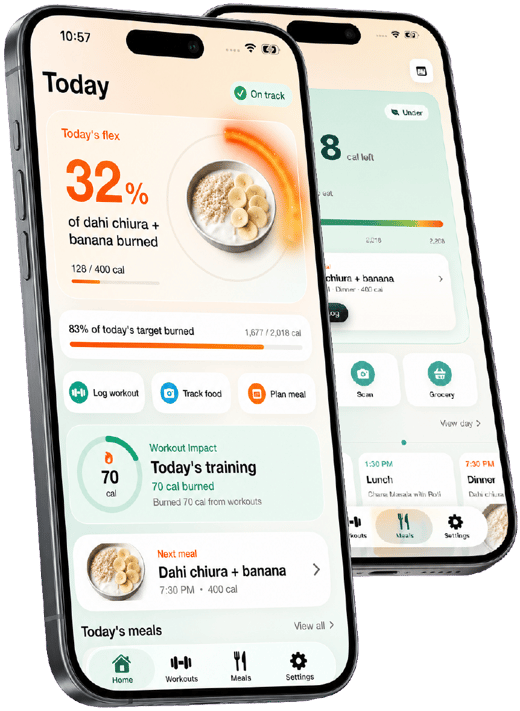
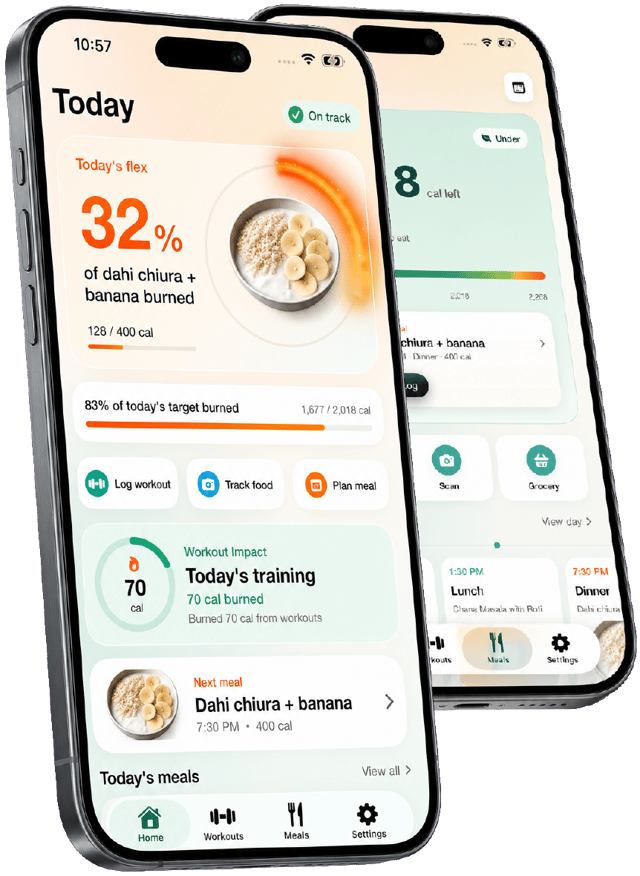
Burnplate isn't Whole30-branded, but its logging and planning tools make the 30 days easier to track and repeat.
Photo logging that flags what you actually ate
Snap a plate and Burnplate estimates the calories and macros, which helps you notice patterns — energy, digestion, cravings — across the 30 days as food groups stay eliminated.
Calorie and protein targets throughout
Whole30 doesn't set calorie rules, but eating enough matters for sticking with it. Burnplate keeps your targets visible so the elimination doesn't turn into accidental under-eating.
A 7-day meal plan built from whole foods
Burnplate's AI meal plan can build weeks around meat, fish, eggs, vegetables and fruit with a grocery list, which covers most Whole30-compliant meals directly.
Swap any meal, stay consistent
Not feeling the fish? Swap it for another whole-food meal and Burnplate keeps the day's calories and protein in range while you stay on plan.
Practical guidance
Tips for surviving all 30 days
The habits that separate a Whole30 round that finishes from one that quietly stops around day 10.
- 01 Read every label, every time
Sugar hides under a dozen names in sauces and cured meats — check even brands you've used before, since recipes change.
- 02 Meal-prep the first week hard
The first week is the highest dropout risk; having pre-cooked meals ready removes the moment you'd otherwise reach for something non-compliant.
- 03 Keep a compliant sauce on hand
A simple olive oil, vinegar and herb dressing or a compliant hot sauce keeps meals from tasting like punishment.
- 04 Eat enough — this isn't a diet plan
Whole30 isn't about restriction; under-eating makes the elimination harder to sustain and skews how you feel by day 30.
- 05 Plan the reintroduction before day 30
Decide the order (usually dairy, then gluten grains, then non-gluten grains, then legumes) ahead of time so day 31 isn't improvised.
- 06 Track how you feel, not just what you eat
Energy, sleep, digestion and skin are the actual signal Whole30 is testing for — the food log is just the record.

Get the week planned in one tap
Build my meal plan Burnplate builds a 7-day meal plan around your calories, protein and food preferences, writes the grocery list, and lets you swap any meal you don't feel like.
Questions
Meal planner for Whole30: FAQ
What is on the Whole30 food list?
Meat, poultry, fish, eggs, vegetables, fruit, nuts, seeds and compliant fats like olive, avocado and coconut oil. Added sugar, alcohol, grains, legumes and dairy are all excluded for the full 30 days, along with any food containing them as an ingredient.
Can I lose weight on a Whole30 meal plan?
Many people do, mostly from cutting added sugar, alcohol and processed food, but weight loss isn't the program's stated goal — Whole30 is designed as an elimination-and-reintroduction reset, not a calorie-restriction plan.
What happens after the 30 days?
A structured reintroduction: adding back one food group at a time (commonly dairy, then gluten grains, then other grains, then legumes) over about 10 days, watching for any reaction before adding the next group.
Is Whole30 the same as paleo?
They're similar but not identical — both exclude grains, legumes and dairy, but Whole30 also bans all added sugar (even natural sweeteners like honey) and alcohol, and is explicitly time-limited to 30 days rather than an ongoing diet.
Can Burnplate help me track a Whole30 round?
Yes. Burnplate's photo and text logging track what you eat and your calorie and protein targets throughout, and its AI meal plan can build weeks from whole-food ingredients that cover most Whole30-compliant meals.
