
An easy 20-mile spin and a hard 20-mile time trial cover the same ground but burn very different amounts of energy. A cycling calorie calculator needs to account for intensity and duration, not just miles logged.
Why it's different
Why cycling calorie needs swing so widely
Running has a fairly predictable calorie cost per mile. Cycling doesn't — the same hour on a bike can burn anywhere from 400 to 900+ calories depending on power output, terrain and drafting, which makes a flat 'exercise' multiplier especially inaccurate for riders.
60–90g carbs per hour is what many cyclists need during rides over two hours to avoid bonking
1.2–1.6g protein per kg bodyweight supports recovery between back-to-back training days
500–900 calories an hour is a realistic range for moderate-to-hard road or gravel riding, depending on effort and size
Past roughly 90 minutes to two hours, glycogen stores start running low, and many cyclists benefit from 60-90 g of carbs per hour on the bike to sustain power and avoid the bonk on longer rides.
A steady indoor trainer session is easier to estimate accurately from power data than an outdoor ride with stops, drafting and terrain changes — both need to be logged, but the outdoor estimate carries more uncertainty.
An easy spin day isn't a zero-calorie day. Underfueling recovery rides on top of a hard training block is a common way cyclists end up chronically tired without realizing food, not just sleep, is the gap.
What it looks like
A sample day: long weekend ride
Built around a 3-hour road ride at moderate effort. Carbs during the ride and a strong post-ride refuel are what separate a good recovery from feeling flat for the next two days.
Example day
Daily targets
Calories ~3,100 covers roughly 1,600-1,900 kcal burned on the ride plus daily activity and baseline needs
Carbs ~420 g elevated for the ride's on-bike fueling plus glycogen refill afterward
Protein ~115 g 1.5 g/kg range to support recovery from a long time in the saddle
On-bike carbs 60–90g/hr taken as gels, chews or a sports drink during the ride itself, not after
A logged day
7:00 AM Oatmeal + banana + coffee, pre-ridecarb-forward breakfast an hour before rolling out 380 kcal
8:00 AM Ride: 3 hours, moderate effort, 2 gels + drink mixon-bike fueling logged separately from the burn ~1,700 kcal burned
11:30 AM Recovery shake + bagel, post-ridecarbs and protein within the first hour off the bike 480 kcal
1:30 PM Chicken, rice, roasted vegetableslunch continues the refuel with a solid protein source 680 kcal
6:30 PM Pasta, ground turkey, marinara, saladcarb-heavy dinner tops off glycogen for tomorrow's recovery spin 740 kcal
8:30 PM Cottage cheese + fruitevening protein to support overnight recovery 220 kcal
How Burnplate handles it
How Burnplate fuels a training block
Burnplate ties calorie and carb targets to your logged rides so a century weekend and an easy trainer spin get treated differently, the way they should be.
Calorie targets that scale with ride duration
Set your weekly training volume and goal, and Burnplate raises calorie and carb targets on long or hard ride days and pulls them back on easy and rest days.
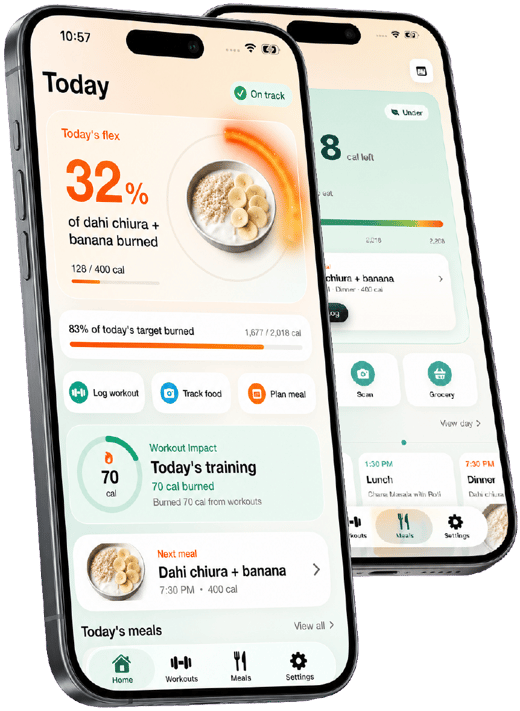
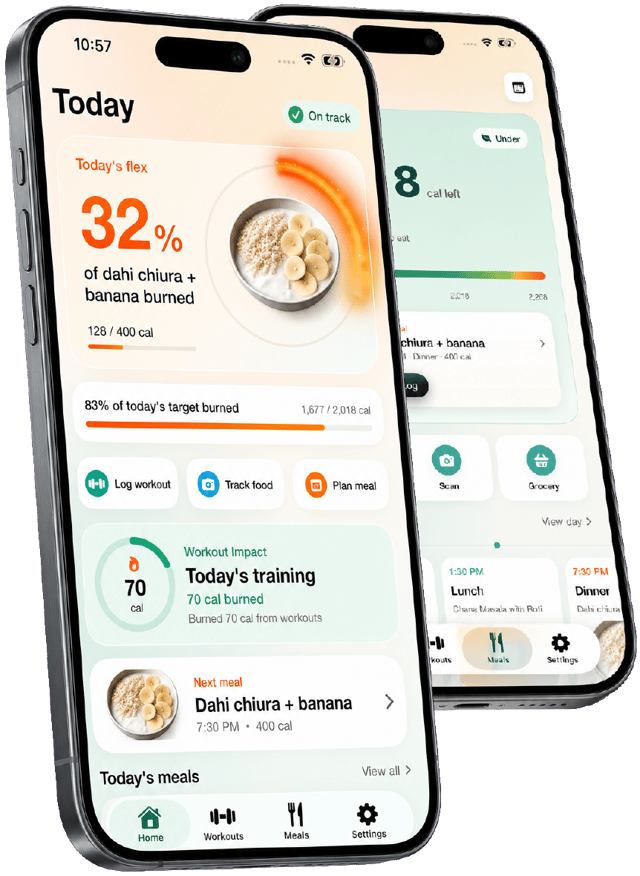
The burn bar shows what a ride earned back
Log a ride and see the percentage of your next meal it's covered — a clear, visible reason the post-ride plate is bigger than a normal lunch.
Photo logging for gels, bars and recovery meals
Snap a recovery shake or a plate of pasta and Burnplate logs it in seconds, useful when you're refueling within a tight post-ride window.
Macro targets that flex with carb needs
Protein, carb and fat targets adjust automatically so long-ride weeks pull more calories from carbs without manual recalculating.
Practical guidance
Fueling tips for cyclists
Habits that keep power up on long rides and recovery on track through a training block.
- 01 Eat carbs before rides over 90 minutes
A carb-focused meal or snack 1-2 hours before rolling out reduces the risk of bonking on longer efforts.
- 02 Fuel on the bike past two hours
60-90 g of carbs per hour from gels, chews or a sports drink sustains power far better than riding on empty.
- 03 Refuel within the first hour off the bike
Carbs and protein eaten soon after a ride start glycogen refill sooner and reduce next-day fatigue.
- 04 Don't treat recovery rides as zero-calorie
Easy spin days still need real fuel — chronic underfueling on 'off' days is a common cause of flat legs on hard days.
- 05 Track hydration and sodium on hot rides
Heavy sweat losses on long, hot rides need more than water — an electrolyte drink or salty snack helps replace what's lost.
- 06 Log indoor rides by duration and effort
Trainer sessions are easier to estimate accurately from power or heart rate data than an outdoor ride's rough distance.

Track it with a photo, not a search bar
Start tracking free Burnplate sets your calorie and macro targets, logs meals from a photo, and shows how much of each meal your workouts and steps have burned off.
Questions
Calorie tracker for cyclists: FAQ
How does a cycling calorie calculator estimate calories burned?
The most reliable estimates use ride duration and intensity, with power data being more accurate than distance alone since terrain and drafting change how hard a given mile actually is. Burnplate logs your ride and applies it against your daily calorie target rather than assuming every hour on the bike burns the same amount.
How many calories does an hour of cycling burn?
It varies widely with effort and rider size, but a realistic range for moderate-to-hard road or gravel riding is roughly 500-900 calories per hour. An easy recovery spin burns noticeably less; a hard group ride or race effort can burn more.
How many carbs should cyclists eat during a long ride?
For rides over about two hours, 60-90 g of carbs per hour from gels, chews or a sports drink is a common range that helps sustain power and delay the bonk. Shorter, easier rides usually don't need on-bike fueling beyond normal hydration.
Should I eat back the calories I burn cycling?
On long or hard ride days, largely yes — underfueling those efforts increases fatigue and slows recovery for the next session. Burnplate's burn bar shows how much a logged ride adds to your target so refueling isn't a guess.
Is a calorie tracker for cyclists useful for indoor trainer rides?
Yes, and indoor rides are often easier to estimate accurately than outdoor ones since power and heart rate data are more consistent without terrain, wind or stoplights changing the effort. Log the ride's duration and intensity the same way you would an outdoor one.
How much protein do cyclists need for recovery?
Most cyclists do well with 1.2-1.6 g of protein per kg of bodyweight per day, supporting recovery between training days without needing the higher intake typical of strength-focused athletes. Spreading it across meals rather than one large dose tends to work better for daily training.
