Most of your weekly riding should happen at an easy, sustainable effort. That zone 2 volume is what builds the mitochondrial and cardiovascular base everything else gets layered onto.
Why it's different
Why a workout plan for cyclists needs more than miles
Cycling's low-impact nature makes it tempting to just ride more, but riders who add structure — an easy-to-hard split, dedicated strength work and planned recovery weeks — improve faster than riders who simply log hours.
6–10 g/kg carbohydrate per kg bodyweight many cyclists need on their highest-volume training days
80/20 easy-to-hard ride split most endurance cycling plans are built around
2x/wk strength sessions that help cyclists produce more power without extra weight
Off-bike strength work — squats, deadlifts, single-leg movements — increases the force your legs can produce per pedal stroke, which shows up as more watts without extra bodyweight to carry uphill.
Riders who go hard on every ride burn out their legs before the sessions that actually build top-end power. Structured threshold and VO2 intervals work best layered on top of an existing base, not instead of one.
Cycling fitness is built in the recovery between hard blocks. A planned lighter week every 3-4 weeks lets accumulated fatigue clear before it turns into stalled progress or overtraining.
What it looks like
A sample training week for cyclists
A balanced week for an intermediate rider combining base miles, intervals and off-bike strength.
Example week
5–6 rides Days/week45–180 min Session lengthIntermediate LevelBike (road or trainer) + basic weights Equipment
Monday Rest or easy spin Full rest, or 20–30 min very easy spin
Tuesday Intervals 5x4 min at threshold effort with 3 min easy recovery
Wednesday Strength 30–40 min lower-body and core compound lifts
Thursday Endurance ride 60–90 min steady aerobic (zone 2) pace
Friday Rest Full rest — protects the weekend's long ride
Saturday Long ride 2–3 hours easy-to-moderate aerobic effort
Sunday Recovery spin 30–45 min easy pace plus mobility work
How Burnplate handles it
How Burnplate plans a cyclist's week
Burnplate builds your riding and strength days around your schedule and equipment, then scales fueling with your actual volume.
A week built around your riding days
Tell Burnplate how many days you can ride, whether you're on a trainer or outdoors, and your level, and it structures intervals, endurance rides and strength around that.
Every ride and lift logged in one place
Log rides and strength sessions, and Burnplate keeps a training history so you can see your riding volume and strength progress together.
The burn bar after long rides
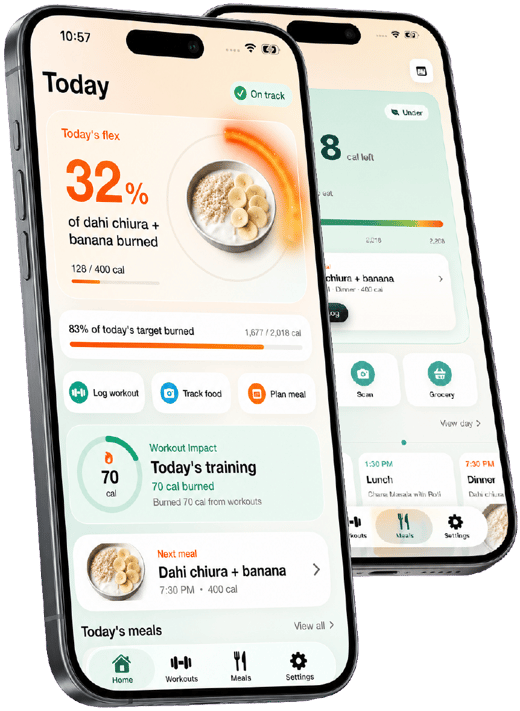
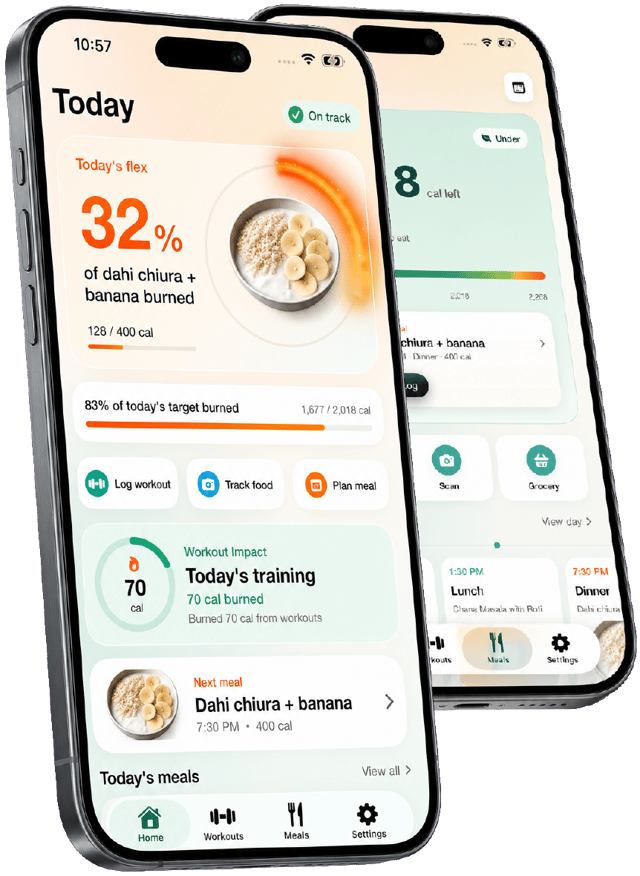
After a long ride, Burnplate shows how much of your next meal you've burned off, connecting a big training day to the fuel it actually cost you.
Calories and carbs that scale with ride volume
Your daily targets adjust upward on high-volume riding days, so a 3-hour Saturday ride doesn't leave you under-fueled into the following week.
Practical guidance
Training tips for cyclists
Habits that turn consistent riding into consistent improvement.
- 01 Fuel long rides with 60–90g carbs/hour
Rides over about 90 minutes benefit from carbohydrate during the ride, not just before and after — it's what keeps power from fading late.
- 02 Hydrate and replace electrolytes
Long rides, especially in heat, need more than water alone — sodium replacement matters once you're sweating for hours.
- 03 Add strength for power, not bulk
Two sessions a week of squats, deadlifts and single-leg work builds force production without meaningfully adding bodyweight.
- 04 Work on cadence, not just effort
Practicing a higher, smoother cadence improves efficiency and can reduce muscular fatigue on long rides.
- 05 Take the recovery weeks seriously
A lighter week every month is what lets the previous three weeks of training actually turn into fitness.
- 06 Protect sleep during peak volume
The biggest training weeks are exactly when your body needs the most recovery to absorb the load.

Build the plan around your week
Build my workout plan Tell Burnplate your days, equipment and level and it builds a progressive workout plan, logs every session, and connects what you burn to what you eat.
Questions
Workout planner for cyclists: FAQ
How many calories does cycling burn?
It varies with intensity and bodyweight, but a moderate-to-vigorous hour of riding commonly burns 500-900 calories, with long endurance rides burning well beyond that in total.
What is a good workout plan for cyclists?
A good cycling training plan for cyclists builds mostly easy aerobic volume (around 80% of riding time), adds one or two structured interval sessions, and includes two strength sessions a week for power and injury resilience.
Do cyclists need to strength train?
Yes. Off-bike strength training increases the force your legs can produce per pedal stroke and is linked to better performance and fewer overuse injuries, without meaningfully adding bodyweight for climbing.
How many hours a week should cyclists train?
It depends on your goals, but recreational cyclists see solid gains from 5-8 hours a week, while competitive riders often train 10-15+ hours, most of it at an easy aerobic effort.
What should cyclists eat before a long ride?
A carb-forward meal 2-3 hours before a long ride tops off glycogen stores, and continuing to take in carbohydrate during rides over 90 minutes prevents the late-ride power fade many riders experience.
