
Adults with regular workouts, physically active jobs or more muscle mass often have maintenance calories well above 2,000 — 1,800 gives enough fuel to train properly while still running a real deficit.
Why it's different
Why 1,800 calories works well for active adults
1,800 calories sits high enough to support real training volume and full-sized meals, which makes it a more sustainable choice than a lower target for people who are already fairly active or have more muscle mass.
120 g+ protein a day is easy to reach within an 1,800 calorie budget without careful rationing
30 g+ fiber a day fits comfortably alongside three full meals and a snack or two
300-600 kcal is roughly the deficit 1,800 represents for many active adults, depending on size
At 1,800 calories, a chicken breast, a cup of rice and a serving of vegetables fit together as a normal-looking plate, rather than requiring the precise, smaller portions a 1,200 or 1,500 calorie day demands.
Eating out, family dinners and normal snacking are far easier to fit into 1,800 calories than a tighter budget, which matters more for long-term adherence than almost any other factor.
For a smaller or less active adult, 1,800 may sit closer to maintenance than a deficit — checking your own calculated needs is what determines whether this number will actually produce weight loss for you.
What it looks like
A sample day on an 1,800 calorie meal plan
Three full meals and two snacks, sized for an active adult who wants real food without micromanaging every bite.
Example day on the plan
1,800 calories125 g+ protein30 g+ fiber180 g+ carbs
7:00 AM Oats with peanut butter & banana¾ cup oats, 1 tbsp peanut butter, banana 460 kcal
10:30 AM Greek yogurt + berries1 cup plain Greek yogurt, ½ cup berries 200 kcal
1:00 PM Chicken, rice & veg bowl180 g chicken breast, 1 cup rice, roasted vegetables, olive oil 560 kcal
4:00 PM Apple + string cheese1 medium apple, 2 string cheese sticks 220 kcal
7:00 PM Salmon, potatoes & salad150 g salmon, 1 medium baked potato, side salad 480 kcal
Smart swaps
Larger starch, smaller protein Equal-sized protein and starch portionsKeeps protein high enough to support training and recovery at this calorie level.
Skipping breakfast to 'save' calories A real breakfast with protein1,800 calories has room for a full breakfast, and skipping tends to backfire later in the day.
Juice or soda with meals Water, and fruit eaten wholeFrees up calories for more food volume instead of liquid sugar.
One large snack Two smaller, protein-containing snacksKeeps energy and hunger steadier across a longer, more active day.
How Burnplate handles it
How Burnplate builds your 1,800 calorie plan
Burnplate checks whether 1,800 is actually a deficit for you and builds full-sized meals around it.
Your real numbers, not an assumed target
Burnplate calculates your maintenance and deficit calories from your body, goal and activity level, so you know whether 1,800 will actually produce weight loss for you specifically.
A 7-day plan built for active adults
The AI meal plan builds a week of full-sized meals around 1,800 calories and your preferences, with a single consolidated grocery list.
Workout plan integrated with the meal budget
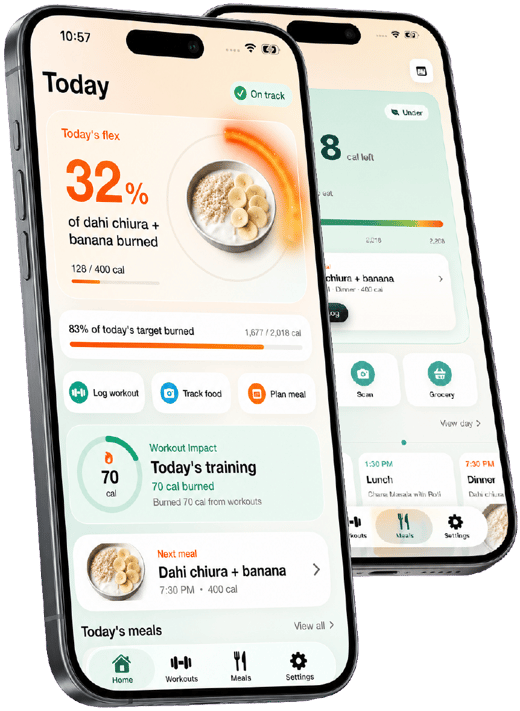
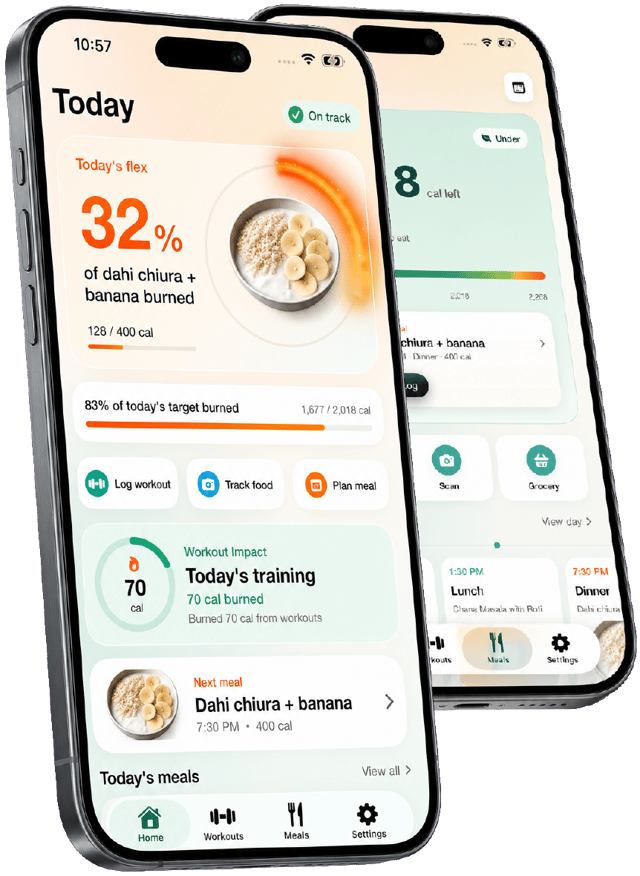
Burnplate's workout builder creates a training plan around your days and equipment, and the burn bar shows how much of a meal that training offset.
Log training days differently from rest days
Photo and search logging make it easy to track a heavier training-day meal separately from a lighter rest day, without leaving the 1,800 calorie plan.
Practical guidance
Tips for getting the most from 1,800 calories
How to spend a more generous calorie budget so it still produces steady progress.
- 01 Confirm it's actually a deficit for you
Check your calculated maintenance calories — 1,800 isn't a deficit for everyone, especially smaller or less active adults.
- 02 Spend extra room on protein, produce
With more calories to work with, prioritize protein and vegetables before adding extra starch or fat.
- 03 Fuel training days a bit heavier
Shifting more carbs to workout days, within the same weekly total, supports performance without changing the deficit.
- 04 Keep three real meals
1,800 calories comfortably supports three full meals — no need to fragment into many tiny snacks.
- 05 Track for two weeks before adjusting
Give the plan time to show a trend on the scale before deciding whether 1,800 needs to move up or down.
- 06 Use the extra flexibility for adherence
A more generous calorie budget is easier to sustain — use that margin to make the plan one you can keep for months.

Get the week planned in one tap
Build my meal plan Burnplate builds a 7-day meal plan around your calories, protein and food preferences, writes the grocery list, and lets you swap any meal you don't feel like.
Questions
Meal planner for 1,800 calories a day: FAQ
Is 1,800 calories a day good for weight loss?
For many moderately active or larger-bodied adults, yes — 1,800 calories represents a real deficit while still allowing full, satisfying meals. For smaller or less active adults, it may sit closer to maintenance, so checking your own calculated needs matters.
Who should eat 1,800 calories a day?
It tends to fit moderately to highly active adults, people with more muscle mass, and men in particular, better than a lower target like 1,200 or 1,500. It's a comfortable deficit for people whose maintenance calories run higher due to size or activity.
What does an 1800 calorie meal plan look like?
Three full meals plus one or two snacks, each built around a protein source with vegetables, fruit and whole grains filling out the rest. Unlike tighter calorie budgets, portions don't need to be carefully rationed to fit the day.
Can I build muscle while eating 1,800 calories?
It depends on whether 1,800 represents a deficit or close to maintenance for you. If it's near maintenance, modest muscle gain is possible, especially for beginners; if it's a real deficit, the priority shifts to preserving muscle with high protein and continued training.
How much weight loss can I expect on 1,800 calories?
That depends entirely on how far 1,800 sits below your personal maintenance calories. For an active adult where it represents a 500 kcal deficit, roughly 1 lb of fat loss a week is a reasonable expectation.
Does Burnplate build a meal plan for 1,800 calories a day?
Yes. Burnplate can generate a 7-day plan around an 1,800 calorie target with a grocery list, while also showing your personally calculated maintenance and deficit so you know how 1,800 fits your specific numbers.
