Running more miles at the same pace every day builds fitness fast at first, then stalls. Real progress needs a mix of easy aerobic volume and a smaller amount of genuinely hard running.
Why it's different
Why runners need more than a mileage chart
A workout plan for runners that's just a list of weekly miles ignores the two things that actually determine whether you improve: how your easy runs are paced, and whether strength training is keeping your joints able to absorb the load.
1.2–1.4 grams of protein per kg bodyweight per day most endurance runners need to recover
2x/wk minimum strength sessions per week shown to lower running injury risk
80/20 easy-to-hard running split used by most evidence-based training plans
Running is a repeated single-leg impact — thousands of times per run. Strength work for the hips, glutes and calves is what lets that tissue keep absorbing the load without breaking down.
The run itself is just the stimulus; the adaptation happens during rest. Runners who skip easy days or sleep short almost always plateau or get hurt before they get faster.
A 20-mile week and a 50-mile week need different calorie and carbohydrate intakes. Eating like a rest-day runner on a peak-mileage week is a common cause of stalled progress and nagging fatigue.
What it looks like
A sample training week for runners
A balanced week for a runner training for general fitness or an upcoming race, combining easy mileage, one quality session and two strength sessions.
Example week
4–5 runs Days/week20–75 min Session lengthBeginner to intermediate LevelRunning shoes + basic weights Equipment
Monday Easy run 30–40 min easy, conversational pace
Tuesday Strength Squats 3x8 · Single-leg RDL 3x8 · Calf raises 3x15 · Plank 3x30s
Wednesday Quality run 8x400m at 5K effort with 90s jog recovery, or 20 min tempo
Thursday Rest or easy cross-train Full rest or 20-30 min easy cycling/swimming
Friday Easy run 30 min easy pace
Saturday Strength Deadlifts 3x6 · Step-ups 3x8/side · Hip thrusts 3x10 · Core circuit
Sunday Long run 60–90 min easy, scaled to your current fitness and any race distance
How Burnplate handles it
How Burnplate plans a runner's week
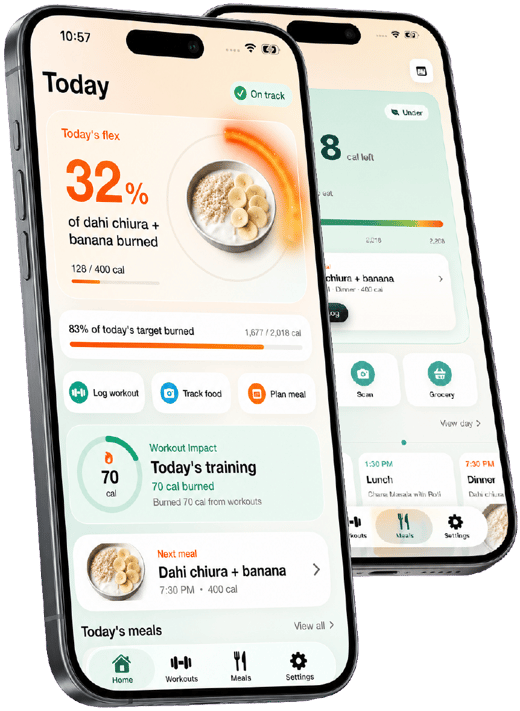
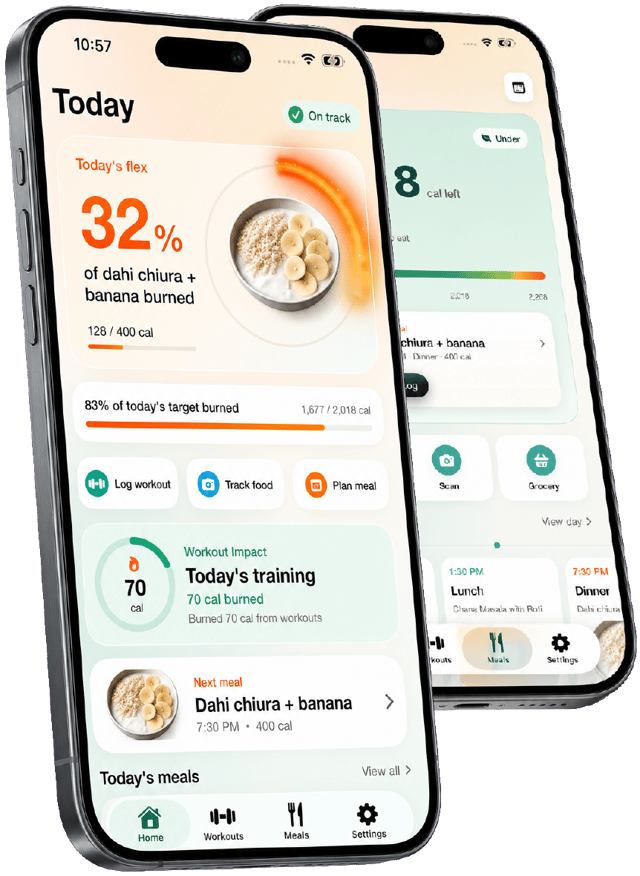
Burnplate builds your running and strength days around your schedule, then keeps your fueling in step with how much you're actually training.
A weekly plan built around your days
Tell Burnplate how many days you can train and your current level, and it lays out a week that mixes easy runs, one quality session and strength work without overloading any single day.
Every run and lift logged in one place
Log paces, distances, sets and reps, and Burnplate keeps a history so you can see mileage and strength progress side by side.
The burn bar connects the run to the plate
After a long run or hard session, Burnplate shows how much of a meal you've burned off — a visible link between the training and the fuel behind it.
Calorie and protein targets that flex with mileage
Your targets adjust as weekly volume changes, so a heavy training week doesn't leave you under-fueled and a rest week doesn't leave you overeating.
Practical guidance
Training tips every runner benefits from
Habits that separate runners who keep improving from runners who plateau or get hurt.
- 01 Don't skip strength training for runners
Two short sessions a week targeting hips, glutes and calves meaningfully lowers injury risk and helps you hold form when tired.
- 02 Run most miles genuinely easy
If your easy pace and your hard-session pace feel similar, one of them is wrong — slow the easy days down.
- 03 Spread protein across the day
Three to four protein-containing meals recover running muscle better than one large serving at dinner.
- 04 Fuel runs over 75 minutes
Carbohydrate during long efforts — even just a gel or sports drink — keeps pace from collapsing in the last third.
- 05 Rotate two pairs of shoes
Alternating shoes changes the impact pattern slightly and is associated with fewer overuse injuries in runners who log consistent mileage.
- 06 Treat sleep as training
Running fitness is built during recovery, not during the run itself — short sleep blunts the adaptation from every session.

Build the plan around your week
Build my workout plan Tell Burnplate your days, equipment and level and it builds a progressive workout plan, logs every session, and connects what you burn to what you eat.
Questions
Workout planner for runners: FAQ
What is a good workout plan for runners?
A good workout plan for runners mixes mostly easy-paced mileage (roughly 80% of weekly volume) with one or two harder sessions, plus two strength sessions a week targeting the hips, glutes and calves. The exact mileage depends on your goal and current fitness.
How many calories should a runner eat?
It depends on bodyweight, mileage and goal, but many runners need 300-600 more calories on heavy training days than on rest days, with roughly 5-7 grams of carbohydrate per kg bodyweight supporting higher-mileage weeks. Burnplate sets a personal target from your body, goal and training load.
Do runners need to strength train?
Yes. Research consistently links regular strength training to lower injury rates and better running economy in runners. Two sessions a week focused on the hips, glutes, calves and core is enough for most people — it doesn't need to look like a bodybuilding program.
How much protein do runners need?
Most endurance runners do well around 1.2-1.4 grams of protein per kg bodyweight per day, a bit higher than sedentary guidelines, to support the muscle repair that high running volume demands.
Should runners do HIIT?
In moderation. Short, hard interval sessions build speed and running economy, but they're meant to be a small slice of the week — most training plans for runners cap hard sessions at one or two, with the rest run at an easy, sustainable pace.
