Newer guidance puts less emphasis on cholesterol-containing foods like eggs and more on saturated fat, which more directly raises LDL production in the liver.
Why it's different
Why high cholesterol needs its own approach
Cholesterol management shifted its focus over the past decade — the food that moves LDL the most isn't the food that contains cholesterol, it's the food that contains saturated fat.
5-10 g soluble fiber a day, from oats, beans or psyllium, can lower LDL by a measurable amount on its own
<6% of calories from saturated fat is the stricter target used in therapeutic cholesterol-lowering diets
2×/week fatty fish like salmon, sardines or mackerel is the intake most heart-health guidelines recommend
It binds to cholesterol-containing bile acids in the gut and carries them out, which is why oats, beans and psyllium have a measurable, well-studied LDL-lowering effect.
Replacing saturated fat — butter, fatty meat — with unsaturated fat like olive oil, nuts, avocado and fish lowers LDL more reliably than simply eating less fat overall.
Found naturally in small amounts in vegetables, nuts and fortified foods, they compete with cholesterol for absorption and can meaningfully lower LDL when eaten consistently.
What it looks like
A sample day for high cholesterol
Around 1,680 calories built on a soluble-fiber source at most meals and unsaturated fat in place of butter or fatty cuts of meat.
Example day on the plan
set to your goal calories5-10 g+ soluble fiberunder 6-7% of calories saturated fat2×/week fatty fish
7:00 AM Oatmeal with flax, walnuts and berries½ cup oats, 1 tbsp ground flax, walnuts, berries 420 kcal
12:00 PM Lentil soup with a big side saladlentils, vegetables, mixed greens, olive oil dressing 460 kcal
3:00 PM Apple with a small handful of almonds1 apple, about 12 almonds 200 kcal
6:30 PM Baked salmon, roasted vegetables and farro5 oz salmon, roasted vegetables, ½ cup farro 520 kcal
8:00 PM A handful of grapesabout 1 cup grapes 80 kcal
Smart swaps
Butter on toast Olive oil or avocadoSwaps saturated fat for unsaturated, the single biggest lever for lowering LDL
Fatty red meat several times a week Fish or legumes for two of those mealsCuts saturated fat while adding omega-3s or soluble fiber, both of which help LDL
Sugary instant oatmeal packets Plain oats with fresh fruitKeeps the cholesterol-lowering soluble fiber without the added sugar some packets carry
Cheese or cream-based sauces Tomato- or olive-oil-based saucesMeaningfully lowers the saturated fat in a meal without changing the portion size
How Burnplate handles it
How Burnplate plans a cholesterol-conscious week
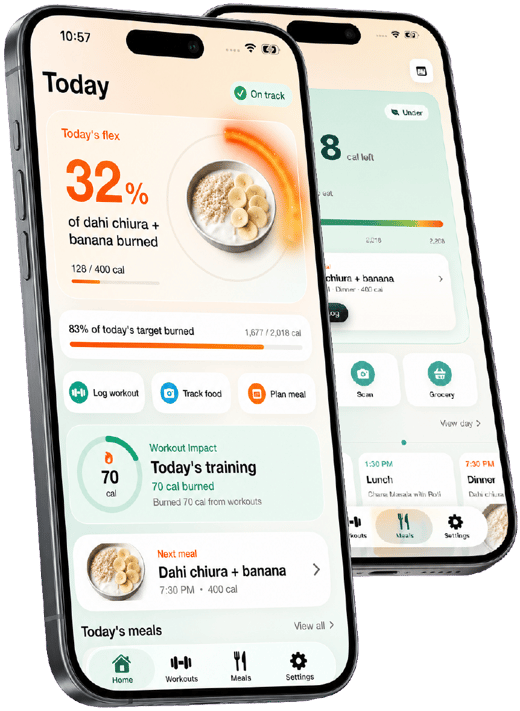
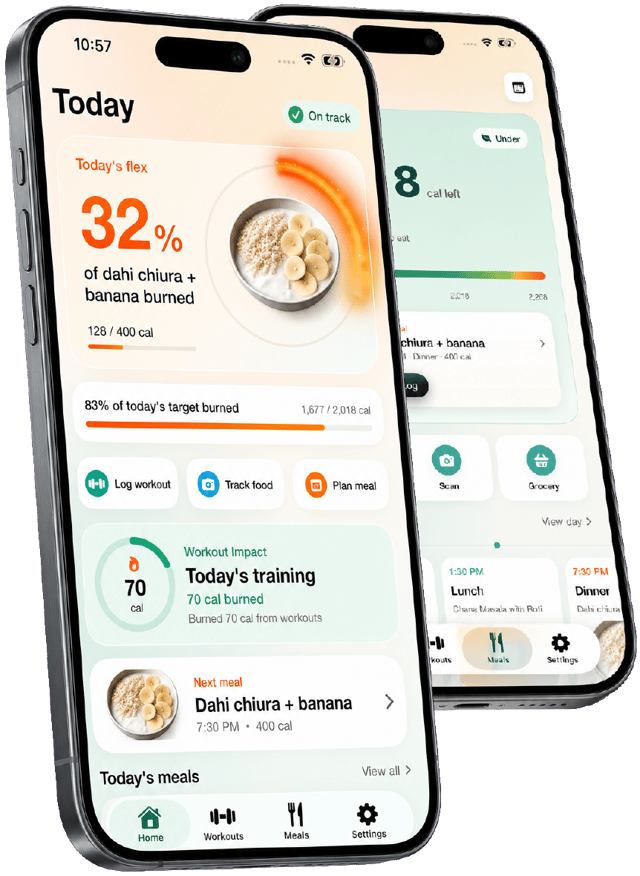
Burnplate shows the fat and fiber grams that actually move LDL, not just a total calorie count.
Targets that leave room for fat quality
Burnplate's targets include calories, protein, carbs and fat, so you can see fat grams and shift the mix toward unsaturated sources rather than tracking cholesterol blindly.
A 7-day plan built around fish and fiber
The AI meal plan can favor legumes, whole grains, fish and olive oil within your preferences, with a grocery list that makes the swaps automatic.
Log a meal, see what's in it
Photo or text logging shows the macro breakdown of what you ate, making it easier to notice saturated-fat-heavy meals as they happen, not after a lab draw.
Activity tracked alongside food
Regular activity raises HDL and modestly improves the overall lipid picture; Burnplate tracks workouts and steps next to your meals on the same screen.
Practical guidance
Tips that help with high cholesterol
Simple swaps that move the two numbers that matter most: saturated fat down, soluble fiber up.
- 01 Start the day with oats
A daily bowl of oatmeal is one of the simplest, most-studied ways to add cholesterol-lowering soluble fiber.
- 02 Make fish two of your weekly proteins
Salmon, sardines, mackerel and trout deliver the omega-3s most heart-health guidance recommends weekly.
- 03 Cook with olive oil by default
A simple swap from butter or vegetable oil that lowers saturated fat without changing how a dish looks or tastes.
- 04 Add beans or lentils a few times a week
They bring both soluble fiber and plant protein, letting them stand in for some of the week's meat.
- 05 Check labels for saturated fat, not just total fat
Total fat isn't the target anymore — saturated fat grams per serving is the number worth checking.
- 06 Recheck your lipid panel on schedule
Dietary changes typically move LDL over 4-12 weeks — recheck on the timeline your doctor sets rather than judging day to day.

Get the week planned in one tap
Build my meal plan Burnplate builds a 7-day meal plan around your calories, protein and food preferences, writes the grocery list, and lets you swap any meal you don't feel like.
Questions
Meal planner for high cholesterol: FAQ
What is the best diet for high cholesterol?
There's no single required diet, but the best-evidenced patterns — the Mediterranean diet, the DASH diet and the clinical TLC diet — all share the same core: more soluble fiber, less saturated fat, and fat that's mostly unsaturated.
What foods lower cholesterol the fastest?
Oats, beans, psyllium and other soluble-fiber foods show measurable LDL reductions within weeks. Fatty fish, nuts and olive oil in place of saturated fat add to the effect. Consistency matters more than any single food.
What should a meal plan for high cholesterol include?
A soluble-fiber source at most meals, unsaturated fats like olive oil, nuts and fish in place of butter and fatty meat, and modest portions of saturated-fat-heavy foods rather than none at all.
Do eggs raise cholesterol?
For most people, dietary cholesterol, including eggs, has a smaller effect on blood cholesterol than saturated fat does. Current guidance focuses more on limiting saturated fat than on egg counting, though your doctor may advise differently based on your labs.
Can diet alone lower high cholesterol?
For many people, yes, meaningfully, though not always enough on its own depending on genetics and starting levels. Diet is usually the first step, with medication added if lifestyle changes aren't enough.
Can a meal planner app help lower cholesterol?
It can help by building fiber-rich, fish-forward, lower-saturated-fat meals into a repeatable week automatically. Burnplate shows fat, fiber and calories per meal, though it doesn't replace a lipid panel or medical advice.
