
A sedentary 6-year-old and an active 6-year-old on a swim team can need 500+ more calories a day than each other. Age-based ranges exist precisely because one number can't cover that spread.
Why it's different
Why kids' calorie needs don't work like an adult calculator
An adult calorie calculator assumes a stable body trying to hit a goal. A child's body is actively building itself, and the number it needs changes month to month — which is why this page is about ranges and awareness, not a diet.
1,200+ kcal/day floor for a typically active 4-8 year old, per USDA ranges
2,600 kcal/day ceiling for a very active 9-13 year old during a growth spurt
0.95 g/kg protein RDA for ages 4-13 — most kids hit this easily from normal meals
Kids' bodies are laying down bone, muscle and organ tissue on a schedule adults aren't. Intentionally restricting calories for a child, outside of a pediatrician's guidance, can interfere with that growth.
Kids are generally poor candidates for counting calories themselves — the goal for parents is understanding rough ranges and offering balanced plates, not having a child track a number.
How food gets talked about at home — pressure, praise, restriction — tends to stick with kids longer than any specific meal does. A calm, shared approach beats a strict one.
What it looks like
A sample day for a moderately active 9-year-old
Built around roughly 1,800 calories, in the middle of the USDA range for ages 9-13. A younger or less active child needs meaningfully less.
Example day
Daily targets
Calories, ages 4-8 1,200–2,000 kcal USDA range by activity level; a pediatrician can narrow it further
Calories, ages 9-13 1,400–2,600 kcal Wider range reflects growth spurts and swings in activity
Protein ~0.95 g/kg RDA for ages 4-13; most kids hit this from normal meals without trying
Calcium & vitamin D priority nutrients Bone-building years — dairy, fortified milk or alternatives daily
Added sugar under 25 g/day AHA guidance for children 2+; sugar naturally in fruit or milk doesn't count
A logged day
7:15 AM Oatmeal, banana, milkProtein and carbs before school 380 kcal
10:00 AM School snack: string cheese, crackersKeeps energy steady until lunch 180 kcal
12:15 PM Turkey sandwich, apple, carrotsA balanced packed lunch 480 kcal
3:30 PM Yogurt and berriesAfter-school refuel before practice 150 kcal
6:00 PM Chicken, rice, broccoliFamily dinner — same plate as everyone else 520 kcal
7:30 PM Milk and a small treatRoom in the day for dessert, no guilt 140 kcal
How Burnplate handles it
How Burnplate fits a family with kids
Burnplate isn't built to put a child on a diet. It's built to give a parent visibility into what the whole family is eating, in one shared space.
A family group, not a diet app
Groups let a parent log a child's meals inside the same family account space — no separate kid profile, no calorie-restriction framing.
Photo logging for the whole plate
Snap what's on your kid's plate and confirm what the AI found — faster than searching a food database mid-dinner.
Targets set for growth, not loss
A child's profile is set to maintenance, never a deficit — Burnplate is there to track intake and awareness, not push a weight goal.
Activity shows up too
Steps and active minutes from sports or play count toward the day, so a parent sees the full picture, not just the food side.
Practical guidance
Tips for feeding kids without turning it into a diet
Small structural habits that support a growing kid's appetite instead of fighting it.
- 01 Let appetite lead, not the log
Kids are generally better than adults at self-regulating intake across a day if the food offered is balanced — trust hunger over a target.
- 02 Offer, don't force
A parent decides what and when food is offered; the child decides how much, or whether, to eat it. That division removes most mealtime battles.
- 03 Treat snacks as meals, not extras
Two solid snacks a day are normal for a kid's smaller stomach and faster metabolism — they're not something to cut.
- 04 Skip the clean-plate pressure
Pressuring a child to finish a plate overrides their own fullness cues and can backfire on both ends — overeating or food refusal.
- 05 Model it, don't lecture it
Kids copy what a parent eats and how they talk about food far more than what they're told to eat.
- 06 Ask a pediatrician before any goal
If there's a real concern about a child's weight or growth, that conversation belongs with their doctor, not a calculator.

Track it with a photo, not a search bar
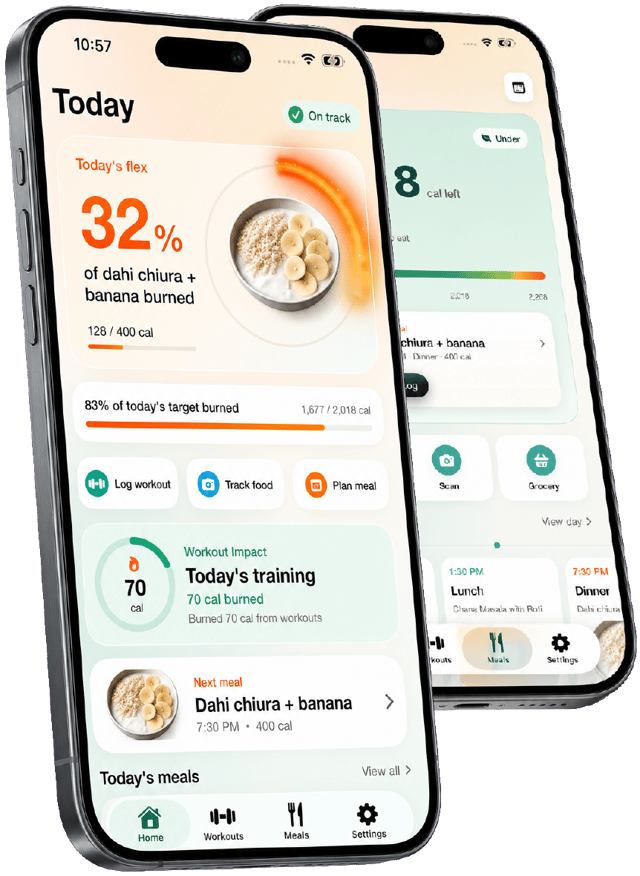
Start tracking free Burnplate sets your calorie and macro targets, logs meals from a photo, and shows how much of each meal your workouts and steps have burned off.
Questions
Calorie tracker for kids: FAQ
How many calories does my child need a day?
It depends heavily on age and activity: roughly 1,200–2,000 for ages 4-8 and 1,400–2,600 for ages 9-13, per USDA dietary guidelines. A very active kid or one mid-growth-spurt sits at the high end; a smaller or less active child sits lower. A pediatrician can narrow this for your specific child.
Should kids count calories?
Generally no. Counting calories asks a child to police their own intake, which isn't developmentally appropriate and can encourage an unhealthy relationship with food. It's parents who benefit from understanding rough ranges, so they can offer balanced meals without a child needing to think about numbers.
Is a calorie tracker for kids a good idea?
It's useful for a parent who wants visibility into what their family is actually eating across a busy week — not as a tool to hand a child. Burnplate is set up that way: a parent logs meals inside a shared family group, with targets set to support growth, not restrict it.
How much protein does a child need?
The RDA for ages 4-13 is about 0.95 g per kg of body weight, which most kids hit easily through normal meals — milk, eggs, meat, beans and dairy at typical portions. Protein deficiency is rare in kids eating a varied diet; it's rarely something a parent needs to actively chase.
Can Burnplate track a child's meals?
Yes — through Groups, a parent can log a child's meals inside the same family account space rather than creating a separate profile. Targets for a child are set to maintenance so the app supports awareness and growth, not weight loss.
What if my child is a picky eater?
Focus on offering a variety of foods repeatedly without pressure rather than tracking exact totals — appetite and preferences shift constantly at this age. If picky eating is affecting growth or seems extreme, a pediatrician or a pediatric dietitian is the right next step, not calorie counting.
