
Falling estrogen speeds up the muscle loss that already happens with age. Protein needs go up to compensate — 1.2–1.6 g/kg is a more useful target now than the lower general adult guidance.
Why it's different
Why a menopause diet is different
The same eating pattern that worked in your 30s and 40s quietly stops working as well, not because willpower changed but because three physiological levers moved at once — metabolism, muscle and bone.
1.2–1.6 g/kg protein per day helps offset the accelerated muscle loss that comes with falling estrogen
1,200 mg calcium a day is the target for most women over 50, up from 1,000 mg pre-menopause
~2–5% drop in resting metabolic rate is typical around menopause — a small, real shift, not a dramatic one
Estrogen protects bone, and its drop during menopause causes the fastest bone loss most women will ever experience — up to 20% in the five to seven years around the transition. Calcium and vitamin D intake matter more now than at any other life stage.
Resting metabolic rate falls a small amount around menopause — not the dramatic slowdown many expect, but enough that unchanged eating habits can lead to gradual weight gain if calories aren't adjusted to match.
Caffeine, alcohol and spicy food are common hot-flash and night-sweat triggers for many women. They don't affect everyone the same way, but they're worth testing individually if symptoms are disruptive.
What it looks like
A sample day on a menopause meal plan
Around 1,700 calories with protein and calcium both prioritized, and caffeine kept to the morning to protect sleep.
Example day on the plan
~1,700 calories95–110 g protein1,200 mg calcium600–800 IU vitamin D
7:30 AM Greek yogurt, berries and flax1 cup Greek yogurt, ½ cup berries, 1 tbsp ground flax 320 kcal
10:30 AM Cottage cheese and almonds½ cup cottage cheese, 12 almonds 220 kcal
12:30 PM Salmon and white bean salad130 g salmon, ½ cup white beans, greens, olive oil 470 kcal
3:30 PM Fortified soy milk latte and a fig1 cup fortified soy milk, 1 fresh fig 170 kcal
6:30 PM Chicken, quinoa and roasted broccoli130 g chicken, ½ cup quinoa, broccoli, olive oil 460 kcal
8:00 PM Herbal tea and a small square of dark chocolateChamomile tea, 1 square dark chocolate 80 kcal
Smart swaps
Afternoon coffee Herbal tea or decafCaffeine later in the day is a common trigger for hot flashes and disrupted sleep during menopause.
Skipping dairy or fortified alternatives Yogurt, cottage cheese or fortified plant milk dailyAn easy, reliable way to close the gap to the higher 1,200 mg calcium target.
Protein mainly at dinner Protein spread across all mealsSpreading protein intake improves muscle protein synthesis better than one large evening dose.
A glass of wine most nights Two to three nights a week, smaller poursAlcohol is a common hot-flash and sleep-disruption trigger; cutting back often improves both.
How Burnplate handles it
How Burnplate plans a menopause-friendly week
Burnplate isn't a medical device and doesn't manage hormone therapy or menopause symptoms directly. What it does is turn the higher protein and calcium needs of this life stage into a week of meals that don't require separate tracking spreadsheets.
Calorie and protein targets that adjust with you
Burnplate sets targets from your body, goal and activity rather than a fixed number carried over from years ago, so the modest metabolic shift of menopause is accounted for.
A 7-day plan weighted toward protein and calcium
Tell Burnplate your preferences and it builds a week around dairy or fortified alternatives, fish, legumes and lean protein at every meal, with a grocery list included.
Workout planning that protects muscle
Burnplate's workout builder creates a plan around your days per week and equipment, pairing resistance training with the higher protein target to counter menopause-related muscle loss.
See what your training is protecting
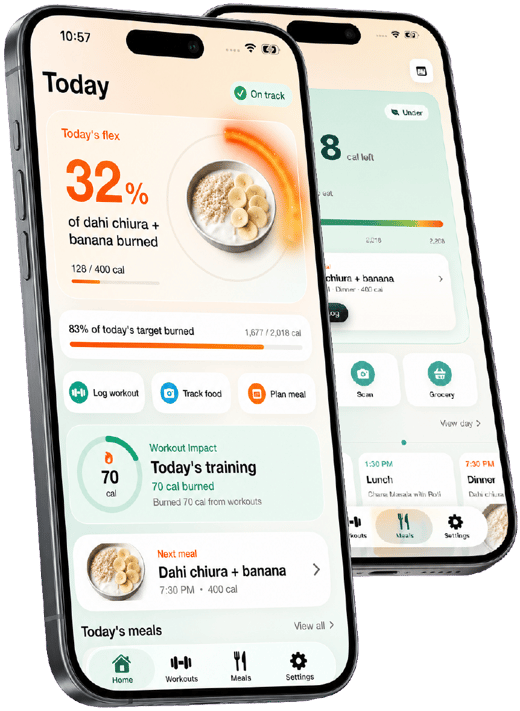
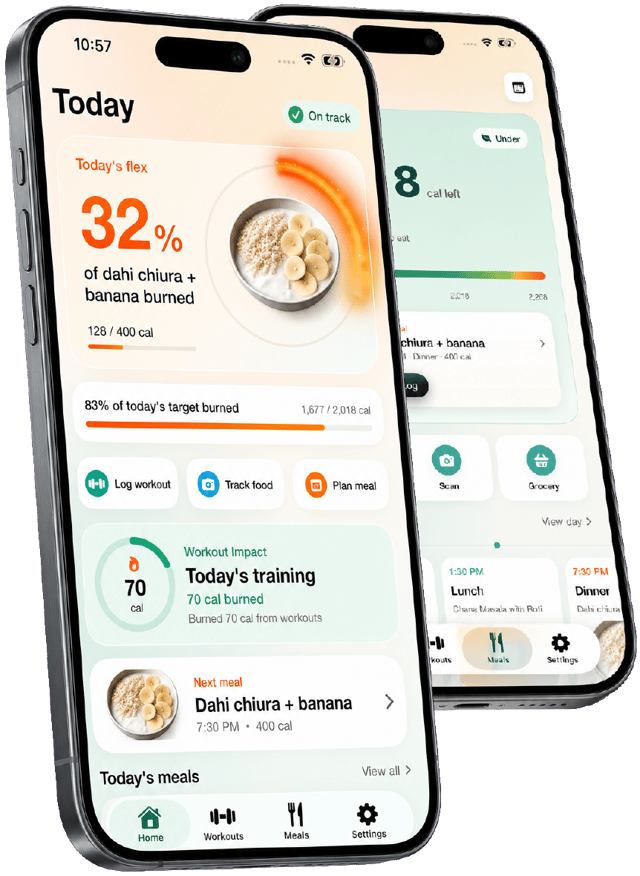
The burn bar connects workouts to meals on one screen — a visible reason to keep the resistance sessions that matter most for bone and muscle right now.
Practical guidance
Practical tips for eating through menopause
Small, consistent changes that address the specific shifts happening during this transition.
- 01 Raise protein before you cut calories
Prioritizing protein at every meal protects muscle even if you're also aiming for a modest deficit — don't let both drop at once.
- 02 Make calcium a daily habit, not a supplement afterthought
Dairy, fortified plant milk, canned fish with bones and leafy greens across the week add up faster than people expect.
- 03 Pair resistance training with the protein increase
Protein alone doesn't preserve muscle without a stimulus — two to three resistance sessions a week make the higher protein target worth it.
- 04 Track your personal hot-flash triggers
Caffeine, alcohol and spicy food affect people differently — a few weeks of noting what precedes flushes tells you more than a general avoid-list.
- 05 Get sunlight or a vitamin D source daily
Vitamin D is essential for calcium absorption and bone density, and many adults are low regardless of age.
- 06 Adjust calories gradually, not all at once
A modest, steady reduction accounts for the metabolic shift without the muscle loss that comes from cutting too hard, too fast.

Get the week planned in one tap
Build my meal plan Burnplate builds a 7-day meal plan around your calories, protein and food preferences, writes the grocery list, and lets you swap any meal you don't feel like.
Questions
Meal planner for menopause: FAQ
What is the best diet for menopause weight gain?
A moderate calorie deficit paired with higher protein (1.2–1.6 g/kg) and resistance training tends to work best — the goal is losing fat while protecting the muscle that's already harder to hold onto due to falling estrogen. Cutting calories alone without the protein and training piece often backfires.
How much calcium do I need during menopause?
Most guidelines recommend around 1,200 mg a day for women over 50, up from 1,000 mg before menopause, alongside adequate vitamin D for absorption. Dairy, fortified plant milk, canned fish with bones and leafy greens are the main food sources.
Does diet actually help with hot flashes?
For many women, yes — caffeine, alcohol and spicy food are common triggers, and reducing them measurably helps some people. It's individual, though; tracking your own pattern for a few weeks is more useful than following a generic avoid-list.
Why is it harder to lose weight during menopause?
Resting metabolic rate drops modestly (roughly 2–5%) and muscle mass declines faster due to falling estrogen, both of which lower daily calorie needs somewhat. The habits that maintained your weight in your 30s and 40s may now produce slow gain unless calories and protein are adjusted.
Should I eat more protein during menopause?
Most evidence supports it. A range of 1.2–1.6 g of protein per kilogram of body weight helps offset accelerated muscle loss during the menopause transition, higher than general adult protein guidance of roughly 0.8 g/kg.
Can Burnplate build a meal plan for menopause?
Burnplate sets calorie and protein targets from your body and goals, builds a 7-day plan you can steer toward calcium-rich and high-protein foods, and pairs it with a workout plan for muscle and bone health. It isn't a medical device and doesn't manage hormone therapy or symptoms directly.
