
Men have the highest fiber recommendation of any group — 38 g a day under 50, 30 g after — and typical intake runs well under half of that.
Why it's different
Why a men's meal plan needs its own numbers
A meal plan built for men isn't just a bigger version of a general diet plan. The fiber target is the highest of any group, cardiovascular risk factors tend to show up earlier, and a larger calorie budget makes it easier to overshoot without anyone noticing.
38 g daily fiber target for men under 50 — the highest DRI of any group, and often missed
1.4 g/kg protein range many men do better on for satiety and muscle, above the 0.8 g/kg minimum
2,600 kcal typical daily calorie need for an active adult man — varies by age and size
More room to eat means it's easier to drift several hundred calories over target through drinks, dressings and portion sizes calibrated to habit rather than a number.
The 0.8 g/kg RDA is a deficiency-prevention floor, not an optimal target. Most men trying to build muscle or manage weight do better in the 1.2 to 1.6 g/kg range.
Men typically develop heart disease risk factors roughly a decade earlier than women on average, which makes fiber, sodium and saturated fat worth tracking sooner rather than later.
What it looks like
A sample day around 2,600 calories
Built for an active man with protein spread across the day and fiber worked into breakfast and lunch rather than left for dinner.
Example day on the plan
~2,600 Calories150–170 g Protein35 g FiberModerate Sodium
7:00 AM Oats with protein powderOats, protein powder, berries, peanut butter 620 kcal
10:30 AM Greek yogurt and almondsPlain Greek yogurt, a handful of almonds 320 kcal
12:30 PM Chicken burrito bowlChicken, rice, beans, vegetables, salsa 680 kcal
3:30 PM Protein shake and a bananaWhey or plant protein, milk, banana 320 kcal
7:00 PM Steak, sweet potato, big saladSteak, roasted sweet potato, large mixed salad 660 kcal
Smart swaps
White bread and bagels by default Whole-grain or high-fiber versionsSame meal, meaningfully more fiber toward the 38 g target without changing the routine
Protein from meat only Meat plus beans, lentils or oatsBean and oat-based sources add fiber alongside protein, which meat alone doesn't provide
A few beers most nights 1–2 nights a week, smaller portionsAlcohol calories add up fast against a higher calorie budget without much satiety in return
Guessing portions by eye Weighing or measuring for a couple of weeksMost men underestimate calorie-dense foods like oils, dressings and meat by a wide margin until they check
How Burnplate handles it
How Burnplate plans a man's week
Burnplate calculates your numbers instead of defaulting to a flat calorie label that undersizes most men.
Calorie targets sized to you
Calories and macros are calculated from your body, goal and activity instead of a flat number that's usually too low for most active men.
Photo logging fast enough to actually use
Snap a plate, confirm it, done — built for someone who won't weigh every ingredient.
A 7-day plan and grocery list
The AI meal plan hits your calorie and protein numbers with food you'll actually cook, plus one shopping list for the week.
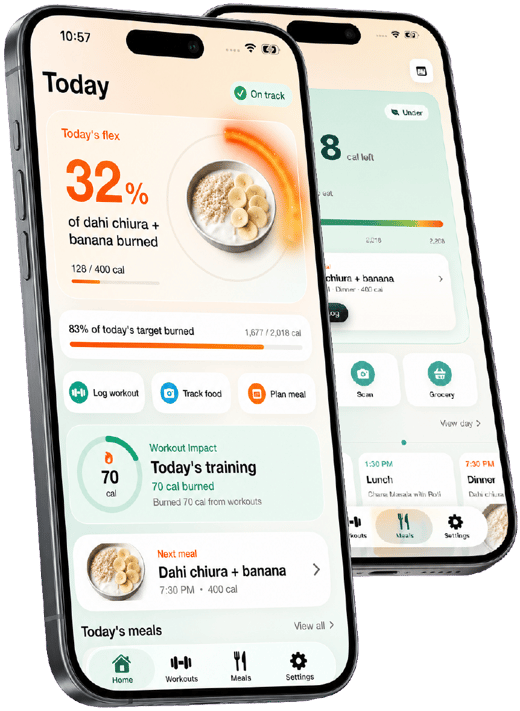
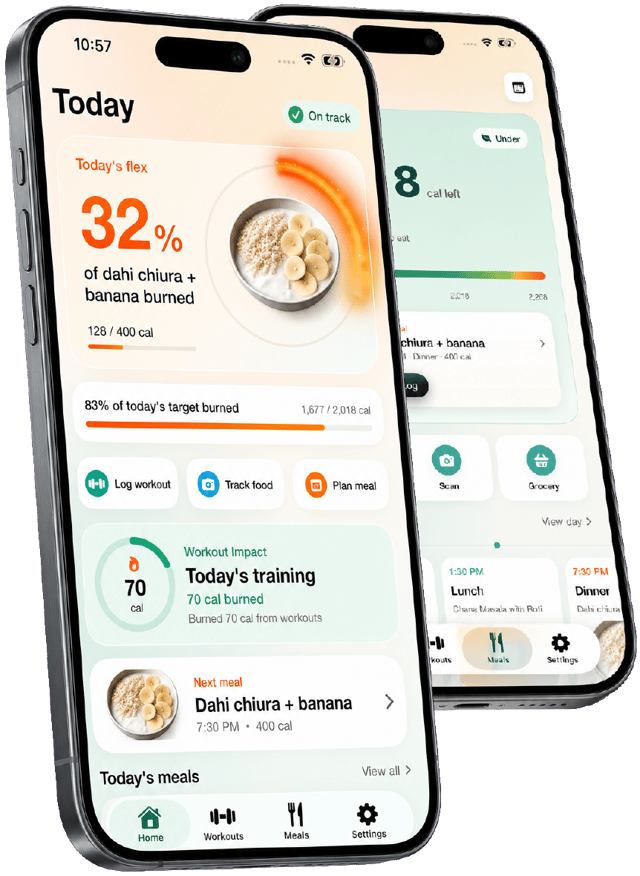
The burn bar connects training to eating
Log a lifting session or a run and see its effect on the day, keeping food and training on one screen instead of two.
Practical guidance
Meal-planning tips for men
Adjustments that close the gaps a generic diet plan for men usually leaves open.
- 01 Set your target from your actual numbers
A generic 2,000-calorie label undershoots most active men by several hundred calories.
- 02 Chase fiber on purpose
It's the target most men miss; oats, beans, fruit and whole grains close the gap fast.
- 03 Spread protein across three-plus meals
Better for satiety and muscle retention than one large protein hit at dinner.
- 04 Watch liquid calories
Beer, sugary drinks and large coffee orders are an easy several hundred calories a day that don't register as food.
- 05 Measure for two weeks, then eyeball
A short calibration period fixes portion-size blind spots that otherwise persist for years.
- 06 Pair higher protein with training
The extra protein does more when there's a training stimulus to use it.

Get the week planned in one tap
Build my meal plan Burnplate builds a 7-day meal plan around your calories, protein and food preferences, writes the grocery list, and lets you swap any meal you don't feel like.
Questions
Meal planner for men: FAQ
How many calories should a man eat per day?
It varies with size, age and activity, but a common range for adult men is 2,200 to 3,000 calories a day. A generic 2,000-calorie label is based on an average intake reference, not an individual man's needs, and often undersizes active men.
How much protein do men need for muscle gain?
A common range for men trying to build muscle is 1.4 to 1.6 grams per kilogram of body weight, well above the 0.8 g/kg minimum meant to prevent deficiency. Spreading it across three or more meals tends to work better than one large serving.
Why do men need more fiber than they think?
Men have the highest fiber recommendation of any group — 38 grams a day under 50, 30 grams after — but typical intake runs well under half that. Oats, beans, whole grains and fruit close most of the gap without much effort.
What does a healthy diet plan for men look like day to day?
In practice it looks like normal food at a calorie level sized to the person — protein at every meal, fiber worked into breakfast and lunch rather than skipped, and liquid calories from alcohol and sugary drinks kept in check.
Can a meal plan app calculate calories for men accurately?
Yes, when it uses your actual height, weight, age and activity level rather than a flat number. Burnplate calculates calorie and protein targets this way and builds a 7-day meal plan and grocery list around them.
Do men need more calories than women?
On average, yes — men typically carry more muscle mass and a higher basal metabolic rate, which raises calorie needs. But the difference between any two individuals depends more on size and activity level than on sex alone.
