A half marathon is raced close to lactate threshold — the pace you can sustain hard but not sprint. Tempo runs, held at or near that intensity, train the body to clear lactate efficiently at exactly the effort race day demands.
Why it's different
Why half marathon training isn't a scaled-down marathon plan
A half marathon plan built by just cutting a marathon plan in half misses the point — the race is run closer to threshold pace than a marathon, which means the training has to build a different kind of fitness.
10–12 weeks typical training block length for a half marathon, shorter than a full marathon buildup
11–12 mi peak long run distance most half-marathon plans build to before tapering
5–7 g/kg carbohydrate per kilogram of bodyweight per day supports the higher mileage weeks in this plan
Unlike a marathon, most half-marathon plans peak the long run around 11–12 miles rather than the full 13.1 — the aerobic benefit plateaus, and running the full distance in training adds recovery cost without much payoff.
A shorter race distance means faster recovery between hard sessions, which lets a half-marathon block fit two quality sessions a week more comfortably than a marathon block typically can.
Most runners finish a half marathon within glycogen reserves without needing mid-race fueling, though longer finish times or hot conditions can still benefit from a gel or two.
What it looks like
A sample mid-training week
A five-day week from mid-block, built around a tempo run, a long run and easy mileage between them.
Example week
5 running days Days/week30–110 min Session lengthIntermediate LevelNone — running shoes Equipment
Monday Rest Full rest or light cross-training, 20–30 min easy
Tuesday Easy run 4 miles at a conversational pace
Wednesday Tempo run 1-mile warm-up · 3 miles at threshold (comfortably hard) pace · 1-mile cool-down
Thursday Easy run 4 miles easy + strides
Friday Rest Full rest or gentle mobility work
Saturday Short easy run 3 miles easy
Sunday Long run 9 miles at an easy, steady pace
How Burnplate handles it
How Burnplate supports half marathon training
Burnplate builds the running structure around your schedule and keeps fueling in sync with the training load.
A plan built around your training days and level
Tell Burnplate your running days and level, and it builds a plan structured around tempo runs, easy mileage and a progressively longer weekly long run.
Calorie and carb targets that flex with training load
Burnplate sets calorie and macro targets from your body, goal and activity, so higher-mileage weeks get the extra carbohydrate they need without you doing the math by hand.
Fast logging on busy training weeks
A photo-based food log keeps tracking realistic even on weeks stacked with early runs and packed schedules — no long manual entry required.
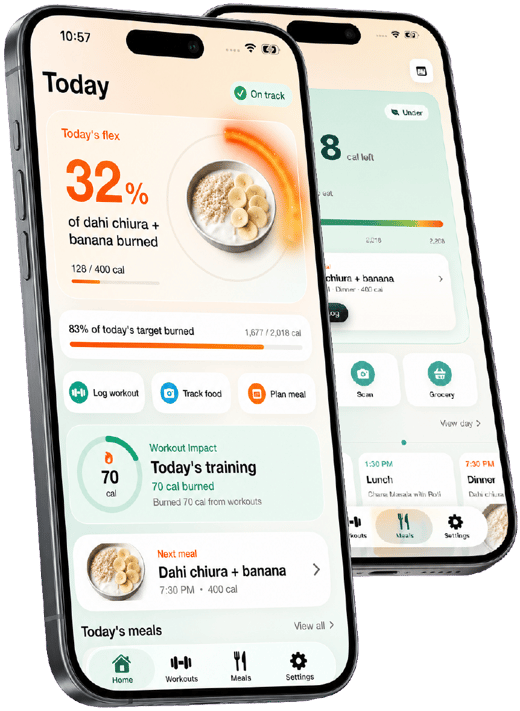
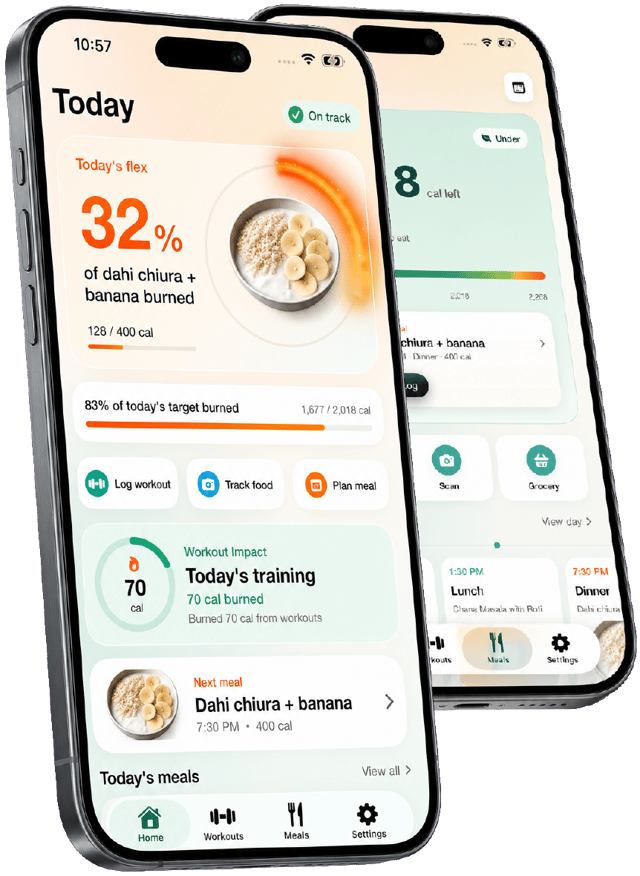
The burn bar connects a tempo run or long run to the day's food
Log a session and see the percentage of your day's target it burned — useful for understanding why hunger spikes after a hard tempo run.
Practical guidance
Tips for half marathon training
Practical habits that make a 10-12 week half-marathon block productive without breaking down.
- 01 Don't run every tempo run at an all-out pace
Threshold pace should feel comfortably hard, sustainable for the segment — not a max effort every time you do it.
- 02 Keep easy days genuinely easy
The tempo and long run do the hard work; easy days exist to let you recover into the next quality session, not to add more stress.
- 03 Rehearse race-day pacing on the long run
Running the last few miles of a long run at goal race pace builds confidence in holding that effort when it matters.
- 04 Taper with intent
Cutting volume while keeping a touch of race-pace running in the final two weeks keeps legs sharp, not just rested.
- 05 Practice your fueling plan even if you don't strictly need it
Testing a gel or sports drink during a long run avoids surprises on race day, even for runners who could finish without fueling.
- 06 Prioritize sleep during the two peak weeks
The weeks with the tempo run and longest long run back-to-back are when recovery debt builds fastest.

Build the plan around your week
Build my workout plan Tell Burnplate your days, equipment and level and it builds a progressive workout plan, logs every session, and connects what you burn to what you eat.
Questions
Workout planner for half-marathon training: FAQ
How long should you train for a half marathon?
Most training plans run 10–12 weeks, which is enough time to build a weekly long run toward 11–12 miles and develop tempo-pace fitness, assuming you're already running a few miles comfortably at the start. Complete beginners may want a longer runway.
What is a good training plan for a half marathon?
A plan with roughly five running days a week — one tempo run, one progressively longer long run and a few easy-paced runs between them — covers both the speed and endurance a half marathon demands. Most plans peak the long run around 11–12 miles before tapering.
Do I need to run 13.1 miles in training before the race?
No. Most half-marathon plans peak the long run a mile or two short of race distance — the aerobic benefit largely plateaus by then, and running the full distance in training adds recovery cost without much extra payoff.
How fast should I run my tempo runs?
Tempo pace should feel comfortably hard — a pace you could hold for 20–40 minutes but wouldn't want to race at. It's typically close to half-marathon race pace or slightly faster, not an all-out sprint effort.
Do I need to fuel during a half marathon?
Many runners finish within their glycogen stores without mid-race fueling, especially finishing under 2 hours. Slower finish times, hot conditions or a history of bonking late in races are reasons to test a gel or two during training long runs.
Can Burnplate build a half marathon training plan?
Yes. Tell Burnplate your running days and level, and it builds a plan around tempo runs, easy mileage and a progressive long run, plus calorie and carb targets that scale with your training load.
