
Cutting 1,000+ calories a day sounds efficient, but it usually means losing muscle along with fat, crashing energy for workouts, and rebounding hard once willpower runs out. A 500 kcal deficit is slower on paper and faster in practice because you can actually sustain it.
Why it's different
Why the deficit size matters more than the diet
Every weight-loss plan is really the same lever pulled to different degrees: eat less than you burn. What separates a plan that works for months from one that fizzles in three weeks is how that deficit is sized and where the calories come from.
500 kcal a moderate daily deficit that produces roughly 1 lb of fat loss a week
1.6–2 g/kg protein target that helps preserve muscle while you're eating less
25 g+ fiber per day most adults need to stay full on fewer calories
In a deficit, your body will happily burn muscle for fuel if you let it. Eating enough protein — roughly 1.6–2 g per kg of bodyweight — signals your body to hold onto lean tissue and lose fat preferentially instead.
A calorie calculator gives you a starting estimate based on your body and activity level. Two to three weeks of honest logging against the scale tells you whether that estimate was right — and Burnplate adjusts as your weight and activity change.
Workouts and daily steps burn real calories, and a plan that ignores them either leaves you hungrier than necessary or eating back too much. Seeing the connection between training and your daily balance keeps the deficit honest in both directions.
What it looks like
A sample day at a 500 kcal deficit
Built for someone with a maintenance calorie level around 2,100 who wants a steady, sustainable pace. Adjust the numbers to your own calculator result — the structure of the day is what carries over.
Example day
Daily targets
Calories 1,600 kcal about 500 below maintenance for a moderate weekly loss
Protein 130 g roughly 1.7 g/kg to protect lean mass in the deficit
Carbs 150 g fuels training and everyday activity
Fat 55 g keeps hormones and satiety in check
Fiber 28 g keeps you full on fewer total calories
A logged day
7:00 AM Greek yogurt, berries, granolaprotein-first start curbs mid-morning snacking 350 kcal
12:30 PM Turkey & veggie wrap, side saladhigh volume, moderate calories 480 kcal
3:30 PM Apple and string cheesea planned snack, not a raid on the pantry 150 kcal
7:00 PM Grilled chicken, rice, broccolithe biggest meal of the day, still on target 520 kcal
9:00 PM Cottage cheeseslow protein before bed rounds the day out 100 kcal
How Burnplate handles it
How Burnplate handles a weight-loss deficit
Burnplate isn't a fixed diet plan. It's a target built from your body and a set of tools that make hitting it day after day genuinely easy.
A target built from your body, not a chart
Enter your stats, goal and activity level and Burnplate sets your daily calorie and macro target — then adjusts it as your weight trends over time.
Snap a photo, get a calorie estimate
Photograph a meal, confirm what Burnplate found, adjust the portion if needed, and it's logged. Text search works too when a photo isn't practical.
See what your workouts did to today's balance
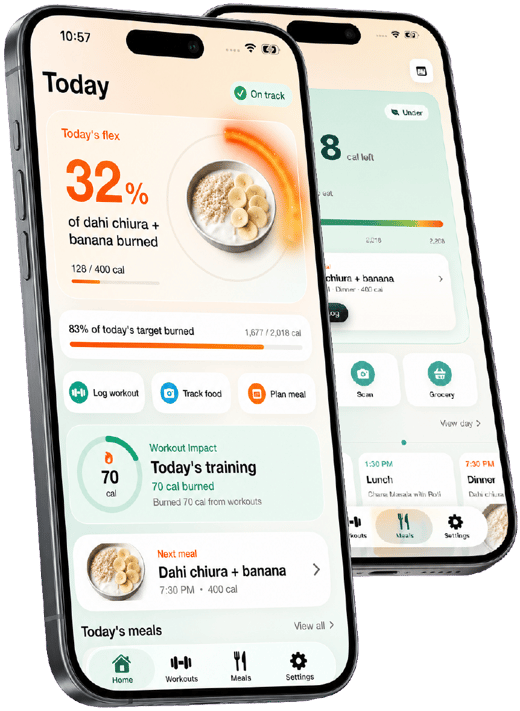
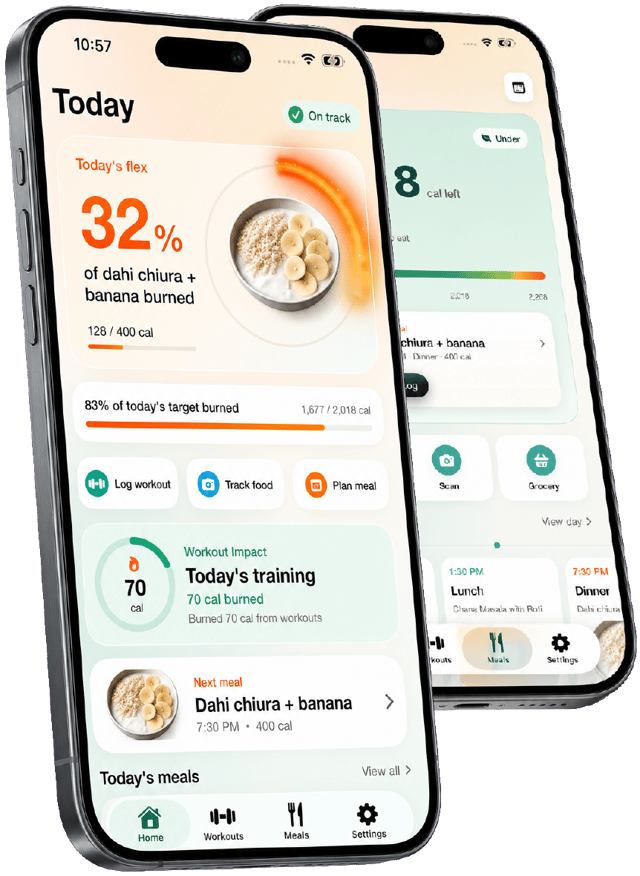
The burn bar shows how much of your target your training and steps have covered, so you know exactly how much room is left to eat.
Steps count toward the deficit too
Daily activity adds up outside the gym. Burnplate folds steps into your balance so a walk isn't invisible to the number that matters.
Practical guidance
Tips for a weight-loss deficit that actually sticks
Small habits that make the math work without making food the center of every conversation.
- 01 Weigh in weekly, not daily
Day-to-day weight swings from water and food volume; a weekly average is what actually tells you the deficit is working.
- 02 Put protein first, every meal
Anchor each meal with a protein source before filling in carbs and fat — it's the single easiest way to stay full on fewer calories.
- 03 Don't punish a bad day with a worse one
One over-target day costs almost nothing over a week. Skipping meals to 'make up for it' usually backfires by 8 PM.
- 04 Size the deficit around training days
Eating a little more on hard training days and a little less on rest days can make the same weekly deficit feel much easier.
- 05 Log the bite, not just the meal
Tastes, handfuls and drinks add up. Logging them honestly is what makes the target mean something.
- 06 Expect the scale to lie some weeks
Sodium, hormones and hydration move the number independent of fat loss. Trust the trend line over any single morning.

Track it with a photo, not a search bar
Start tracking free Burnplate sets your calorie and macro targets, logs meals from a photo, and shows how much of each meal your workouts and steps have burned off.
Questions
Calorie tracker for weight loss: FAQ
How many calories should I eat to lose weight?
Most adults lose weight steadily on a deficit of about 500 calories a day below maintenance, which works out to roughly 1 pound of fat loss per week. A calorie calculator gives you a starting estimate from your body and activity level; two to three weeks of logging tells you whether it needs adjusting.
Is a calorie tracker for weight loss actually accurate?
No calorie tracker is perfectly precise — photo logging and food databases carry some margin of error. What matters is consistency: tracking the same way every day makes the trend reliable even if any single number is off by a little.
Do I need to track macros, or just calories?
Calories alone will move the scale, but tracking protein specifically helps you keep the muscle you have while losing fat. Carbs and fat matter less precisely for weight loss itself, though they affect energy and hunger.
What if my weight loss stalls?
Stalls of one to two weeks are normal and often water or hormone related. If the scale hasn't moved in three to four weeks despite consistent logging, your maintenance calories have likely shifted as you've lost weight — it's time to recalculate.
Does exercise let me eat more?
Yes, but with a caveat: gym machines and even watches tend to overestimate calories burned. Burnplate's burn bar shows your actual training and step contribution so you can eat back a reasonable portion of it without erasing the deficit.
How fast should I expect to lose weight?
About 0.5 to 1 percent of bodyweight per week is a realistic, muscle-sparing pace for most people. Faster than that usually means losing water and muscle along with fat, and it's harder to sustain past a few weeks.
