
Eating in a large, unmeasured surplus does build some muscle, but the fat gained per pound of muscle is far higher than a controlled surplus produces. The extra fat has to come off again later — a lean bulk skips that detour.
Why it's different
Why a tracked bulk beats a 'see food' bulk
An untracked bulk usually drifts into one of two failure modes: too small a surplus to gain much, or a surplus so large the fat gain outpaces the muscle. Tracking is what keeps a bulk in the range that's actually working.
400 kcal a typical daily surplus for a standard, controlled bulk
1.6 g/kg protein floor for a bulk — pushing higher rarely adds more benefit
0.5–1% bodyweight gained per month that keeps a bulk mostly muscle
Your body can only build muscle so fast, even in ideal conditions. Calories beyond what training can use for muscle are stored as fat — there's no upper limit on that side of the equation.
Lifters who alternate bulking and cutting phases make the fastest long-term progress when each bulk stays lean enough that the following cut is short — a few weeks, not a few months.
What it looks like
A sample day on a lean bulk
Built for a lifter with an estimated maintenance around 2,600 calories running a 400 kcal surplus with four training days a week.
Example day
Daily targets
Calories 3,000 kcal about 400 above maintenance for a standard bulk pace
Protein 180 g roughly 1.8 g/kg — comfortably above the 1.6 g/kg floor
Carbs 380 g the main driver of the surplus, fueling training volume
Fat 90 g adds calorie density without crowding out protein
A logged day
7:00 AM Eggs, oats, whole milk, fruita calorie-dense breakfast sets the tone for the day 700 kcal
12:00 PM Beef, rice, veg, olive oilthe biggest single meal of the day 780 kcal
3:00 PM Protein shake, bagel, peanut butteran easy 550 calories between meals 550 kcal
6:00 PM (lift session) —training logged; burn bar shows how much of the surplus it used —
7:30 PM Chicken thighs, potatoes, saladcloses most of the remaining target 700 kcal
9:00 PM Cottage cheese, honeyrounds the day out to 3,000 total 270 kcal
How Burnplate handles it
How Burnplate handles a bulk
A bulk is only as good as the training absorbing it — Burnplate keeps both sides connected.
A surplus sized to your goal, not open-ended
Choose your pace and Burnplate sets a calorie and protein target for a standard or lean bulk, instead of leaving 'eat more' undefined.
A workout plan that gives the surplus somewhere to go
Burnplate's workout planner builds a progressive program around your days per week and equipment — the training volume a bulk is actually meant to fuel.
Photo and text logging for high-calorie days
Hitting 3,000+ calories without obsessing means logging fast. Snap a photo or search a food, and dense meals get tracked in seconds.
The burn bar shows what cardio or steps take back
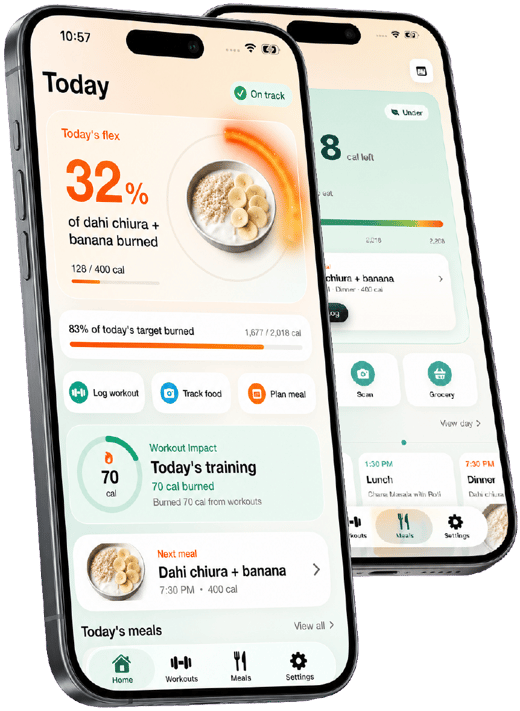
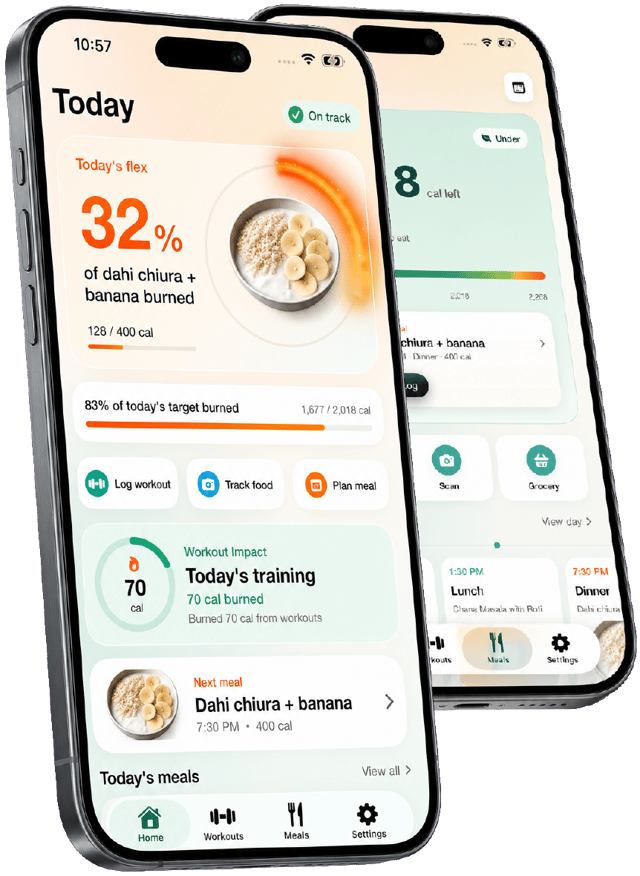
Extra walking or conditioning eats into a surplus the same way it widens a deficit. The burn bar shows how much of today's surplus has already been spent.
Practical guidance
Tips for a bulk that stays mostly muscle
Habits that keep the surplus doing its job instead of just adding weight.
- 01 Start smaller than you think
A 300–400 kcal surplus is plenty for most lifters. You can always add more if the scale isn't moving after two to three weeks.
- 02 Weigh in weekly, track the trend
0.5–1% of bodyweight gained per month is a lean pace. Faster than that is usually more fat than muscle.
- 03 Keep protein steady even on high-calorie days
It's tempting to fill extra calories with carbs and fat alone — keep protein near your target even as total calories climb.
- 04 Progress the lifts, not just the plate
If training weights aren't increasing over weeks, the extra calories aren't being used for their intended purpose.
- 05 Plan the cut before you start the bulk
Knowing roughly how long you'll bulk before cutting back keeps the surplus from drifting on indefinitely.

Track it with a photo, not a search bar
Start tracking free Burnplate sets your calorie and macro targets, logs meals from a photo, and shows how much of each meal your workouts and steps have burned off.
Questions
Calorie tracker for bulking: FAQ
How many calories do I need for a bulk?
A daily surplus of 300–500 calories above maintenance is the standard range for a bulking calculator, producing roughly 0.5–1% of bodyweight gained per month while keeping most of the gain as muscle rather than fat.
What's the difference between a lean bulk and a dirty bulk?
A lean bulk uses a controlled, tracked surplus (roughly 300–500 kcal) aimed at maximizing muscle while limiting fat gain. A dirty bulk is an unmeasured, often much larger surplus that builds muscle too, but with substantially more fat gained alongside it.
How long should a bulking phase last?
Many lifters run bulks in 8–16 week blocks, long enough to make meaningful strength and muscle progress before the accumulated fat gain makes a cutting phase worthwhile. Very long, open-ended bulks tend to drift into excess fat gain.
Will I gain fat during a bulk?
Some fat gain is normal and expected with any calorie surplus. A controlled surplus with adequate protein and consistent resistance training minimizes it, but a bulk without any fat gain at all usually means the surplus is too small to build much muscle either.
Do I need a workout plan while bulking, or just more food?
Both — the surplus alone doesn't build muscle. Progressive resistance training is what directs the extra calories toward muscle instead of fat, which is why Burnplate pairs its calorie targets with a workout planner rather than treating them separately.
