
T3 and T4 regulate how many calories the body burns at rest, so low or unstable thyroid hormone levels genuinely lower calorie needs, not just energy levels.
Why it's different
Why hypothyroidism changes the calorie math
Thyroid hormone regulates basal metabolic rate directly — this isn't a vague feeling of a slow metabolism, it's a measurable effect that a standard calorie calculator doesn't account for.
10–15% roughly how much lower resting metabolic rate can run in untreated or under-treated hypothyroidism
1.0–1.2 g protein per kg body weight — supports energy and muscle on a condition that saps both
25–30 g fiber a day recommended, and useful for the constipation many with hypothyroidism experience
Correcting thyroid hormone levels through medication is the biggest lever available — calorie tracking works best as a secondary tool once levels are stable, not as a substitute for treatment.
Very low calorie intake worsens the fatigue that already comes with hypothyroidism and can further suppress metabolic rate, making an aggressive deficit particularly counterproductive here.
Once hormone levels are stable on treatment, standard calorie-deficit principles apply — they just tend to work from a lower baseline and at a more patient pace than a calculator assumes.
What it looks like
A sample day with hypothyroidism
Built around roughly 1,650 calories — a conservative estimate that accounts for a metabolic rate that may run below what a standard calculator suggests.
Example day
Daily targets
Calories ~1,650 Estimate accounting for a metabolic rate that may run below typical calculators until levels are stable
Protein 1.0–1.2 g/kg Helps offset thyroid-related fatigue and muscle loss
Fiber 28 g Also helps with the constipation common with hypothyroidism
Iodine from food, not supplements Excess supplemental iodine can worsen some thyroid conditions — food sources are usually enough
Weight-loss pace 0.5–1 lb/week A slower, steadier pace than typical calculators suggest, especially before levels are stable
A logged day
7:00 AM Eggs, spinach, whole-grain toastProtein and fiber to start 400 kcal
10:30 AM Greek yogurt and berriesSmall protein touchpoint 190 kcal
12:30 PM Chicken, farro, roasted vegetablesBalanced, fiber-forward lunch 460 kcal
3:30 PM Apple and almondsSteady energy, no crash 190 kcal
6:30 PM Salmon, sweet potato, greensProtein and fiber at dinner 420 kcal
How Burnplate handles it
How Burnplate fits hypothyroidism
Burnplate isn't a thyroid treatment tool and doesn't replace medication management. It helps track food realistically while treatment does the heavier lifting on metabolism.
A target sized for a slower metabolism
You can dial in a more conservative activity level so the calorie target doesn't overestimate what your body's actually burning while levels are being managed.
Protein tracked to fight the fatigue
Macro targets keep protein visible day to day, supporting energy and muscle on a condition that tends to sap both.
Photo logging for low-energy days
Snap a plate instead of a manual food diary — logging that survives the fatigue that comes with under-treated hypothyroidism.
See activity's real effect
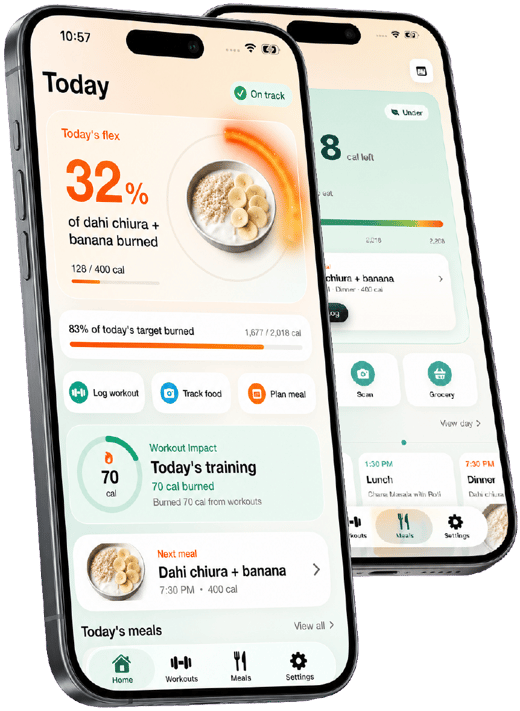
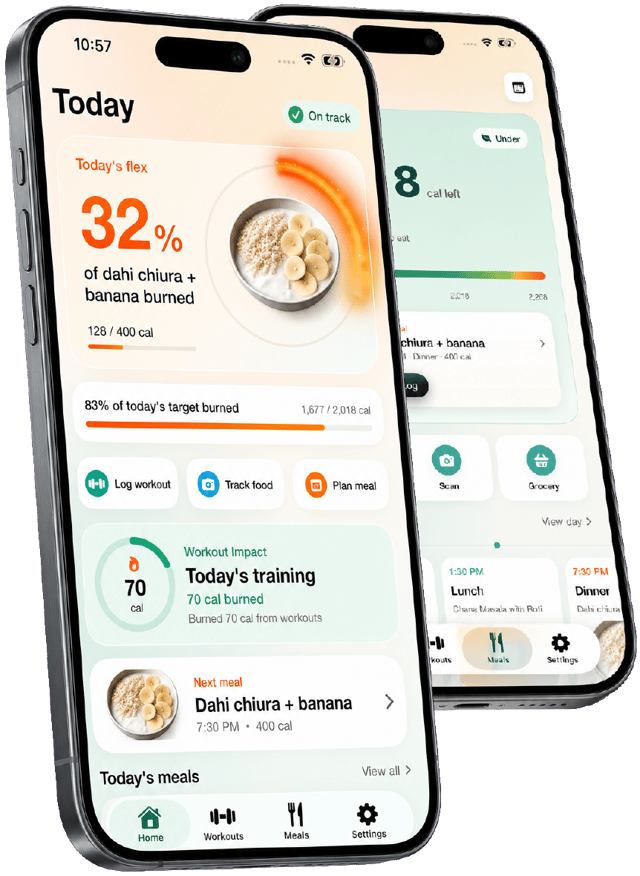
The burn bar shows how much of a meal workouts and steps have offset, encouraging gentle, consistent movement rather than punishing exercise.
Practical guidance
Practical tips for tracking with hypothyroidism
Habits that respect a genuinely slower metabolism instead of fighting it with more restriction.
- 01 Get levels stable before chasing numbers
Calorie and weight targets are far more reliable once thyroid hormone levels are stable on treatment — tracking before that point is a rougher estimate.
- 02 Don't go below a calorie floor
Very low intake worsens fatigue and can further suppress metabolic rate — a floor around 1,200-1,500 calories is a common conservative starting range, adjusted with your doctor.
- 03 Prioritize protein over cutting further
Extra protein supports energy and muscle mass better than trimming calories further once a reasonable deficit is already in place.
- 04 Expect a slower pace than usual
A metabolism running 10-15% below typical estimates means results take longer than a generic timeline suggests — that's expected, not a sign something's wrong.
- 05 Watch fiber for the constipation effect
Hypothyroidism commonly slows digestion — hitting the fiber target helps with a symptom that's easy to overlook while focused on calories.
- 06 Keep iodine from food, not pills
Excess supplemental iodine can worsen some thyroid conditions — get it from food sources and let your doctor guide any supplementation.

Track it with a photo, not a search bar
Start tracking free Burnplate sets your calorie and macro targets, logs meals from a photo, and shows how much of each meal your workouts and steps have burned off.
Questions
Calorie tracker for hypothyroidism: FAQ
Does hypothyroidism really slow your metabolism?
Yes — thyroid hormone directly regulates basal metabolic rate, so untreated or under-treated hypothyroidism can lower resting calorie burn by a meaningful margin, often estimated around 10-15%. Once hormone levels are stabilized on treatment, metabolic rate typically improves, though it may not fully return to pre-condition levels for everyone.
How many calories should someone with hypothyroidism eat?
It depends on treatment status, body size and activity, but a somewhat conservative estimate — below what a standard calculator suggests — is reasonable until hormone levels are stable. Many people find a target in the 1,500-1,800 range works as a starting point, adjusted based on actual weight trend.
Is it harder to lose weight with hypothyroidism?
It can be, especially before treatment has stabilized hormone levels, since resting metabolic rate is genuinely lower. Once levels are managed, standard calorie-deficit principles work, though often more slowly and from a lower calorie baseline than for someone without the condition.
Does a calorie tracker for hypothyroidism actually help?
It can, mainly by keeping protein visible alongside calories and avoiding an overly aggressive deficit that would worsen fatigue. It's a tracking tool, not a treatment — the biggest lever for hypothyroidism is medication management with your doctor, not calorie counting.
Should I avoid iodine with hypothyroidism?
Not necessarily from food — iodine from typical food sources is generally fine and often necessary. Excess iodine from supplements, however, can worsen some thyroid conditions, so any supplementation should be discussed with your doctor rather than added on your own.
Can Burnplate account for a slower metabolism?
You can set a more conservative activity level and calorie goal to reflect a lower metabolic rate, and Burnplate calculates macro targets from there with protein weighted to support energy and muscle. It doesn't measure thyroid function or adjust automatically for it — that's a conversation for your doctor.
