
Whether the goal is a surplus or a deficit, protein intake around 1.6–2.2 g per kilogram stays roughly the same. It's the calorie total around it that changes with the phase.
Why it's different
Why bodybuilding needs a phase-based plan
A single fixed meal plan can't serve both goals bodybuilding cycles through. A bulk and a cut want opposite calorie balances, but they share the same requirement — protein has to stay high enough, in both phases, to signal the body to hold on to and build muscle.
1.9 g/kg a typical daily protein target for both a bulk's surplus and a cut's deficit
+10–20% a controlled calorie surplus during a bulk that limits fat gain relative to muscle gained
-15–25% a calorie deficit during a cut that loses fat while protecting strength and muscle
A surplus that's too aggressive adds mostly fat, not muscle. A modest 10–20% surplus, tracked consistently, adds size while keeping the eventual cut shorter and less punishing.
An aggressive deficit without enough protein and resistance training loses muscle along with fat. A moderate 15–25% deficit with protein held high and training maintained protects the muscle while the fat comes off.
Protein and carbs around a lifting session — before to fuel it, after to start recovery — do more for a training-driven goal than the same food eaten at random points in the day.
What it looks like
A sample day on a bodybuilding meal plan
Around 2,900 calories on a lean-bulk day, with protein spread across five meals and the largest carb meal placed around the training session.
Example day on the plan
~2,900 (bulk) calories180–200 g protein330–360 g carbs5 meals/day
7:00 AM Eggs & oats4 eggs, 1 cup oats, banana 620 kcal
10:30 AM Protein shake & fruit1 scoop whey, milk, 1 cup berries 320 kcal
1:00 PM Chicken, rice & veg200 g chicken breast, 1.5 cups rice, mixed vegetables 720 kcal
4:30 PM Pre-workout carbsRice cakes with honey, 1 scoop whey 380 kcal
7:30 PM Steak, potatoes & salad180 g lean steak, 1.5 cups potatoes, olive oil, salad 700 kcal
9:30 PM Cottage cheese before bed1 cup cottage cheese 180 kcal
Smart swaps
An open-ended surplus A tracked 10–20% surplus, adjusted every 2 weeks by the scale trendKeeps muscle-to-fat ratio favorable and the eventual cut shorter.
Cutting protein when calories drop Protein held flat across bulk and cut phasesProtein is what protects muscle in a deficit — it's the last thing to cut.
A huge single post-workout meal Protein and carbs split before and after trainingFuels the session and starts recovery instead of loading everything after the fact.
Random meal timing The largest carb meal placed around the workoutPuts the most fuel where it's used, rather than eaten idly earlier or later in the day.
How Burnplate handles it
How Burnplate tracks a bulk-and-cut cycle
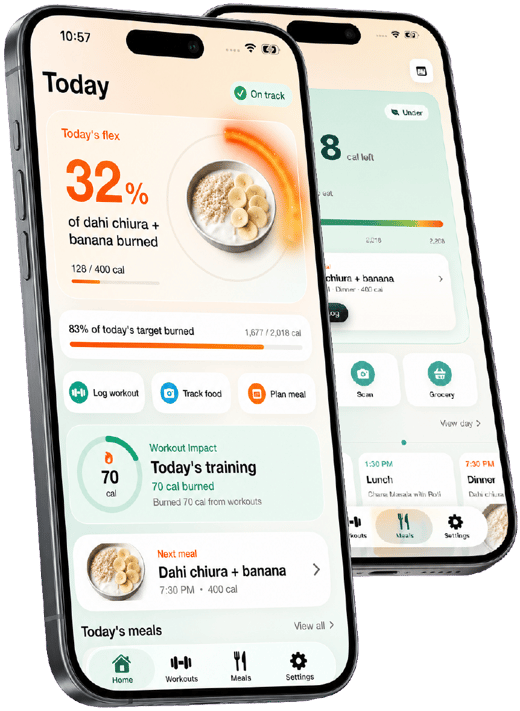
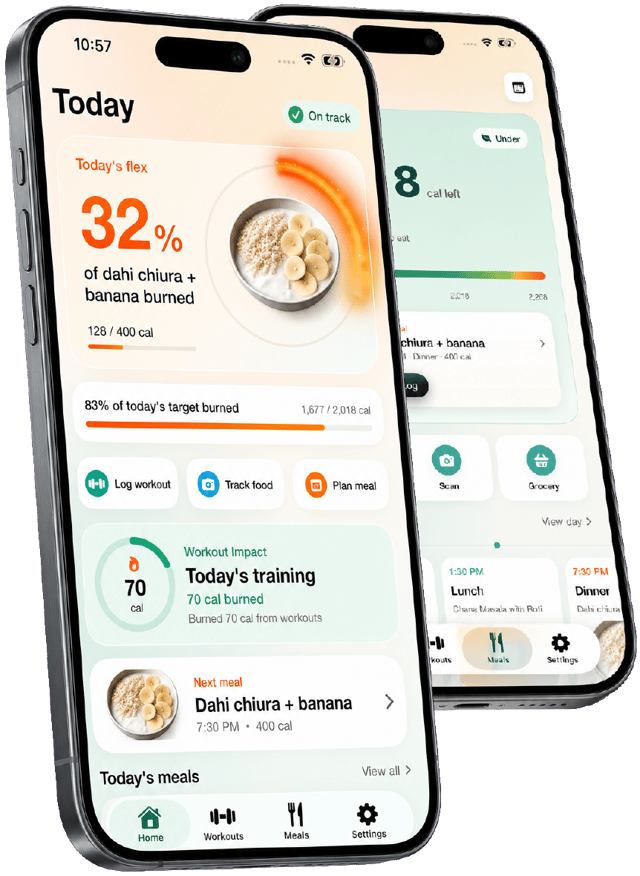
Burnplate's targets are built from your body, goal and activity, and update when your goal does — which fits a phase-based approach naturally.
Targets that shift with your phase
Switch your goal from muscle gain to a cut and Burnplate recalculates your calorie and protein targets, so the plan updates instead of you doing the math by hand.
A 7-day plan built around your protein floor
Burnplate builds a week of meals around your calorie and protein targets, with a grocery list ready for one shopping trip through either phase.
Workout planner tracks the training
Log lifts in Burnplate's workout planner with sets, reps and progression, right alongside the meals fueling them, instead of splitting training and nutrition across two apps.
See the day's balance at a glance
The burn bar and daily calorie balance show exactly where you stand against a bulk's surplus or a cut's deficit, so the phase stays on track day to day, not just on paper.
Practical guidance
Nutrition tips for bodybuilding
Practical habits that keep a bulk lean and a cut muscle-sparing.
- 01 Track the scale trend, not one day
A weekly average weight trend is a far more reliable signal for adjusting a bulk or cut than any single day's number.
- 02 Keep the bulk modest
A 10–20% surplus adds size with less fat gain than an aggressive one, and it means less to cut later.
- 03 Don't cut too hard, too fast
A 15–25% deficit loses fat while training performance and muscle hold up better than a crash diet.
- 04 Prioritize protein when calories are low
In a deficit, protein is the macro that most directly protects the muscle you built — keep it high even as total calories drop.
- 05 Eat carbs around training
Placing the day's largest carb meal before or after lifting supports performance and recovery better than spreading carbs randomly.
- 06 Keep lifting heavy in a cut
Maintaining training intensity, not just volume, is what signals the body to keep muscle while calories are reduced.

Get the week planned in one tap
Build my meal plan Burnplate builds a 7-day meal plan around your calories, protein and food preferences, writes the grocery list, and lets you swap any meal you don't feel like.
Questions
Meal planner for bodybuilding: FAQ
How many calories should I eat for bodybuilding?
During a bulk, most people target roughly a 10–20% calorie surplus above maintenance; during a cut, a 15–25% deficit. The exact number depends on your body, activity and how fast you want the phase to progress — Burnplate sets a starting target from those inputs.
What is a good diet plan for bodybuilding?
A solid bodybuilding diet holds protein around 1.6–2.2 g per kilogram of body weight in every phase, adjusts total calories for bulking or cutting, and times carbs around training. Whole foods with a few convenient staples repeated weekly make it sustainable long-term.
How much protein do bodybuilders need?
Most evidence-based guidance for bodybuilding lands around 1.6–2.2 g of protein per kilogram of body weight per day, spread across 4–5 meals. Going meaningfully higher than that range shows little additional benefit for most lifters.
Should I bulk or cut first?
It depends on your current body composition and goals — someone with higher body fat often cuts first, while someone leaner may bulk first to build a base to cut from later. Either way, the cycle alternates between the two rather than picking one permanently.
Do I need to eat right after lifting for bodybuilding?
The old strict 30-minute anabolic window is looser than once believed, but eating protein and carbs within a few hours of training still supports recovery, and it's a simple habit to build the plan around.
Does Burnplate work for bulking and cutting?
Yes — Burnplate recalculates your calorie and protein targets when you change your goal between muscle gain and fat loss, builds a 7-day meal plan around them, and tracks your lifts in the same app so training and nutrition stay in sync through both phases.
