
With grains and legumes off the table, vegetables and fruit are the only fiber sources left. A paleo plate needs more of both than a typical plate to hit the same fiber total.
Why it's different
Why paleo needs a real plan, not just a list of banned foods
Removing grains, dairy and legumes in one move takes out several foods most meal plans lean on for volume, calcium and easy carbs — paleo has to replace all three with something else.
30–35 g fiber a day from vegetables and fruit alone, since paleo drops grains and legumes as fiber sources
0 g added sugar is the paleo default — sweetness comes only from whole fruit
1.2–1.6 g/kg protein per kg body weight is typical on paleo, since meat and fish carry most of the protein load
Without dairy, calcium comes from leafy greens, sardines with bones, and almonds — none of which match a glass of milk gram for gram, so paleo eaters generally need to eat more of them deliberately.
Sweet potato, squash, plantain and fruit replace rice, bread and pasta as the carb source. They're lower in calorie density than grains, which is part of why paleo often runs at a natural deficit.
Because packaged food almost always contains grains, added sugar or dairy, paleo pushes toward cooking from raw ingredients more than most diets — which is a feature for some people and a real time cost for others.
What it looks like
A sample paleo day
Around 1,900 calories built entirely from meat, fish, eggs, vegetables, fruit, nuts and seeds — no grains, dairy or added sugar anywhere.
Example day on the plan
~1,900 calories130 g+ protein0 g added sugar30 g+ fiber
7:30 AM Eggs, avocado & sautéed greens3 eggs, ½ avocado, sautéed spinach and mushrooms 440 kcal
10:30 AM Fruit & almonds1 apple, 20 almonds 260 kcal
1:00 PM Grilled chicken & roasted vegetables180 g chicken, roasted sweet potato, broccoli, olive oil 500 kcal
4:00 PM Beef jerky & carrots1 oz unsweetened beef jerky, carrot sticks 160 kcal
7:00 PM Salmon, cauliflower rice & salad160 g salmon, cauliflower rice, mixed greens, olive oil 480 kcal
Smart swaps
Rice or bread as the carb Sweet potato, squash or plantainKeeps a starchy carb on the plate without grains.
Cheese for calcium Sardines, leafy greens or almondsThe main non-dairy sources paleo relies on for calcium.
A granola bar snack Fruit and a handful of nutsMost bars carry grains or added sugar; whole fruit and nuts don't.
Soy sauce or store marinades Coconut aminos or a fresh citrus marinadeAvoids the soy and added sugar in most bottled sauces.
How Burnplate handles it
How Burnplate builds a paleo week
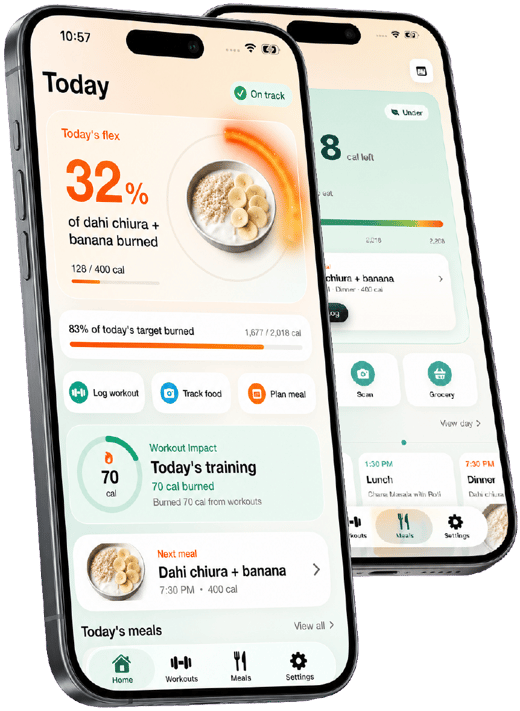
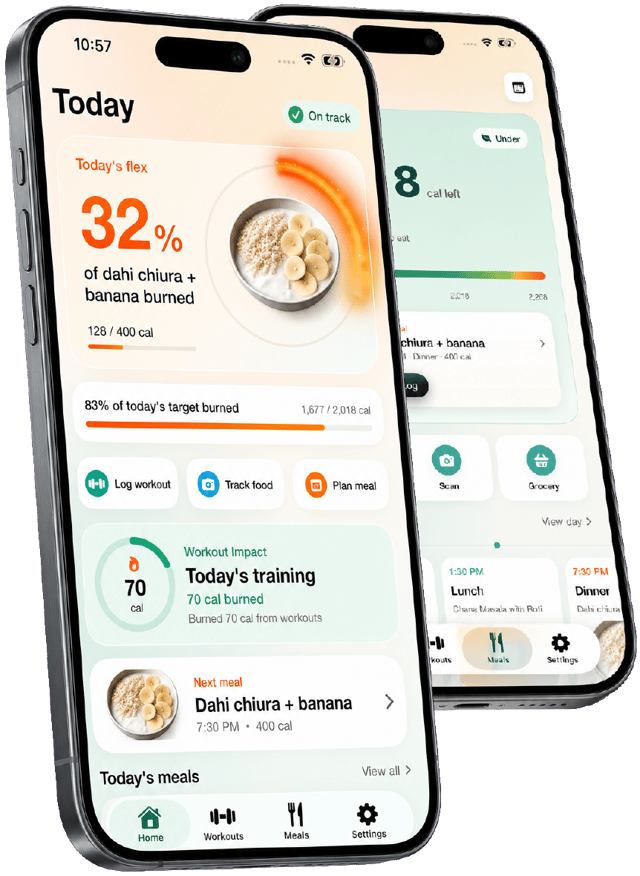
Burnplate builds meals from your calorie and protein targets using whole-food, paleo-compatible ingredients when you set that preference.
Protein and calorie targets set for you
Burnplate calculates your daily protein and calorie targets from your body, goal and activity, so a paleo plan has a clear number to build around.
A 7-day paleo plan with a grocery list
Set your food preference and Burnplate's AI meal plan builds a week from meat, fish, eggs, vegetables, fruit and nuts, with a consolidated shopping list.
Photo logging for meals out
Snap a plate at a restaurant and Burnplate estimates calories and macros, which matters more on paleo since most packaged menu items quietly contain grains or sugar.
Swap any meal, keep it paleo
Not feeling the salmon? Swap it for another paleo-compatible meal and Burnplate keeps the day's calories and protein in range.
Practical guidance
Tips for sticking to a paleo food list
Habits that make whole-food eating sustainable past the first excited week.
- 01 Batch-roast vegetables and protein
Cooking a tray of vegetables and a batch of chicken or fish once covers several meals with just reheating.
- 02 Keep paleo-friendly snacks visible
Nuts, fruit and jerky in easy reach beat willpower when the alternative is a grain-based snack in the cupboard.
- 03 Use starchy vegetables like a grain
Sweet potato and squash can fill the same role rice or pasta used to on a plate.
- 04 Watch sauces and condiments
Ketchup, teriyaki and most salad dressings hide added sugar — check labels or make a simple oil-and-vinegar version.
- 05 Plan the carb source, not just the protein
Paleo meals still need a starchy vegetable or fruit for energy, especially around workouts.
- 06 Don't confuse paleo with low-calorie
Nuts, oils and fatty cuts of meat are calorie-dense — paleo can still run a surplus if portions aren't watched.

Get the week planned in one tap
Build my meal plan Burnplate builds a 7-day meal plan around your calories, protein and food preferences, writes the grocery list, and lets you swap any meal you don't feel like.
Questions
Meal planner for paleo: FAQ
What foods are on a paleo food list?
Meat, poultry, fish, eggs, vegetables, fruit, nuts, seeds and healthy oils like olive and avocado oil. Grains, legumes, dairy, refined sugar and processed food are excluded, based on the idea of eating what's closest to whole, unprocessed food.
Is paleo good for weight loss?
Often, mainly because cutting grains, dairy and added sugar removes a lot of easy excess calories and pushes toward protein and vegetables, which are more filling per calorie. It isn't automatically low-calorie, though — nuts and fatty meats add up fast.
Can you get enough calcium on paleo?
Yes, through leafy greens, sardines eaten with their bones, and almonds, though it takes more deliberate planning than a glass of milk. Anyone concerned about calcium intake on paleo should discuss it with a doctor or dietitian.
How is paleo different from keto?
Paleo restricts by food group — no grains, dairy or legumes — without a strict carb limit, since fruit and starchy vegetables are allowed. Keto restricts by macronutrient, capping carbs regardless of source. Some paleo eating is naturally low-carb; not all of it is.
Does Burnplate build a paleo meal plan?
Yes. Burnplate's AI meal plan can build a 7-day paleo week from meat, fish, eggs, vegetables, fruit and nuts, sized to your calorie and protein targets, with a grocery list and one-tap swaps.
