During activity, working muscle takes up glucose without needing as much insulin. After activity, muscles stay more insulin-sensitive for up to 24–48 hours — which is why regular sessions matter more than occasional hard ones.
Why it's different
Why exercise for diabetes is its own category
A general fitness plan chases calories burned. A diabetes-conscious plan chases something more specific: how effectively your muscles pull glucose out of the bloodstream, both during a session and for hours afterward.
150 min/week moderate cardio activity is the standard target most diabetes exercise guidelines recommend
2–3×/week resistance training sessions recommended alongside cardio for glucose control
~15 min a walk after eating can measurably reduce the post-meal blood sugar rise
More muscle mass means more tissue available to store and use glucose. Strength training two to three times a week builds that capacity in a way cardio alone doesn't.
A walk after a meal blunts the glucose spike that follows eating. For people managing blood sugar, that makes post-meal movement a specific, useful habit rather than just "more exercise is better."
For people on insulin or certain medications, exercise can drop blood sugar too far. Monitoring before and after sessions, and having a plan for lows, is part of designing a safe routine.
What it looks like
A sample week for diabetes management
A four-day mix of resistance training and cardio, with a post-meal walk built in as a standing habit.
Example week
4 + daily walks Days/week30–40 min Session lengthBeginner to intermediate LevelDumbbells, resistance band Equipment
Monday Full-body strength Goblet squat 3×12 · Seated row 3×12 · Push-up (or knee push-up) 3×10 · Glute bridge 3×15
Tuesday Post-meal walk + light cardio 15-minute walk after dinner · optional 20-minute bike ride
Wednesday Full-body strength Dumbbell deadlift 3×10 · Overhead press 3×10 · Lat pulldown or band row 3×12 · Plank 3×30s
Thursday Post-meal walk + steady cardio 15-minute walk after dinner · 25-minute moderate walk or bike
Friday Full-body strength Step-up 3×10 per side · Chest press 3×12 · Hamstring curl (band) 3×15 · Side plank 3×20s per side
Saturday Longer moderate cardio 35–40 minutes brisk walking, cycling or swimming
Sunday Rest + post-meal walk Full recovery day; a short walk after the largest meal still helps
How Burnplate handles it
How Burnplate supports a diabetic exercise routine
Burnplate isn't a medical device and doesn't replace your care team's guidance — it builds the training and food structure around it.
A plan built around your days and equipment
Tell Burnplate your days per week, equipment and level, and it builds a strength-and-cardio plan around that, sized to your starting point.
Session logging to track consistency
Log strength and cardio sessions as you go — consistency over weeks is what drives the insulin-sensitivity benefit, and the log makes that pattern visible.
Calorie and carb-aware meal planning
Burnplate sets calorie and macro targets from your body and goal, and can build a 7-day meal plan around them — useful alongside exercise for managing blood sugar through food.
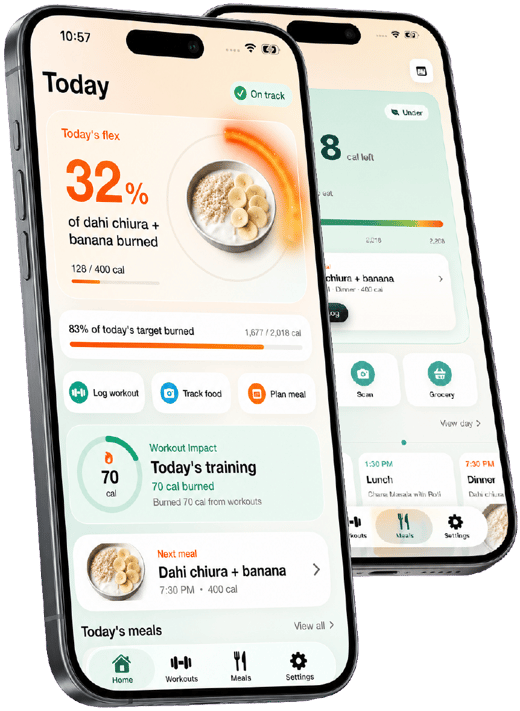
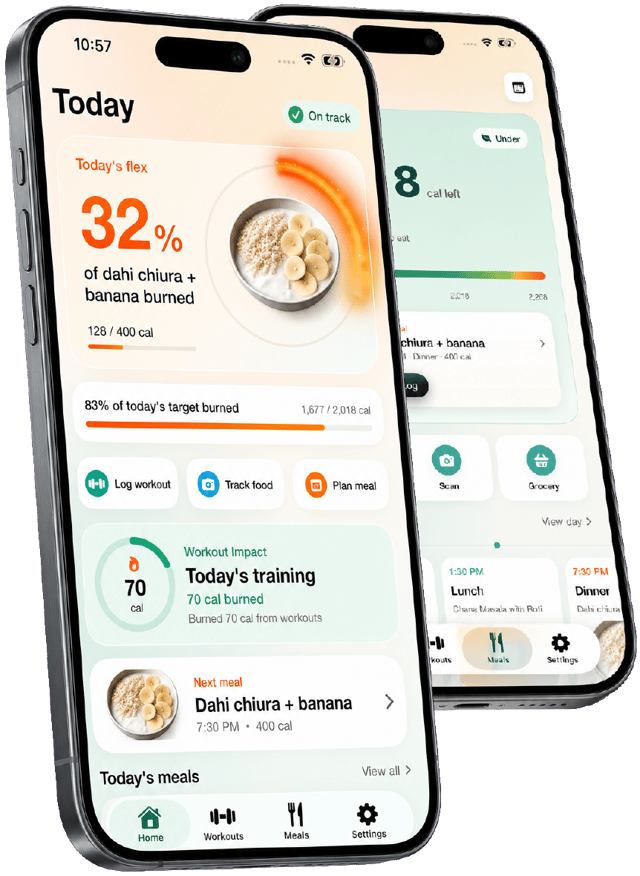
The burn bar connects the walk to the meal
Log a post-meal walk and see the percentage of that meal it burned off — a small, visible reason to take the walk that helps your glucose the most.
Practical guidance
Tips for exercising with diabetes
Practical habits that make a diabetes exercise routine both effective and safe.
- 01 Walk after your biggest meal
A 10–15 minute walk after the largest meal of the day is one of the most reliable, low-effort ways to blunt a glucose spike.
- 02 Check blood sugar around new activity
If you monitor glucose, check before and after sessions when trying something new, especially if you take insulin or a sulfonylurea.
- 03 Carry a fast-acting carb source
If you're at risk of hypoglycemia during exercise, having glucose tablets or juice on hand is a simple safety habit.
- 04 Don't skip strength training for cardio alone
Resistance training builds the muscle mass that improves glucose handling long-term — cardio alone misses part of the benefit.
- 05 Stay consistent rather than sporadic
Regular moderate sessions keep insulin sensitivity elevated more reliably than occasional intense ones with long gaps between.
- 06 Check your feet regularly
Diabetic neuropathy can mask injuries from footwear or activity — a quick foot check after exercise is a simple habit worth keeping.

Build the plan around your week
Build my workout plan Tell Burnplate your days, equipment and level and it builds a progressive workout plan, logs every session, and connects what you burn to what you eat.
Questions
Workout planner for diabetics: FAQ
What is the best exercise for diabetics?
A combination works best: resistance training two to three times a week to build glucose-handling muscle, plus regular moderate cardio like brisk walking. Adding a short walk after meals is a specific, well-supported habit for blunting post-meal blood sugar spikes.
Can exercise lower blood sugar quickly?
Yes — muscle activity pulls glucose from the blood during exercise, and a walk after eating can measurably reduce the post-meal rise within 15–30 minutes. The effect on insulin sensitivity also extends for 24–48 hours after a session.
Is it safe to exercise with type 1 diabetes?
Yes, with planning — checking blood sugar before and after sessions, carrying a fast-acting carb source, and knowing how different types of exercise affect your glucose are important, since intensity and duration can push blood sugar either up or down depending on the activity.
How often should diabetics exercise?
Most guidelines recommend at least 150 minutes of moderate cardio a week, spread across most days, plus resistance training two to three times a week. Daily post-meal walks are a useful addition on top of that structured training.
Can exercise reduce the need for diabetes medication?
For some people with type 2 diabetes, consistent exercise and weight management can improve insulin sensitivity enough that medication needs change — but that's a decision for your doctor, not something to adjust on your own based on how a workout felt.
Can Burnplate build a workout plan for diabetics?
Yes. Tell Burnplate your days per week, equipment and level, and it builds a strength-and-cardio plan, plus calorie and macro targets to pair with it. It doesn't replace your care team's guidance on medication or glucose targets.
