
Blood sugar regulation is often still highly responsive to lifestyle change at the prediabetes stage, before the pancreas has sustained years of extra strain — which is part of why this stage gets its own approach.
Why it's different
Why prediabetes calls for a specific approach
Prediabetes responds unusually well to lifestyle change — better, in some research, than medication alone — but the approach that works is specific: modest, sustained, and paired with movement.
5–7% body weight loss shown to cut progression risk to type 2 diabetes by over half in major prevention studies
150 min weekly moderate activity recommended alongside diet changes
25–30 g fiber a day that helps slow glucose spikes and supports the weight-loss goal
Major diabetes-prevention research used modest calorie deficits and moderate activity, not extreme restriction, to achieve the risk reduction associated with 5-7% weight loss — the modest version is the one with the evidence.
Swapping refined carbs for fiber-rich, whole-food carbs improves glucose response independent of the calorie total, making it one of the highest-leverage changes at this stage.
Regular moderate activity improves insulin sensitivity through a mechanism separate from weight loss, which is why diet and movement are paired rather than treated as alternatives.
What it looks like
A sample day at a prediabetes-focused deficit
Built around roughly 1,750 calories — a moderate 300-400 kcal deficit from an estimated maintenance near 2,100.
Example day
Daily targets
Calories ~1,750 A moderate 300–400 kcal deficit from an estimated maintenance around 2,100
Weight-loss pace 1–2 lb/week Matches the pace used in major diabetes-prevention research
Fiber 28 g Slows glucose absorption and supports satiety on fewer calories
Protein 100 g+ Preserves muscle during the deficit and improves satiety
Refined carbs limited White bread, pastries and sugary drinks swapped for whole-food carbs
A logged day
7:00 AM Veggie egg scramble, whole-grain toastProtein-forward, fiber included 400 kcal
10:30 AM Apple and peanut butterFiber and protein pairing 190 kcal
12:30 PM Chicken and lentil saladHigh-fiber legumes, lean protein 450 kcal
3:30 PM Greek yogurt and berriesLow-sugar snack with protein 180 kcal
6:30 PM Salmon, quinoa, roasted broccoliBalanced, fiber-rich dinner 520 kcal
How Burnplate handles it
How Burnplate supports a prediabetes-focused plan
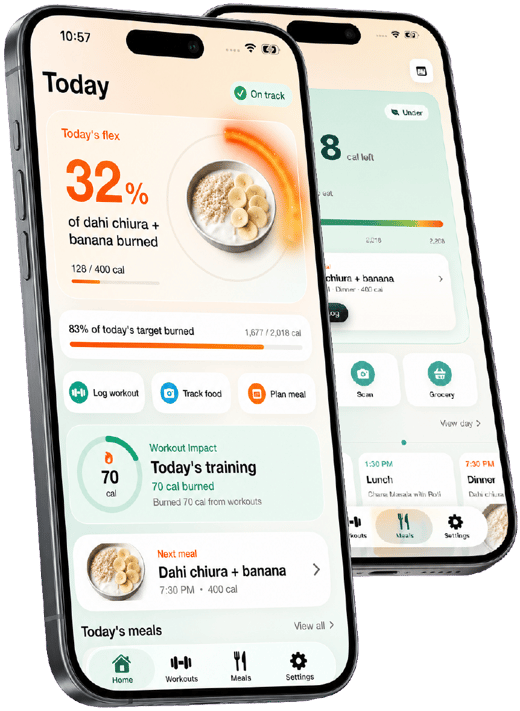
Burnplate isn't a diabetes prevention program, but it's built to support the specific approach that program research points to: modest deficit, fiber, and consistent activity.
A calorie target sized for steady loss
Calorie and macro targets are calculated from your body, goal and activity to land in a moderate deficit range — not an aggressive one that's hard to sustain past a few weeks.
Photo logging that keeps the habit going
Snap a plate instead of a manual food diary — the habit that's easiest to sustain is the one most likely to still be running in month three.
Steps and workouts count toward the goal
Steps and logged workouts show up alongside food, reflecting the pairing of diet and activity that prevention research relies on.
A plan for the week, not just today
The AI 7-day meal plan builds a week of meals around your calorie and fiber-friendly targets with a grocery list, so the habit doesn't depend on daily willpower.
Practical guidance
Practical tips for the prediabetes stage
The changes with the most research behind them for this specific window, in order of leverage.
- 01 Aim for 5-7% of body weight, not more
That's the target associated with the largest risk reduction in prevention research — there's no evidence more aggressive loss adds proportional benefit.
- 02 Swap refined carbs before cutting more
Trading white bread and sugary drinks for whole-food carbs often improves glucose response as much as reducing the amount eaten.
- 03 Move after meals, even briefly
A short walk after a carb-heavy meal blunts the glucose rise through a mechanism separate from the calorie deficit.
- 04 Track consistently, not perfectly
A rough log every day beats a precise log three days a week — consistency is what reveals the pattern worth acting on.
- 05 Build the plate around fiber first
Starting with vegetables and legumes, then adding protein and a smaller carb portion, naturally lands near the fiber and carb targets.
- 06 Recheck labs on your doctor's timeline
Progress in prediabetes is measured over months, not days — lab recheck timing matters more than daily glucose swings.

Track it with a photo, not a search bar
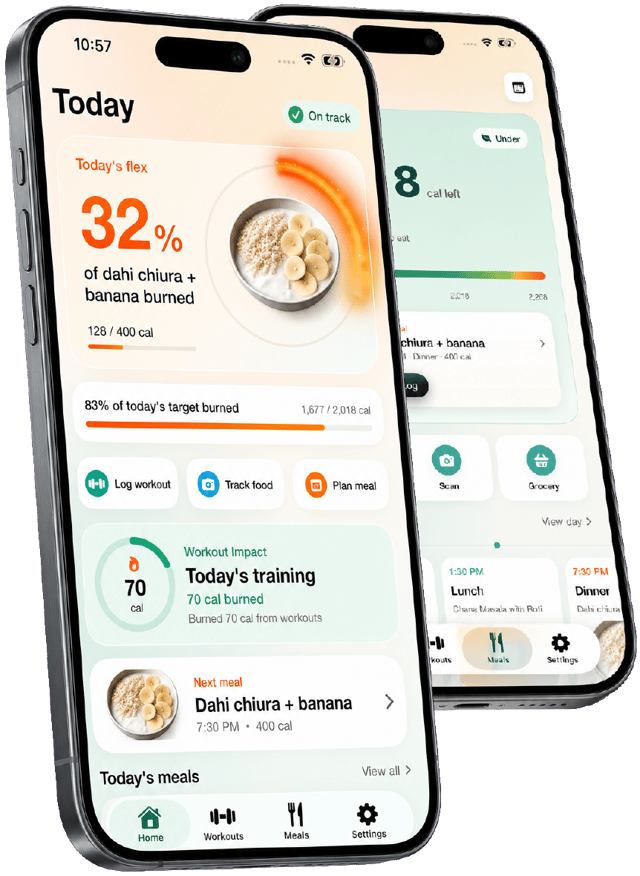
Start tracking free Burnplate sets your calorie and macro targets, logs meals from a photo, and shows how much of each meal your workouts and steps have burned off.
Questions
Calorie tracker for prediabetes: FAQ
How much weight loss reverses prediabetes?
Major prevention research points to 5-7% of body weight as the target associated with cutting the risk of progressing to type 2 diabetes by more than half. For someone at 180 lb, that's roughly 9-13 lb — a modest, achievable range rather than a dramatic transformation.
How many calories should someone with prediabetes eat?
A moderate deficit of 300-400 calories below maintenance is typical — often landing in the 1,500-1,800 range for many adults, though it depends heavily on starting weight and activity. The pace used in major prevention studies was gradual, roughly 1-2 lb per week.
Does a calorie tracker for prediabetes actually help?
It helps by keeping the deficit consistent and visible, and by making fiber and refined-carb intake trackable alongside calories — both matter more here than for a general weight-loss goal. It's a tracking tool, not a substitute for medical monitoring or your doctor's guidance.
Is exercise as important as diet for prediabetes?
Both matter and work through partly different mechanisms — activity improves insulin sensitivity independent of weight loss, while diet drives the calorie deficit and carb quality. Prevention research pairs roughly 150 minutes of weekly activity with dietary change rather than relying on either alone.
What foods should I limit with prediabetes?
Sugary drinks, refined breads and pastries, and large portions of white rice or potatoes tend to cause the sharpest glucose spikes. They don't need to be eliminated entirely — swapping them for fiber-rich, whole-food carbs most of the time captures most of the benefit.
Can Burnplate build a plan for prediabetes?
Burnplate can set a moderate calorie deficit sized from your body and activity, build a 7-day meal plan with a grocery list, and track steps and workouts alongside food. It's a tracking and planning tool, not a clinical prevention program — pair it with your doctor's monitoring.
